Wednesday, 31 December 2025

New Year’s Eve into New Year’s Day

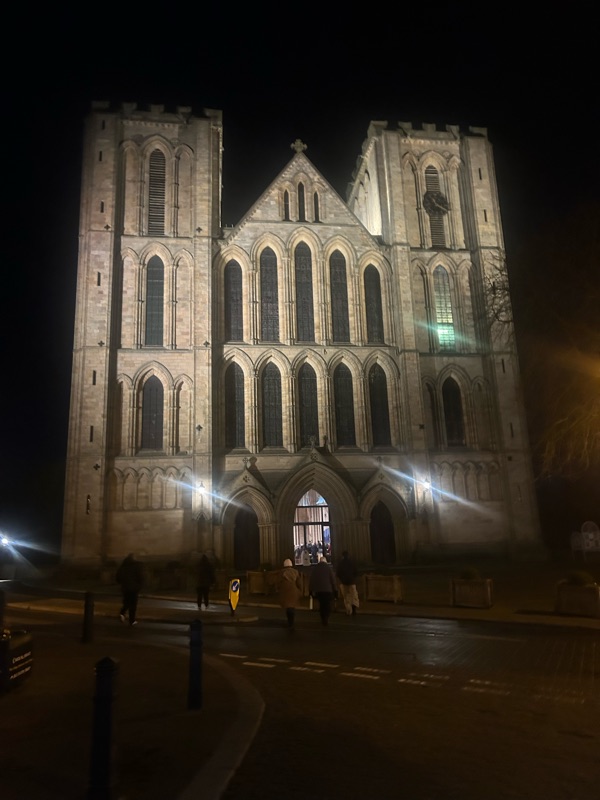
We’ve just thawed out after being out in the city for new year celebrations. There were fireworks! Before them there was a watchnight service in the cathedral. However you mark it, in church, at a party, getting too drunk, watching Jools Holland or just not bothering, the turn of the year reminds us that time doesn’t stand still. The world turns. And there are times of human turning. So that’s why people make resolutions. The turn of the year in some people is a physical and mental and spiritual moment to be able to start again especially if the last year wasn’t good or things need to change.


In her sermon in the cathedral, Bishop Anna preached on Ecclesiastes chapter 3: “for everything there is a season under heaven.” She emphasised the words “under heaven.” 

Stuff happens. We don’t know why stuff happens, good stuff or bad stuff and we don’t know why God sends stuff. Every year has its mixture. The teacher of Ecclesiastes says we just need to live! The invitation is to live every moment. We are to live every moment of celebration and joy and through the difficult ones with prayer and confidence we are not alone. 

We had lit candles to process with to the market square where the Bishop was to bless the city. They blew out as we walked out into the wind. It might be hard to keep the light alive this coming year but we have to keep trying. We have fireworks I think tonight to light up the darkness and to say there can be celebration in everything. 

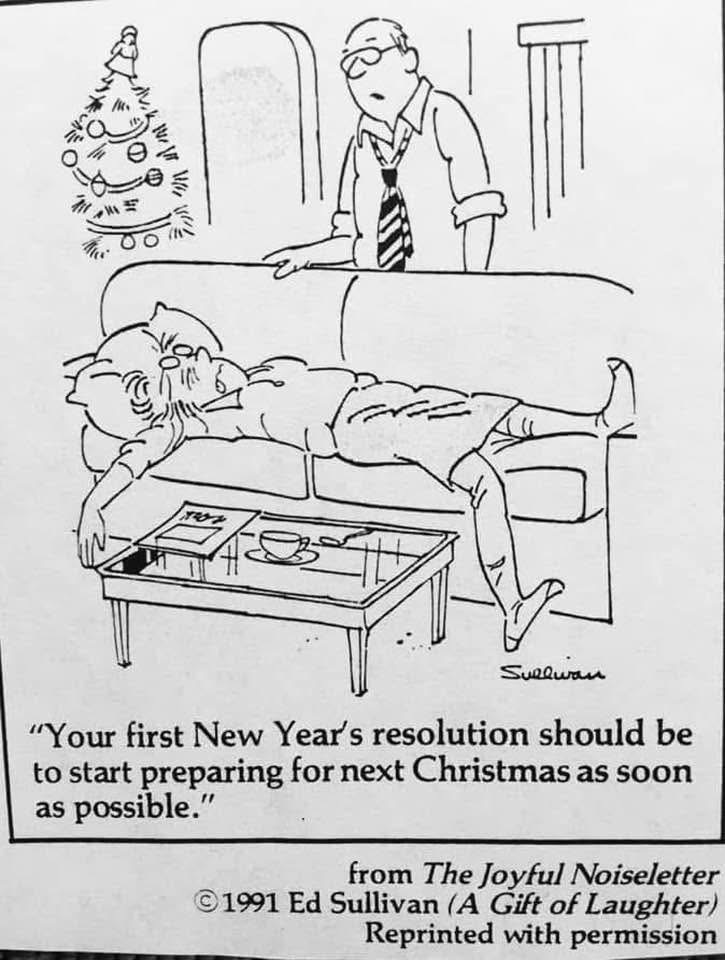
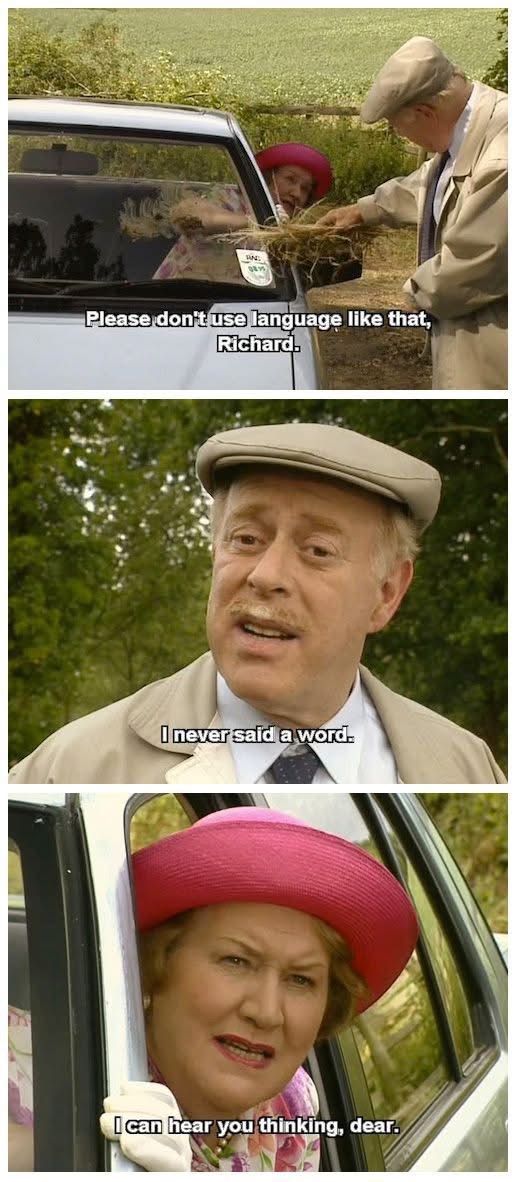
So Happy New Year everyone. I love this cartoon from a website I discovered today. Part of the turning is we’ve made it through another various year to use Charles Wesley’s phrase about divine providence so whatever we’ve been through God has been there. And that’s really worth getting your blower thing out about! More new year thoughts later. I’ve now thawed out at 2.38am after a cup of mulled wine and a cup of ribena. It really was raw out there tonight!  


Tuesday, 30 December 2025

The sixth day of Christmas - Death

I’ve had a day thinking about death. There’s cheery! 

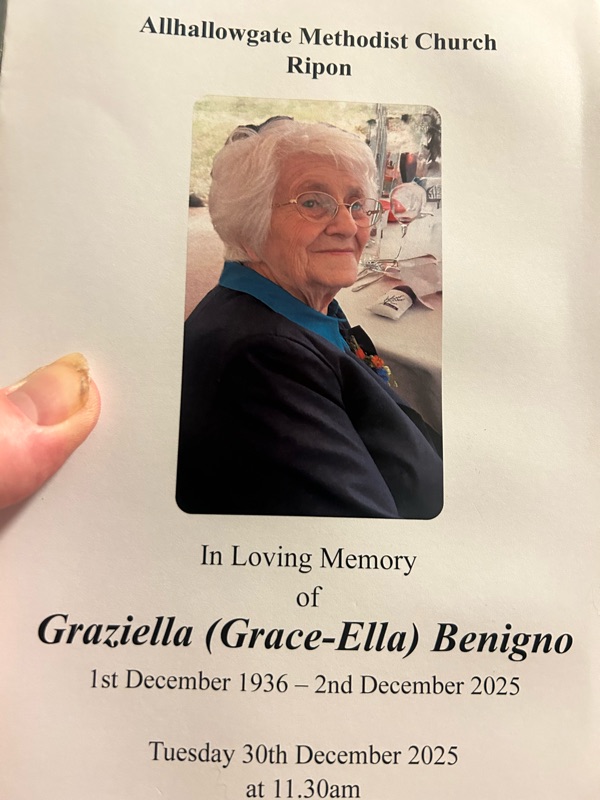
I had a funeral this morning of a very quiet little Italian lady who came to church but always slipped out at the end of the service. When I visited her there was little conversation, perhaps because English was her second language. I think her family were shocked how many were there. We discovered afterwards how many different groups in the city she belonged to. 

This afternoon I met another family to plan a funeral for 12 January. I heard of two other people in our mission area who have passed on, one after fighting cancer very bravely, a dear soul who played the organ at our Ellington chapel and ran a catering business which catered for funerals - and the other living a long life. She was one of the founder members of our Harrogate Road church. I also have a funeral on 8 January and the widow is worrying there’s a snow bomb forecast that day. 

I was at the hospital in Harrogate tonight and my visit included a discussion about heaven, and then dressed for work I was stopped by a young girl whose mother narrowly escaped death after a head on collision and she also told me her father was murdered last year. She wanted to talk! Then as I was having a quiet hot chocolate in the cafe area, a lady in tears asked me to pray for her father who is on end of life care. I held her hand and prayed for him and her. I heard her tell her daughter “I really appreciated that.” Likewise my steward at church told me this morning I always take a good funeral. 

What is there to say about death in the Christmas season? I spoke this morning about God coming as Immanuel - God with us, and that not just being for a few days and all frothy and light but an abiding with us in life’s trouble and through death and with the promise of eternity. The passage used so often in funerals is where John records the words of Jesus - Immanuel - saying do not let your hearts be troubled and do not let them be afraid. Jesus comes into mess and takes on death and shows us it isn’t the end of the story. If Jesus comes as Immanuel, that being one with us is there in pain, in confusion, in death and in life beyond it. He says do not be afraid. I love the fact that do not be afraid appears 365 times in the Bible - a word for every day. You can be afraid when there is a February 29! 

Our late lamented pastoral tutor at college Dr David Dunn Wilson used to tell us as ministers we need to be experts in death. At Christmas we remember the entry of God into the reality of the world and that includes death. Death is real. It is hard. It isn’t nothing at all. You get round it. With help! But it cannot defeat us. That’s the good news of the Gospel. Immanuel isn’t just about Christmas, he’s about sharing life with us, dying and rising.

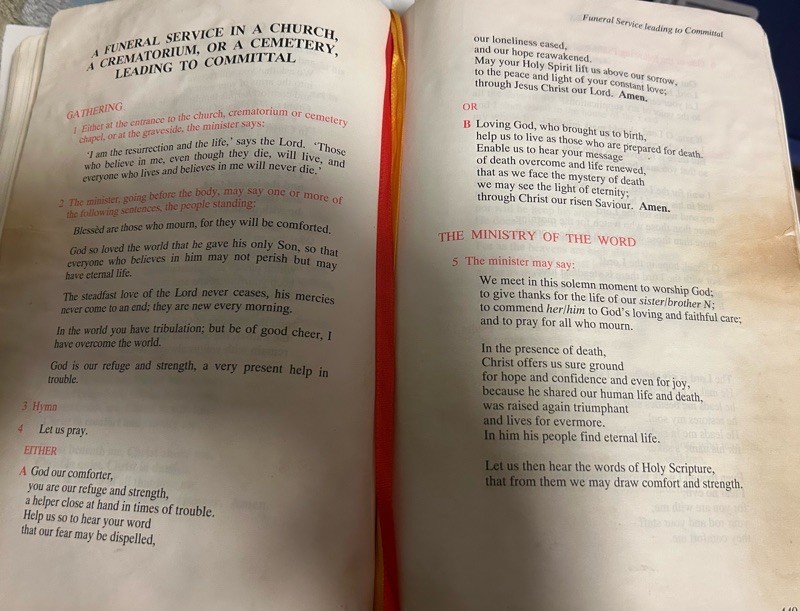
My service book which I received as an ordination present from the then Harpenden Circuit in 1999, is its most grubby in the funeral pages. I’ve taken a  lot of them. David Dunn Wilson also told us students at Hartley to always preach the Gospel at a funeral. 

What is it? Well… Jesus doesn’t abandon us. He is with us when it happens and leads us to whatever comes next. The good news of Christmas is that we are never alone and whatever we face even dying and being left behind to cope when we lose loved ones he gets it! 

I hope though for less death and talk of death after today! It’s getting as bad as when I was serving in County Durham and took five or six funerals a week and spent my days taking a service getting in a hearse to go to Darlington crem then returning, taking another service in church then getting in another hearse to go to Durham crem. It was mad! And don’t mention the day a complicated family had a punch up at a graveside or the man who sang Celeste with swearing and all in a service. Son of a gun! 


Monday, 29 December 2025

The fifth day of Christmas - tired of it?

I’ve noticed this year after Christmas there are less decorations up. The radio isn’t playing any Christmas music and today someone wanted to talk about Lent to me. 

Is it any wonder that once the decorations start to come down and the fridge is picked clean of any leftovers worth eating, Christmas exhaustion (also known as ‘festive burnout’) begins to set in? Of course, it’s normal to feel some degree of exhaustion at Christmas. It’s a high-intensity period, and each season seems to be demanding more than the previous year. The mental and physical toll is increasing.
Typically felt during ‘Twixmas’ – that doldrum-y period between Christmas and New Year we are in – Christmas burnout is a serious issue. Often, the most wonderful time of the year leads to many people saying they are tired of the season.
But that feeling of being tired and exhausted by the pace of life is felt more than just Christmas. In fact, we go through seasons of life that just drain us. Everyone faces difficult and oppressing times. There are seasons in our lives that are just exhausting. We experience times in life when all life does take from us day after day. The days turn into weeks. Weeks turn into months. Months turn into years. Years become decades of life, just draining the life right out of us. We go through these periods of life almost like zombies, just surviving with no peace or any rest. Unfortunately, for many people, when the difficult periods of life set in, they feel like they have nowhere to turn for help. Many of us reach that dark night of the soul.
Thankfully, the Jesus who has come not only experienced life as we do, but he also taught us how to face life's most difficult and dark days. He faced life like we do. Jesus' birth, life, death, resurrection, and teachings all give us hope when we are at the point of being tired of the season of life we're in. 

Matthew 11:25-30

At that time Jesus declared, “I thank you, Father, Lord of heaven and earth, that you have hidden these things from the wise and understanding and revealed them to little children; yes, Father, for such was your gracious will. All things have been handed over to me by my Father, and no one knows the Son except the Father, and no one knows the Father except the Son and anyone to whom the Son chooses to reveal him. Come to me, all who labor and are heavy laden, and I will give you rest. Take my yoke upon you, and learn from me, for I am gentle and lowly in heart, and you will find rest for your souls. For my yoke is easy, and my burden is light.”

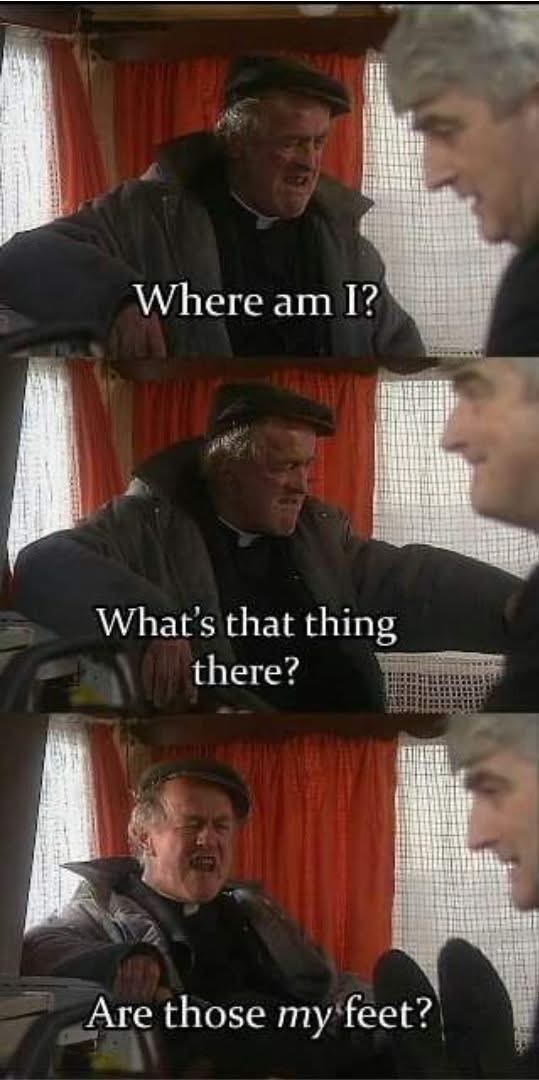
 But for now I feel a bit like Father Jack. Where am I? What’s that thing over there? Are those my feet? 

The demands of 2026 are coming and I’m not over Christmas yet. But incarnation is permanent. So stress not if you are done in in these days. You are not alone. 


Sunday, 28 December 2025

The first Sunday of Christmas - Joseph - faithful protector through pregnancy, census, birth, visitations and refugee status…


Gervaise Phinn in his poem about a school nativity play has this line:

Oh Miss, I don’t want to be Joseph, 

Miss, I really don’t want to be him, 

With a cloak of bright red and a towel on my head 

And a cotton wool beard on my chin.

Would we want to be Joseph? That’s my question for today. I had an idea we might look at his part in the Christmas story today… 

I wonder if you can think of a time in the last year or so when your best laid plans are suddenly and unexpectedly derailed

Imagine, then, what it must have been like for Joseph when his fiancĂ©e Mary came to him with her news of pregnancy. 

There are some basic facts that we know about Joseph from the bible and there are others that church tradition adds.

Firstly, we know that Joseph could trace his roots back to King David and beyond – the gospels of Matthew and Luke both contain genealogies of Jesus and the one in Matthew is traced back to David and Abraham, through Joseph.

Joseph is of long-standing Jewish heritage – this is important as the prophets such as Isaiah had spoken that the coming messiah, the one that would save the people, would come from David’s line, from ‘the root of Jesse’ (David’s father). Joseph came from that line.

It is often assumed that Joseph was a carpenter by trade and that he passed on his trade to Jesus, but the word used to describe Joseph’s occupation in the Greek was Tekton which means artisan or builder.  An artisan or builder could work in wood but, interestingly, the term could also describe a stonemason.

To these basic facts church tradition tells us that Joseph was quite a bit older than Mary and when he is depicted in church art he is often shown that way – Joseph is shown as a mature man whereas Mary is always thought to have been not much more than a teenager. 

If you speak to Roman Catholic friends who believe Mary remained a virgin her whole life and yet there’s a verse in Scripture that Jesus had brothers and sisters, they explain that away saying Joseph was married before and they were his children. 

One reason Joseph is thought to have been much older than Mary is because he is not mentioned in the gospels after the time Jesus is twelve and Joseph and Mary find him in the temple teaching the scribes.  He does not feature again, and it is thought that he died before Jesus started his ministry. 

Although we have little factual information about Joseph, we have more about his character.

Matthew tells us that Joseph was a ‘righteous man’. That means he took his faith seriously – that he tried to live rightly under God’s law. He tried to do ‘the right thing’ in life.

Joseph surely imagined his life unfolding in very normal ways: continuing his trade, marrying Mary, raising children, remaining part of the Jewish community he knew and loved. All very reasonable hopes.

And so when this happened, what is this ordinary working man to do:

‘When Mary had been engaged to Joseph, but before they lived together, she was found to be with child from the Holy Spirit’ (v.18)

His life is abruptly upended. Mary is pregnant – and Joseph knows howthat happens.  We can only imagine how the conversation when Mary broke the news to Joseph went.

In the eyes of the community this would mean disgrace, shame, and scandal, not only for Mary but for Joseph and his family as well. Jewish marriages were in two parts, with a betrothal ceremony (rather like an engagement) and then the marriage. There was likely to have been vows of celibacy at the betrothal. Breaking these vows would have consequences.

So, what is this ordinary, righteous, quiet man to do?

We often tidy this moment up in our nativity plays, glossing over the emotional cost. 

Joseph may well have wrestled for weeks with the decision. There may have been many sleepless nights as he weighed the law, his reputation, Mary’s safety – what is ‘the right thing’ in this situation. Eventually, he decides on a course of action that is both lawful and merciful: he will dismiss her quietly, without fanfare or public shame.

And it is into this confusion and in the dead of night during a dream that Joseph has his annunciation. In Joseph’s dream the angel of God reveals that Mary’s child is indeed from God, that Joseph should not be afraid to take her as his wife – the child has been sent to deliver the world from its sins in fulfilment of the messianic prophecies.

Joseph’s response is striking for what it lacks. There are no questions. No objections. No songs or speeches of faith or doubt. Joseph answers the call placed on his life without a single recorded word.

‘When Joseph awoke from sleep, he did as the angel of the Lord commanded him.’ (v.24)

He takes Mary as his wife. He names the child Jesus. He adopts Jesus and raises him as his own.

Joseph had a choice to make – he could have said no and dismissed Mary – but he did the right thing and said ‘yes’ to the call on his life and in that moment he steps away from any hope of an ordinary, uncomplicated life. Without Joseph’s yes, Mary and her newborn son would have been unprotected in the world. Would they have even survived – it is unlikely.

So, what can Joseph’s story teach us

Joseph’s story is one of faithfulness without fanfare. He is an example of obedience, courage, and remarkable trust, lived out quietly and through actions rather than words.

Faithfulness is often easy when life is going well, when our carefully laid plans unfold as expected. But what about when they don’t? When illness, loss, redundancy, or unexpected responsibility changes everything?

Sometimes faithfulness looks like staying when it would be easier to walk away. Sometimes it means allowing ourselves to be changed by circumstances we did not choose, trusting that God is still at work even when the future looks nothing like we imagined.

Joseph reminds us that you don’t have to be in the spotlight to matter.Many of the people who shape the world for good do so without applause. They are faithful, steady, courageous in quiet ways.

Joseph teaches us that faithfulness matters. Obedience matters. Quiet trust matters.

God our Father,

who from the family of your servant David

raised up Joseph the carpenter

to be the guardian of your incarnate Son

and husband of the Blessed Virgin Mary:

give us grace to follow him

in faithful obedience to your commands;

through Jesus Christ your Son our Lord,

who is alive and reigns with you,

in the unity of the Holy Spirit,

one God, now and for ever.


So faithfulness to his betrothed, forced to get to Bethlehem for a census, a long journey to plan and endure, no room, finding somewhere to stay, being there witnessing birth in a cattle shed and receiving some interesting visitors. Joseph surely hoped for peace. But like the Christmas episode of Eastenders, which is always dark and someone is usually murdered Christmas for Joseph after some wise men have visited turns very very dark indeed…


I can imagine Joseph saying when another angel comes to him “I can’t take much more!” Joseph is now dragged into politics and threat. The wise men have journeyed to find Jesus and they’ve rattled King Herod.  The writer Kate Compston says “We call them wise and I had always thought of them that way respecting the pilgrimage of anyone who sees a star and follows it to his discomforting being prepared to change.


And yet - in following their star, the star that was to lead them to enlargement of the soul (their own) they blundered mightily, and set in train the massacre of many innocents. Naive and foolish men they were, not wise to go and ask of Herod “where is your rival? where is he who might unseat you?”


The people knew about Herod. They were well aware of how dangerous life can be when a powerful ruler with a fragile ego is afraid. So everyone was on edge — anxious about what the paranoid king might do. 


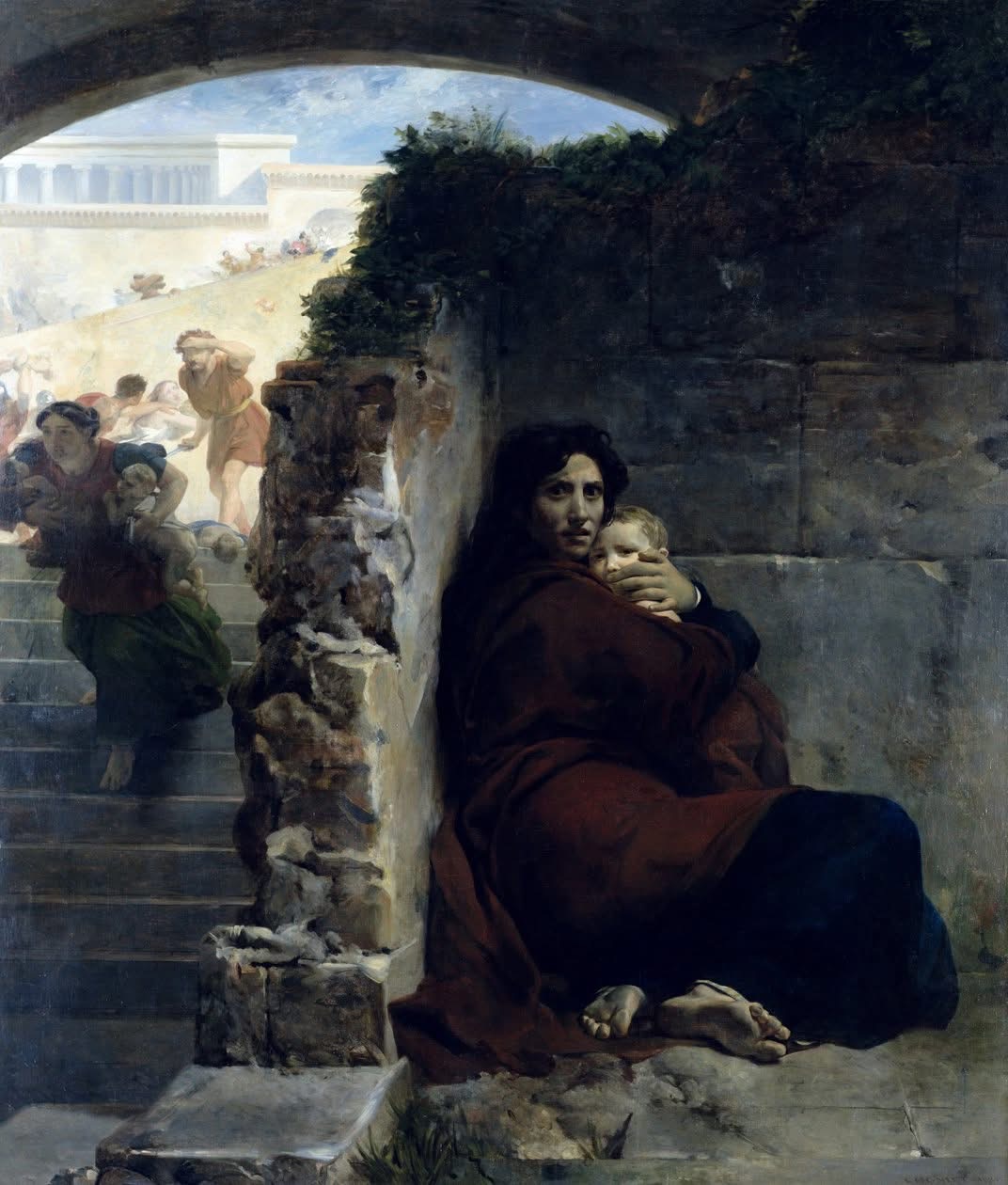
What Herod did was commit one of the greatest crimes in the Bible — we call it the Slaughter of the Innocents. Though it’s true we have no corroboration of this atrocity outside of Matthew’s Gospel, the account is in keeping with what we know about Herod’s ruthless methods. Matthew tells us that the paranoid king sent death squads to Bethlehem with the ghastly instructions to kill all male babies under the age of two.


One writer I read says that she has been privileged enough to visit the tomb of the massacred children in Bethlehem. And when I go there, I was surprised to see how few they were: probably 10 to 15 in number. What was I expecting? Maybe hundreds of little tombs. But actually, the small number of these tiny tombs brought home the power of the story for me. A little Middle Eastern village, invaded by soldiers, taking all the children together and killing them in front of their mothers and fathers and brothers and sisters and grandparents. The barbarity of that act in that close knit community where everyone would have known everyone else was cruel in extremity.

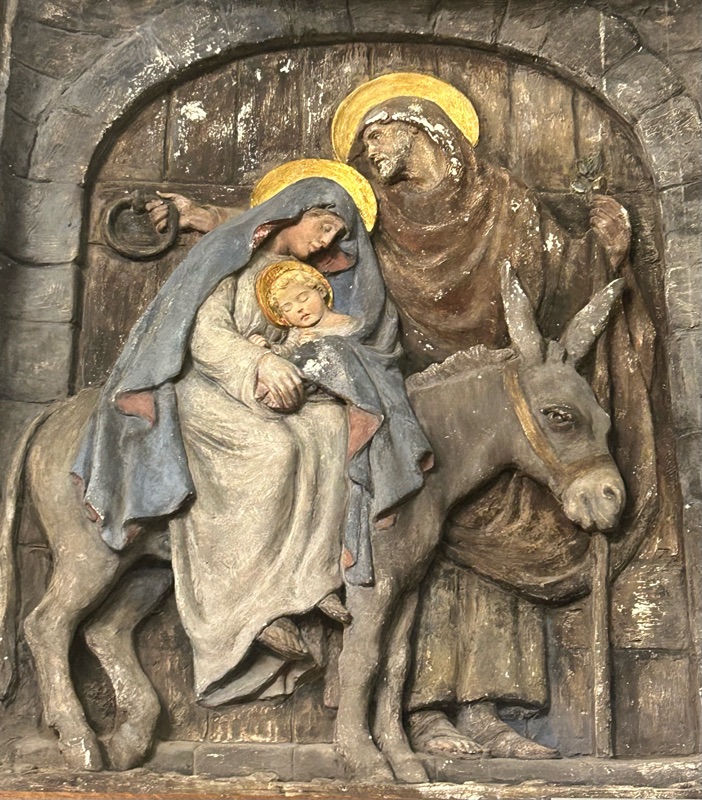
It’s horrible but it reminds us Christmas comes in the dark. And what of Joseph? Well Joseph becomes protector again. The angel tells him to get Mary and Jesus away quickly. Jesus himself was a refugee, displaced from his homeland by politics. And we say this story has nothing to say about the world today.How did they get to Egypt? This is where my preparation went a bit mad. Here’s what Egypt on line tour website says: 

The overland journey, approximately 300 miles, would have taken perhaps a month, considering a donkey's average travel of 12–15 miles per day.

However, a more probable route would have been by sea.  Traveling the 40 miles from Jerusalem to Jaffa, they could have taken a boat to Alexandria. 

This 285-mile journey at a sailing speed of roughly 8 miles per hour would have taken less than two days. The gold from the Magi likely afforded them this option. Furthermore, the urgency of the angel's warning suggests time was critical. An overland journey risked being overtaken by Herod's soldiers. Traveling to Jaffa in two days and then by sea would have quickly placed them beyond Herod's reach.

How long did they stay in Egypt? We think about two to three years until Herod died. 

This is the other side of Christmas, the other side of the angels and shepherds. Just as we celebrated joy and wonder in the lead up to Christmas, so we contemplate vulnerability and chaos and danger and frailty on this side of Christmas.

On the one side we have joy and confidence.

On the other side we have vulnerability and fear.

And standing in the middle of the two is the birth of the Messiah, our Saviour.

And what a wonderful metaphor that is for life. On one hand, we experience joys and wonders and amazements and peace. But on the other hand, we experience pain and suffering and loss and vulnerability.

How can we possibly make sense of the see-saw of emotions that life brings?

Well, we can only make sense of it if we put Jesus Christ, our Saviour, in the centre and allow the see-saw of life’s experience to pivot around him as the source of our Being.

If Jesus is at the centre of our lives, we can make sense of our joys and wonder and peace.


What words does Joseph speak into the Christmas story? None at all that we have. But without him things would have been very different.
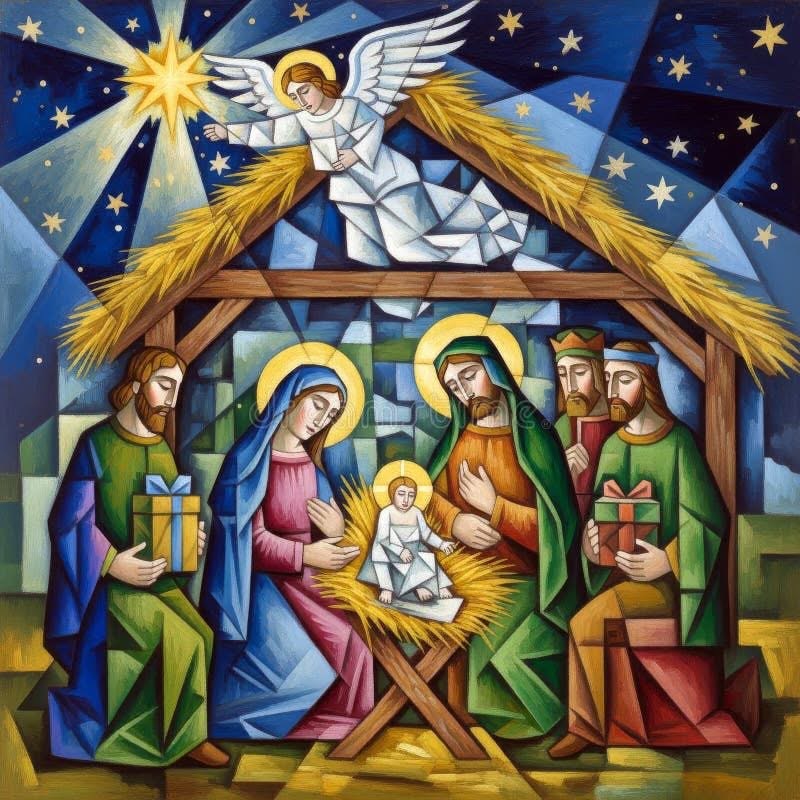


Saturday, 27 December 2025

The third day of Christmas: the word made flesh


In the Christmas Eve broadcast of Thought For The Day on BBC Radio Scotland, the Rev Philip Blackledge said “The year has been a noisy one. People seem to be angrier and more anxious, with louder voices drowning out the quiet, and the troubles of the world hemming us in. In his Screwtape Letters, CS Lewis called hell the “kingdom of noise” and you kind of get where he’s coming from. 

“But there’s a moment in church at Christmas when I will look upon our crib scene, and see that helpless child, born into terrible poverty, and ignored by all the people who were warm and safe in their homes in Bethlehem. In a way it’s a tragic scene but it’s also beautiful.

“The all-powerful God, is a helpless child. That’s the power of the story. God is powerful not because of him, but because of our compassion. When we see a helpless child we want to help, and when we act on that compassion, miracles happen.

“Today amid the war and strife and troubles, there are people feeding the hungry, inviting the homeless into their homes, money will be given to those charities who will heal the sick and give sight to the blind. Those are miracles which are happening today, because people feel that pull of compassion, and want to help.

“Somewhere in the world right now there is, violence and anger, but somewhere too there is kindness, miracles worked, lives saved. And as long as there is love and compassion, that means everywhere, there is hope.”

Today the 27 December is the day the Church remembers St John. John’s prologue to his Gospel sums up the Christ event. Despite everything there is light and despite everything the glory of God can be seen. Thank God!


1In the beginning was the Word, and the Word was with God, and the Word was God. 2The same was in the beginning with God. 3All things were made by him; and without him was not any thing made that was made. 4In him was life; and the life was the light of men. 5And the light shineth in darkness; and the darkness comprehended it not.

6There was a man sent from God, whose name was John. 7The same came for a witness, to bear witness of the Light, that all men through him might believe. 8He was not that Light, but was sent to bear witness of that Light. 9That was the true Light, which lighteth every man that cometh into the world. 10He was in the world, and the world was made by him, and the world knew him not. 11He came unto his own, and his own received him not. 12But as many as received him, to them gave he power to become the sons of God, even to them that believe on his name: 13which were born, not of blood, nor of the will of the flesh, nor of the will of man, but of God. 14And the Word was made flesh, and dwelt among us, (and we beheld his glory, the glory as of the only begotten of the Father,) full of grace and truth.

Friday, 26 December 2025

The second day of Christmas: St Stephen

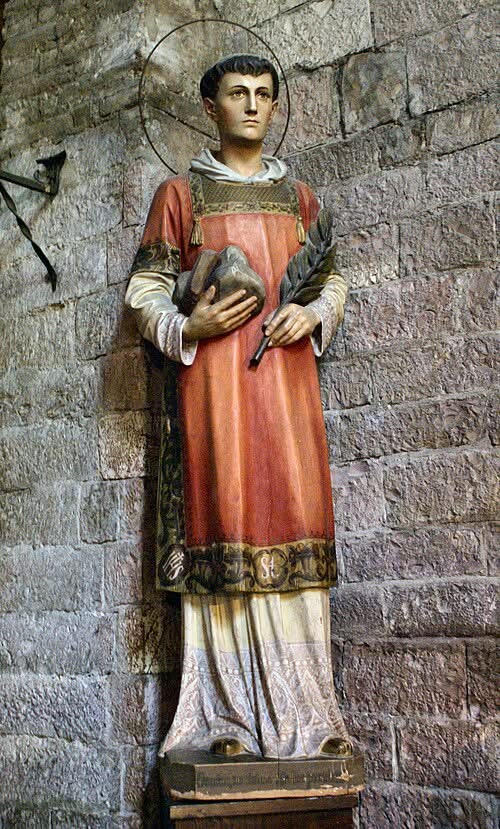
Today is the Feast of St Stephen, one of the first Christian martyrs. According to the Acts of the Apostles, he was a deacon in the early church at Jerusalem and was a gifted evangelist, preaching in his community. He wasn’t afraid to speak out against the injustices of the day.  Eventually, following one of his speeches, he was arrested, charged with blasphemy and stoned to death.

It’s been interesting this Christmas that most of the prominent church leaders have spoken out against isolationism and treating others badly. Mary and Joseph were refugees in the latter bits of the story. I like what Pope Leo said yesterday:


Have we become too quiet or private and scared to be political and speak out? Saint Stephen teaches us to be bold in putting what we believe into the discussion and to expect that we might be got at as our message is counter cultural and threatening to those who would use power to get  they want. The amazing thing about Stephen as he faced death was that he forgave - just like the Jesus he followed. So today we remember him and all those who speak out and those who have lost their life fit the sake of the Gospel.


I will speak out for those who have 
no voices ; I will stand up for the rights 
of all the oppressed ;
I will speak truth and justice ;
I’ll defend the poor and the needy ;
I will lift up the weak in Jesus’ name.

I will speak out for those who have
no choices ; I will cry out for those who
live without love ;
I will show God’s compassion
to the crushed and broken in spirit ;
I will lift up the weak in Jesus’ name.


Thursday, 25 December 2025

Christmas Day - the wonder of the Christ event


​So the Advent reflections now turn into Christmas ones. I write this at the end of Christmas Day reflecting on what hit me as I led worship in two of my churches this morning. 

I think as I reach Christmas this year the word that remains with me as I have shared the story in so many different contexts is wonder. I suggested in my sermon today that adults have lost wonder and almost enjoy predictability. I have been worried how tired church people are that putting on things to tell the story has caused stress. Children on the other hand will have lived wonder today. One of my folk told me this morning her grandchild was given a goalpost for Christmas. He was puzzled how it fit on Santa’s sleigh! 

The Dean last night at the midnight service in the cathedral shared Betjeman’s thoughts on incarnation: “and is it true? The maker of the stars and sea became a child on earth for me?” John’s Gospel tells us “the word became flesh and dwelt among us and we beheld his glory.” And on Sunday we will sing Charles Wesley’s fabulous incarnational theology: “our God, contracted to a span, incomprehensibly made man.” Wonder leads to worship. 

I was glad to be able to lead a communion service this morning. It reminded me that the Christ child who came in vulnerability as one of us also had his body broken and blood shed to complete God’s work of saving his people from themselves which is what the name of Jesus means. While some ministers today will have led lively party worship I chose to be quieter and reflective so in my second service we sang the Methodist carol…

My senior steward at Allhallowgate said to me before our carol service “you haven’t picked my favourite carol!” I said “wait until Christmas Day!” I arrived at Allhallowgate and a lovely local preacher said “you’ve picked it!” And another person there said “I knew you wouldn’t let me down.” Methodist minister the Rev George Stringer Rowe sums up the implications for us of incarnation. His carol was written in 1879. No characters in the story are mentioned or details of birth just what it means. Wonder! For me not singing it on Christmas morning would leave things incomplete… 

I’ve just watched the King’s Christmas broadcast. He called a Jesus’ coming a “pilgrimage with purpose.” Things have changed if only we take time to see it and wonder at it. 

The Archbishop of Westminster Vincent Nicholls was doing pause for thought on Kate Bottley’s radio show as I drove to Grewelthorpe this morning. He said we should only wish each other a merry Christmas once  and have fun but merry doesn’t last whereas a happy Christmas in our heart can. So to those of you who are reading these things every day may you wonder a bit and as the carol says let’s pray at the end of this Christmas Day that there be a Christmas in our heart, heaven here and now. A bit of wonder and incredulity. Like how did Santa fit that goalpost on his sleigh! 

Cradled in a manger, meanly,
Laid the Son of Man His head;
Sleeping His first earthly slumber
Where the oxen had been fed.
Happy were those shepherds listening
To the holy angel’s word;
Happy they within that stable
Worshipping their infant Lord.

Happy all who hear the message
Of His coming from above;
Happier still who hail His coming,
And with praises greet His love.
Blessèd Savior, Christ most holy,
In a manger Thou didst rest;
Canst Thou stoop again, yet lower,
And abide within my breast?

Evil things are there before Thee;
In the heart, where they have fed,
Wilt Thou pitifully enter,
Son of Man, and lay Thy head?
Enter, then, O Christ most holy;
Make a Christmas in my heart;
Make a heaven of my manger:
It is heaven where Thou art.

And to those who never listened
To the message of Thy birth,
Who have winter, but no Christmas
Bringing them Thy peace on earth,
Send to these the joyful tidings;
By all people, in each home,
Be there heard the Christmas anthem;
Praise to God, the Christ has come!


Wednesday, 24 December 2025

Christmas Eve: a holy night


Over the last month I’ve been greeted in all sorts of places with this comment: “I expect you are busy!” It’s as though we ministers do nothing for eleven months of the year. Advent and Christmas time is mad but I thrive on it: carol services, in church, with the WI, the scouts, a community choir, schoolsnursing homes, and in Ripon cathedral last night. Christmas dinners, Christmas concerts, a blue Christmas service and coffee mornings with carols, and Lego church this morning. Tonight I led communion in Bedale and I’ve been to midnight service back at the cathedral. Someone in a church was moaning there’s too much on in December. But if you can’t do Advent and Christmas you have missed the point.

I love Christmas Eve.Tonight once you’ve done all the running around is a time to pause, to stop and to wait. What are we waiting for? 


The late Walter Bruggemann said it brilliantly “give us the grace and the impatience to wait for your coming to the bottom of our toes, to the edges of our fingertips.” This is a holy night of anticipation and hope. There’s something in the air.


In O Holy Night there’s a phrase, til he appeared and the soul felt its worth..

What I need is for my soul to feel its worth. Worth not in how much someone spends on me or values meWhat qualifies me for God’s grace is nothing more than my need for God’s grace. And the church is here to share that grace.


You know there’s a story that swirls round that we ministers don’t visit anymore. I want to challenge that story. Pastoral care at moments of joy and sorrow is the privilege of ministry. The lasting memory of this Advent time for me will be sitting at the bedside of a dying faithful Christian man. I held his hand and prayed from memory, the Lord bless you and keep you, the Lord make his face to shine upon you, the Lord lift up the light of his countenance upon you and give you peace. The dear man couldn’t talk but he squeezed my hand at the word peace. We shared God’s grace with him at the end of his life as a church.


Our Christmas Eve prayer for ourselves, each other, our church, our town and our world is may your soul feel its worth.

It happened in this story. To those who have no worth … to an unwed, pregnant teenage mother, to her faithful partner who risked his own life and social standing to defend and accompany her, to a ragtag band of shepherds on the fringes of Bethlehem … it is to them and for them that this “good news of great joy” first comes.

So may he on this Christmas Eve give us the grace and the impatience to wait for your coming to the bottom of our toes, to the edges of our fingertips. And when he comes let’s really celebrate. For here is Christmas: God keeps his promises to save and bless his world. His solution to our pining and our longing is simple – Jesus.