Saturday, 14 March 2026

Mothering Sunday Nurture


Mothering Sunday isn’t an easy Sunday for the preacher. There’s a complexity of emotions gathered in churches today. For some happiness and thanksgiving as we remember lovely mothers we will always treasure and a twinge of sadness that some of them are not with us on earth anymore. We take time today to smile about them.


There are though those for who this day is painful, those who yearned for children yet could not have them, those whose experience of mothering was not loving and those who have lost children too early.

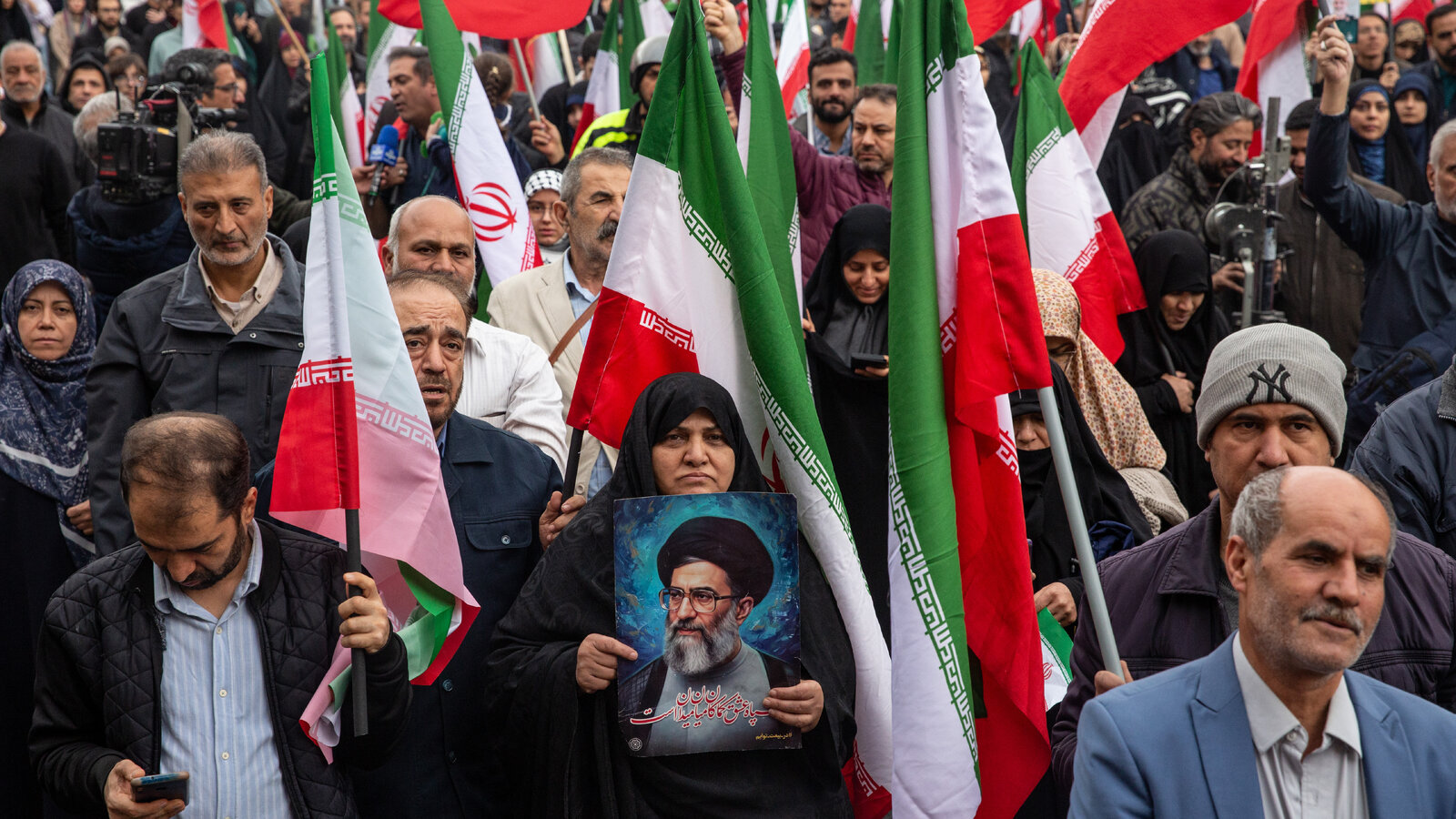
In the world today I think of Iranian children in Southern Iran killed by a bomb on the 1 March, 150 of them, mothers and fathers who will never see them again, of mothers and fathers of those going to war, a plane load of American soldiers were lost this week, every life as this goes on that is lost will cause unimaginable grief to most of us. I think of the 30th anniversary of Dunblane this week closer to home.

And there are those who’ve found this day excludes them. And it hurts. So what to do with it? Well, let’s explore nurturing, then Christianity as a family, then radical love together. I just hope you find my rambling helpful today however this day falls for you.

I wonder if there are any avid Call the Midwife watchers amongst us. I used to watch it but I stopped because I couldn’t cope with its rawness after a busy Sunday. Sister Monica Joan passed away in the last episode of the last series, the wise matriarch and soul of Nonnatus House. She once said this: "The hands of the Almighty are so often to be found at the ends of our own arms.” I like that. May you be known by love. Let’s begin by saying this day is about remembering nurture, those who have nurtured us.

The biblical picture of Motherhood isn’t quite the sugary sweet image that we have from card manufacturers.

The biblical image of Motherhood doesn’t quite match that of the card producers where nothing is ever difficult and everyone has 2.4 children.

One woman who had three children was asked, “If you had it all to do over again, would you have children?” “Yes,” she replied, “But not the same ones”.

Another mother says, “The joy of motherhood is what a woman experiences when all the children are finally in bed.”

It’s not easy to be mothering. But let’s take time today to remember all those who have nurtured us.

Secondly Mothering Sunday invites us into a new family, deep Christian love and safety. What was on the cards you received this morning mothers? Roses, teddy bears, maybe? And what does the Church  give us for Mothering Sunday? A Mother’s Day card with a picture of Mary standing at the foot of the cross, watching her son die. Anyone get a card this morning with a picture of that?

We have Mary. Mary the teenage mum becoming pregnant when she is not yet married. Mary the young widow for we don’t know exactly when Joseph died, but we know that by the time Jesus is a grown up Mary is maybe 45 or so, and Joseph is dead. Mary who stands at the foot of the cross watching her son die.

Jesus entrusted Mary to the disciple John but he didn’t entrust her to his brothers and sisters who were still alive. We know that he had four brothers – James, Joseph, Simon and Judas – and some sisters who are not named. That seems a little strange. Surely one of them could have looked after their mum into old age? But Jesus doesn’t pursue that option. Why? What else is going on here?

There is something quite profound about what Mary and the disciple John represent to us here. Because here are two people who are there with Jesus at the foot of the cross, two people who believe in his mission, two people who believe in his claim to be the Son of God – the Lord and Saviour of the world. This is in stark contrast to Jesus’ brothers. In John 7:5 we are told quite starkly, “Not even his brothers believed in him.”

So it seems that what is happening here between Jesus the Saviour and the two people at the foot of the Cross who believe in him, is that a new family is being created. “Jesus saw his mother and the disciple he loved standing there; so he said to his mother, ‘He is your son.’ Then he said to the disciple, ‘She is your mother.’ From that time the disciple took her to live in his home.” And so a new family is created in the shadow of the cross. Through the blood of Christ shed for us, a new home, a new community comes to life – a new family is born. It is here, at the foot of the cross as Jesus sheds his blood and a woman embraces a boy and a boy embraces a woman – it is here that the church is formed!”

But the family formed at the foot of the cross is bigger than that. The story of John being entrusted to Mary and Mary to John is the start of a new family which is incredibly supportive. In John’s Gospel – John represents all of us – that’s why he is never given a name – just referred to as the disciple Jesus loved.

It’s like one of those films where you don’t see the main character because they are behind the camera – John is behind the camera – we see the Gospel through his eyes. So when John is entrusted to Mary, we all are entrusted to Mary. And because death is not the end for us, because Jesus has defeated death, that relationship continues.

That’s why many Christians over the centuries and still today think of Mary as being a Mother to us.

Mary is also an example to us. As former Archbishop of Canterbury Rowan Williams puts it, “For centuries, Christians have kept coming back to the idea that what happens in Mary is what has to happen to some degree in each of us. She, uniquely and once for all, says a yes so complete that her entire material life is changed by the coming of God to her; God’s everlasting gift of himself that is the Son, the Word, emerges from her to begin that life which will change everything in creation. But we are called to the same job, to give God room so that we may be changed, so that the eternal Word will live in us and speak and act in love to others.”

And do you notice something about Jesus and Mary his mother? The roles reverse!

Even though Jesus is dying he begins to mother her. She becomes the child. He calls her ‘Dear Woman’ and then proceeds to place her into the arms of his very best friend. He provides a shelter for her…….in the same way today he wants to mother us. He notices us, even in our worst moments of pain, sadness, anxiety, shame and humiliation, he is there for us. When we have our crosses to bear, he is there for us, just like Mary was for him.

It was Jesus who described himself as a ‘mother’ – a mother hen who longed to gather her ‘brood’ under her wings, and give them her peace, if only they would let her.

We are called to give love like that of a mother to others. The hands of the Almighty are so often to be found at the ends of our own arms.

So today, as we give thanks for our human mothers and all they did for us, let us remember the motherly love of Mary and Jesus to us, and be inspired to show that motherly love to others. That’s the work of the Church.

On This is Ripon social media group the other day someone posted anonymously they were thinking of coming to church and had anybody any recommendations. It was really funny that over the next few hours most of the churches in Ripon wrote that they’d be best off with us! We like to think we are welcoming. I think people are searching for care. Maybe today is a day we think about how we nurture others especially those like Mary who need to know life doesn’t stop in tragedy.

Then finally I think Mothering Sunday reminds us that God’s love is enough. At Sawley this afternoon because they’ve got the old book we will sing “o love of God how strong and true, eternal and yet ever new, uncomprending and unbought, beyond all knowledge and all thought.”

Let me end with my favourite mother in Christian history, who can teach us so much about spirituality in today’s climate. People I meet are frightened, they are scared of Donald Trump. The preacher has to offer hope and name the things we need love to conquer today. No sermon at the moment is credible if it doesn’t mention the mess around us.

In her showings, showings’ (traditionally called ‘Revelations of Divine Love) Mother Julian of Norwich was the first woman to write a surviving book in the English language. Julian was an anchorite, an early form of the Christian monastic. She lived in a simple room attached to the local church, receiving meals and participating in church services through different windows. Julian spent most of her time connecting mystically to God. Eventually, she also wrote and gave spiritual guidance to those who came to her. 

When she was 30, God healed Julian of a serious illness. At that time she had a series of visions of Jesus on the cross. One writer says that Julian had what we might now describe as a Near-Death Experience, which I thought was an interesting idea. Her visions radically changed her and she spent the rest of her life writing down the things she learned from them.
“And so our life is grounded in our true Mother, Christ, endlessly guided by his foresight and Wisdom, supported by the boundless Power of the Father, and assisted by the great Goodness of the Holy Spirit. In taking on our humanity, he brought us back to life. In dying on the cross he birthed us into life everlasting. Ever since that time, and until the Final Days, she nurtures and cares for us, as the supreme loving nature of motherhood mandates and as the natural needs of childhood require.”

Julian’s most famous saying is: All shall be well, and all shall be well and all manner of thing shall be well…

Don’t we need to hear that this Mothering Sunday? Not just that we are cared for, that the church is our family but that in God’s love all shall be well, even with bombs flying about and grave uncertainty and all our worries and questions and aches and pains and bereavements? All shall be well!

Julian, echoing the words of the Letter to the Colossians, sees that ‘God is everything that is good and supports us. He clothes us in his love, envelops us and embraces us. He wraps us round in his tender love and he will never abandon us.’

This Mothering Sunday, we give thanks for all those who have carried and nurtured us. All those who have gone with us through pain and joy. And all those who by being mothers to us, have shown us the love of God in Christ. And we commit ourselves to mothering…

In 1999 I was minister in Manchester and one of my churches was the very traditional Tame Valley church in Dukinfield. The new service book which we still use today came out that year. I used the communion service which has the words “God our Father and our mother” in it. The balloon went up! They weren’t happy. But I’m glad our understanding of God has moved beyond gender and to include motherly attributes is to find the heart of God anew.

So on this Mothering Sunday let’s be encouraged we are not alone.
God hold us, enfold us, and keep us wrapped around His heart.
May we be known by love.
May the hands of the Almighty be found at the ends of our own arms. May we know all shall be well.

And … as the thought for the week on Allhallowgate notices says this week: Mother is a verb.
It’s something you do. Not just who you are.

Mother God, you are compassionate when our capacity for mercy for ourselves and others runs dry…

Mother God, you are near when everything but the depths of despair seems so far from us…

Mother God, you are a wind of constancy, allowing us, your beloved, to sail through this journey of life amidst fear and chaos…

As we celebrate this day, let us remember that we already possess the perfect parent in you. You never forsake us, neglect us, or abandon us. Thank you. Amen

Wednesday, 4 March 2026

Armageddon coming?


​I share tonight this wisdom from the writer Benjamin Creamer: American troops are being told that war with Iran is part of a biblical prophecy for Armageddon that President Trump was anointed by God to carry out.

Creamer writes: 

This is what happens when Christian Nationalism infiltrates the government. And people are dying because of it.

There is no “battle of Armageddon” in the book of Revelation.

Given the recent news about more than a hundred service members filing complaints that a commander told them that war with Iran is part of “God’s divine plan,” that a sitting president is “anointed by Jesus” to ignite Armageddon, it is important to make it clear how unbiblical this claim is.

The Book of Revelation was composed in the late first century, most likely during the reign of Domitian, when the Roman Empire demanded not only political loyalty but religious reverence. Rome ruled through claiming divine sanction. Emperors were hailed as “Lord” and “Saviour” and participation in imperial cults was a sign of allegiance. Refusal could mean marginalization, economic exclusion, or worse.

It is that context where John of Patmos writes his vision.

Revelation is not a coded forecast of 21st-century geopolitics. As John writes in verse one, the entire letter is the revelation of Jesus Christ. It is the way of God through Jesus Christ being revealed in the world. It is written in the prophetic genre of apocalyptic resistance literature. It pulls back the curtain on earthly empires and names them for what they are: beastly.

Rome is depicted as the first Beast, seven heads representing the seven hills of Rome. The second beast is the propaganda machine for the first beast, looking like a lamb but speaking for the dragon. Then the mark of loyalty to the beast is a number (666 or 616 in some manuscripts), and when using gematria, the number is transliterated into Hebrew (nrwn qsr) it points to Emporor Nero, one of the worst persecutors of the early church (Rev. 13).

John also describes Rome’s economic system becomes “Babylon,” drunk on luxury and the blood of the saints. (Rev. 17 & 18).

John is offering a theological critique of imperialism in contrast to the way of the crucified Lamb (Jesus Christ). He is telling persecuted Christians that while the empire looks invincible is not ultimate. Its violence is not divine. Its claims to eternal rule are a parody. They will not have the last word.

This is the contrast to keep in mind when we consider the famous “battle of Armageddon,” which appears in Revelation 16:16. The kings of the earth gather at a place called Armageddon, from “Har-Megiddo,” Mount Megiddo, which is a symbolic site associated with decisive Old Testament conflicts.

But here’s the striking detail many miss: no battle is actually described.

The nations gather. The stage is set. But when we reach Revelation 19, where we expect a final and epic clash of armies, something else astonishing happens.

Christ appears as a rider on a white horse. His robe is dripping with his own blood, not his enemies. Legions of angel armies are flanked behind him, armed to the teeth. Then they just stand there. The word comes out of his mouth, which is described as sharper than any double edged sword (the advanced weapon of the time). And the Beast and the kings of the earth are defeated, not through violent warfare, not, but by the word that proceeds from him, but the word that is revealed through him, buy the Word that is him (John 1).

There is no prolonged fight. No exchange of blows. No suspenseful military drama. No Christian foot soldiers taking up arms against hostile evil forces as the “Left Behind” series would have us believe. The “battle” is over before it begins. We are then given a casualty report of the enemy’s of God in Rev 19:20-21.

It is a powerful depiction of how Jesus has defeated sin and death through his self giving love on the cross.

Even earlier, in Revelation 5, John hears of the Lion of Judah. But when he turns, he sees a Lamb, standing as though slain.

This is the entire theological centre of the book!

Victory in Revelation does not come through superior violence. It comes through faithful witness, sacrificial love, and divine judgment enacted by truth itself. The conquering Messiah conquers as the slain Lamb, not as a beast.

It is a fragile, insecure God that needs weapons and armies to achieve victory. It is an all powerful God that creates and dismantles simply by speaking a word. The Word.

Empire thrives on spectacle, like parades, armies, intimidation, and crucifixions lining the roads. Revelation subverts that spectacle. It stages what looks like the ultimate imperial showdown and then refuses to narrate it as a conventional war.

Why? Because the point is not that God wins by out killing Rome. The point is that Rome’s power is the hollow and endless cycle of violence. God’s power is the redeeming, nonviolent power of self sacrificial love (the cross).

In the ancient world, empires justified war as divinely sanctioned. Rome claimed Pax Romana, which means the “peace of Rome,” and it was secured by conquest. Peace through domination.

Revelation exposes that as counterfeit peace. “Babylon” falls not because Christians take up arms, but because her violence results in a self inflicted wound as all empires inevitably do, leading to her collapses under divine judgment. The merchants weep when she falls, not because of lost lives, but because of lost profits. It is a piercing indictment of economic exploitation fused with military power. Same story repeats throughout history and today.

The so-called final battle reveals that God does not need legions to defeat tyranny. Empire gathers for war. God simply speaks.


So this is the crucial theological meaning of the book of Revelation:

God’s victory is not symmetrical with empire’s violence. God does not mirror the beast to defeat the beast.

Faithful witness, not armed revolt, is the church’s calling. The saints “conquer” by the blood of the Lamb and the word of their testimony (Rev. 12:11), not by seizing power.

Imperial claims are temporary. What looks absolute is already judged in heaven’s perspective.

Evil always self-destructs when confronted by truth. The absence of a literal battle underscores that evil has no ultimate substance before God’s reign.

All this to say, when Revelation is read as a blueprint for inevitable global warfare, it can be co-opted to sanctify violence as we are seeing again today. But in its original context, it functioned as a pastoral encouragement to marginalized believers: Do not fear the empire. Do not worship it. Do not become like it.

Armageddon is not a call to arms. It is a dramatic unveiling of the futility of arms before God.

The final word of Revelation is not war but renewal. It is a new heaven, a new earth, and a city where the nations bring their glory, not their weapons, into the light of God.

The empire gathers for battle.

The Lamb reigns without fighting.

The battle was already won on the cross.

That contrast is the critique.

We want the warhorse.

Jesus rides a donkey.

We want the eagle.

The Holy Spirit descends as a dove.

We want to take up swords.

Jesus takes up a cross.

We want the roaring lion.

God comes as a slaughtered lamb.

We keep trying to arm God.

God keeps trying to disarm us.

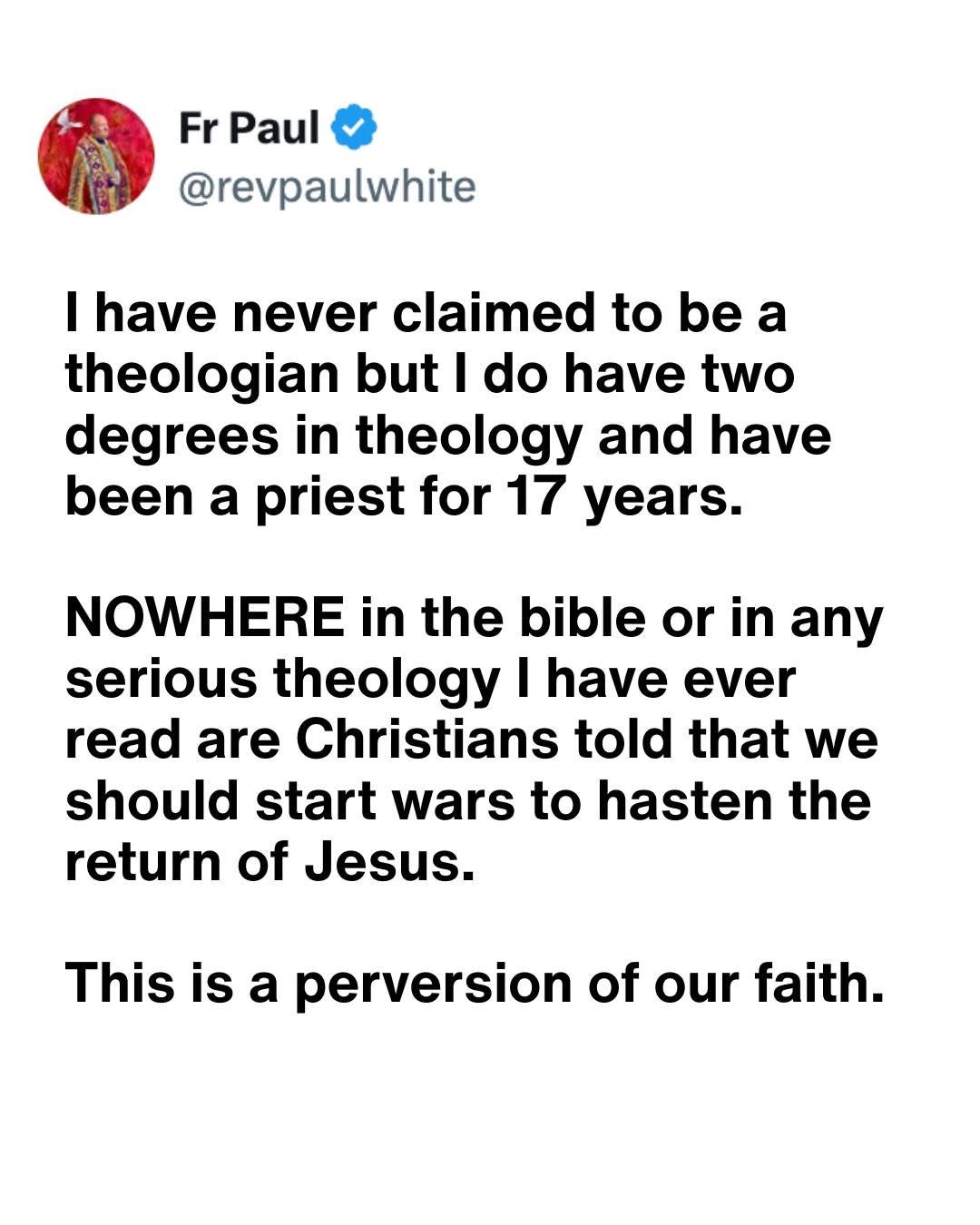
And here’s more sense from Paul White…


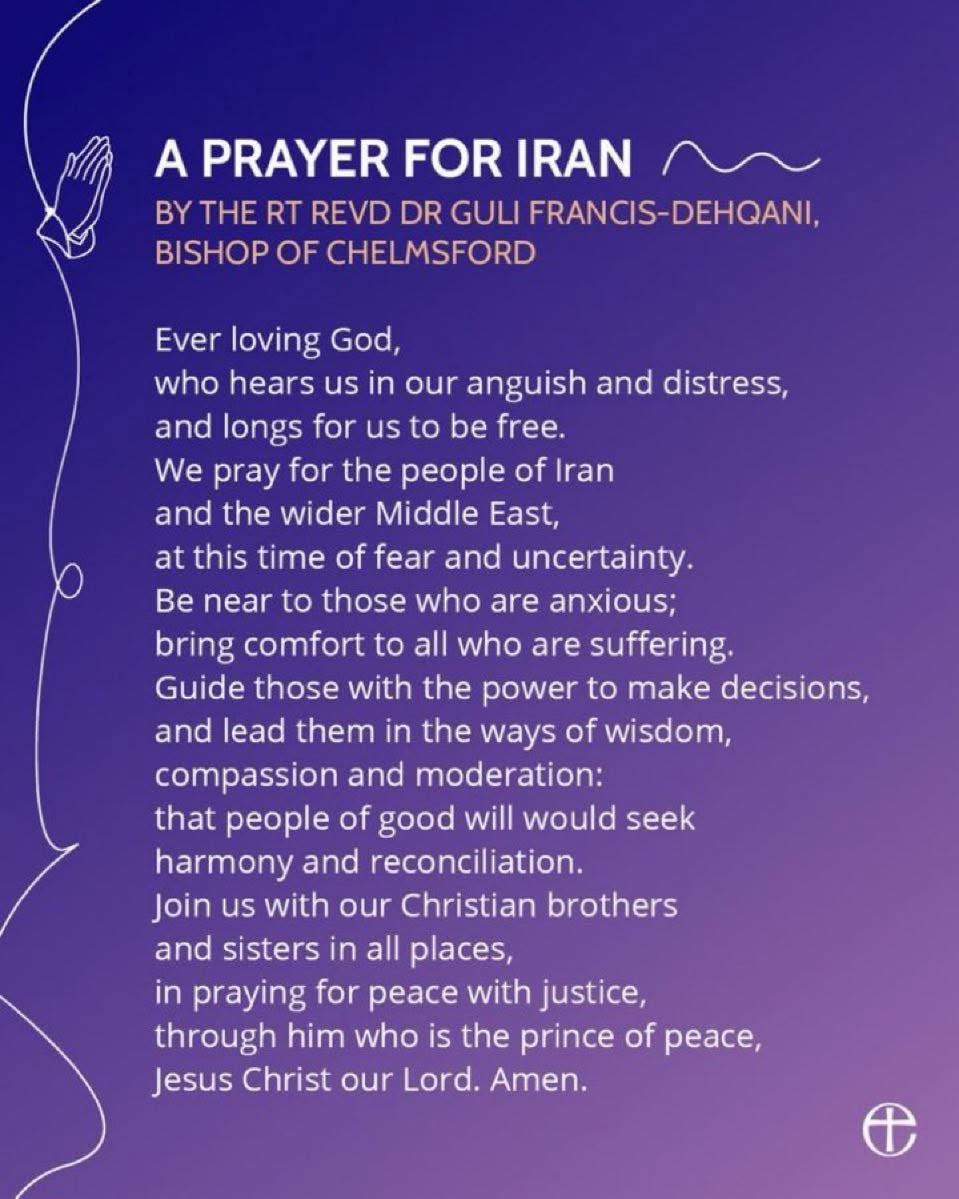
And here’s a useful prayer from an Anglican Bishop who is Iranian: I used to share ecumenical ministry in Oakham with her husband. 


Monday, 2 March 2026

What’s wrong with the world?


I commented last Sunday in worship that the world might change while we are in church. Last weekend I had to rewrite my sermon after I heard the news that bombs were flying about and the world suddenly changed as I heard the ten o clock news. In a world of social media and 24 hour news the events in the world are in our face. Growing up we heard the news once a day.  A generation before, you gathered round the radio. A stark example is families listening to Neville Chamberlain, the Prime Minister on 3 September 1939. Another was the death of Princess Diana in August 1997. I was about to share in my first ever service as a minister that morning. Another was 9/11. That was my first encounter with rolling news on the TV, the planes going into those towers played over and over again. My late Uncle George used to sit watching rolling news for hours. My Aunt would get exasperated - “turn it off George!” she’d yell. 

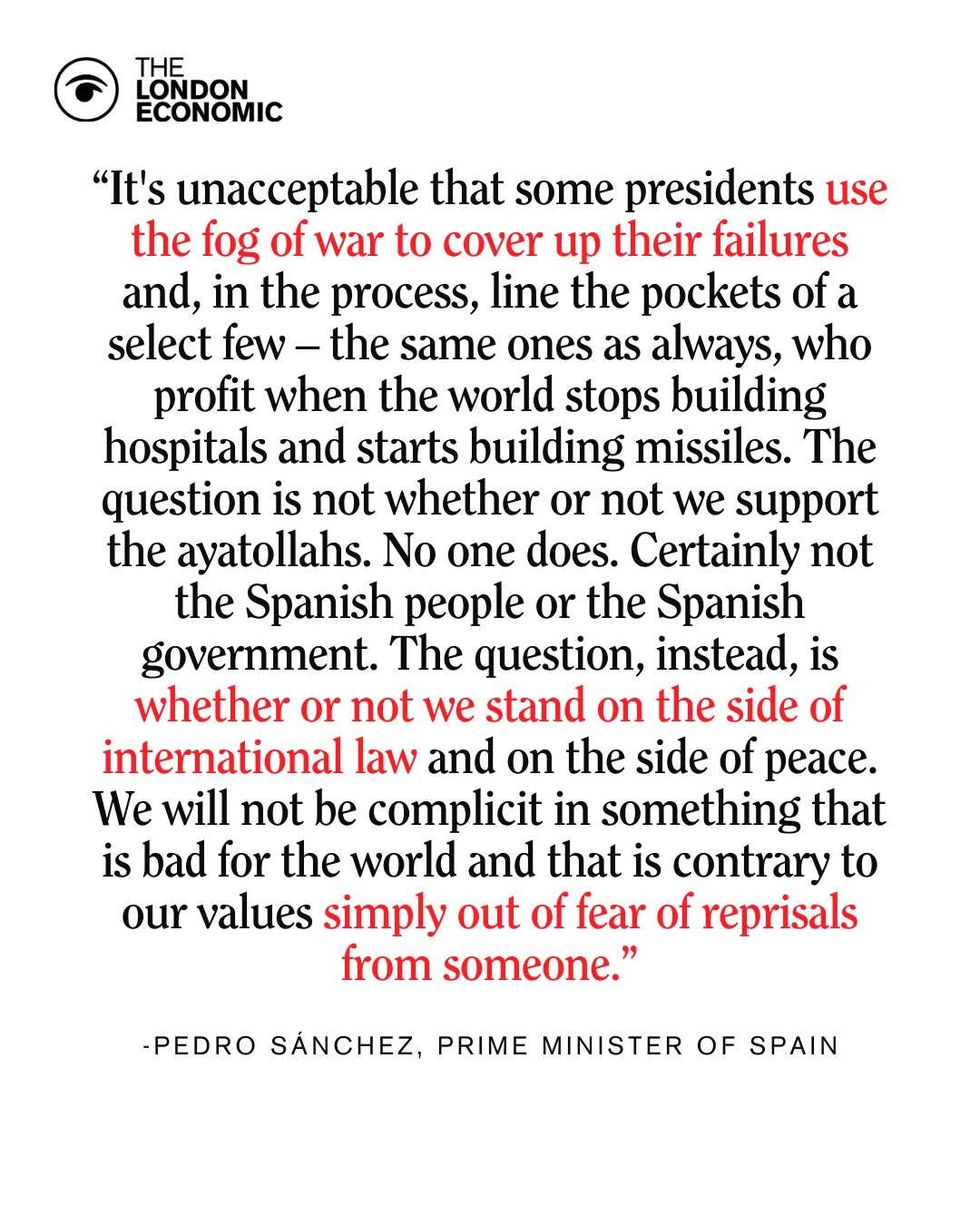
It’s easy to despair about the events that suddenly unfold around us as we feel helpless. I don’t like the tone coming out of America. “We are knocking the crap out of them” are not words an American President used to say until we had this one.


 I felt the need to pray tonight so as I’m on holiday but still at home until tomorrow as I had to wait for a parcel which should have come on Saturday I went and did  evensong in in our cathedral. It was sung beautifully by the choir of Barnard Castle School including the fab “if you love me” by Thomas Tallis.

Evensong allowed me space to think. Where is God in all this? Psalm 74, which was sung tonight, included a plea to God - “O God, how long shall the adversary reproach? Shall the enemy blaspheme thy name for ever? Why withdrawest thou thy hand, even thy right hand? Pluck it out of thy bosom! “They” want God to deal with the enemy, and I guess that prayer is being prayed by fundamentalists in America, and in Israel and in Iran and in Lebanon tonight. “The enemy” have no name, they are just there to be crushed because we are right and God is on our side. Even on Sunday in worship the music group as an opening song had one which said God “aids us against the enemy.”

We also tonight prayed “give peace in our time o Lord,  because there is none other the fighteth for us, but only thou O God.” And there was a weird reading from 1 Chronicles where the angel wanted to destroy a nation and God says “back off” there’s always grace!

I just wonder whether God is weeping tonight. We never learn. Yes, there are evil regimes in the world but you can’t just decide you’ll drop a bomb on them, can you? Clearly you can! 

In despair it’s so hard to see how we can make a difference in a war torn world which has people caught up in it suddenly in many different countries. What do we do?

We must pray for peace - that’s something we can do. What we can also do is try and make a difference where we are making good relationships and working for justice and respect where we are. It may mean we look at our behaviours and seek renewal from God.

The story is told that the Times at one point early in the 1900s posed this question to several prominent authors: “What’s wrong with the world today?” The well-known author G.K. Chesterton is said to have responded with a one-sentence essay: His witty reply is unnerving and unexpected. But it is also very biblical. We take responsibility. As the old song says “let there be peace on earth, and let it begin with me.”

_Dear Sir,
__I am.
_Yours, G.K. Chesterton.


Sunday, 1 March 2026

Searching for God

Lord, as we journey through March and the days of Lent,

give us the courage to follow you on your road.

When life is hard, give us direction.

When we face turmoil, give us peace.

When there is joy, help us celebrate. You give us life every day. We thank you.

Amen.


The theologian Rev AI says this:


Searching for God in a church setting is described as 

a deliberate, heart-felt pursuit rather than a passive experience, often involving active engagement with scripture, worship, and community. It is described as a journey that requires sincerity and the removal of distractions, with the promise that those who truly seek will find Him.  It has to be a wholehearted pursuit: The foundational encouragement is found in Jeremiah 29:13, which states "You will seek me and find me when you search for me with all your heart.”


A lot of people begin their search for spiritual meaning when life is hard or it has lots of questions. 


So I took my car to the garage for a service the other morning and I’d booked a courtesy carfor the day.

“We’ve only got a manual,” said the man.

That’s fine!” I said.


Except it wasn’t fine! I got a little way along the road and the thing stopped and my brain couldn’t work out what to do. The thing I needed to remember was to press the clutch in to change gear. I’ve driven an automatic for the last six years. To be able to move I had to quickly remember what to do I’m different circumstances. A bit scary when you need to do this as you are about to get on the motorway!


In life we need so often to dig deep into our resources when things suddenly need us to cope. I think that’s why we need to know the basics of how to live well. Spiritually when we can’t move, we need to remember what we so easily forget. That God loves us. That Jesus is with us. And… that we need to breathe in panic and think. I found shouting at the car “ WHY CANT I GET YOU TO START?”wasn’t helpful! I felt like Basil Fawlty and his car, bashing it with a tree branch giving it a thrashing because it wouldn’t go! May weknow we have the resources in us

to keep moving. And to move may need a search. 

So I want to think about two scenarios where God is yearned for. 


First, in desperation


We may ignore, but we can nowhere evade, the presence of God. The world is crowded with him,. He walks everywhere incognito.” So wrote C S Lewis, who had his own spiritual battles when life was hard especially in bereavement. 

When life suddenly throws us a huge curveball, we reach out for help. Let’s consider Psalm 121. What does the Psalmist say? I look to the hills - where does my help come from? My help comes from the Lord who made heaven and earth. Great change and bold journeys can only be undertaken by looking upward to the mountains. Not just any mountain, more likely Sinai or Horeb – mountains where God is close and gives information or can be perceived. Perhaps all high places were thought closer to God.

Certainly, the psalmist is clear: help comes from God. Deeply reassuring words – God does not sleep or slumber but watches over us in everything, in all our comings and goings, and protects us from falling, or from the sun that is too bright. We are reminded that God does this in part because He is the Creator of heaven and earth. The psalmist does not want us to think about other gods - either those of the ancient world which did not have our best interests at heart, or the other gods of our lives today - those other things we give priority too, rather than let our Creator take care of us.

The Psalm is a strong affirmation that the God who created all that is, even us, will be the one who provides help. Whether the road is easy or tough, God is there. Our help comes from the Lord. This is good and reassuring news that we do not have to do it alone. Such a perspective reminds us that we believe in a God who is all-powerful and all-knowing, an all-encompassing God who will not abandon ship at the first sign of trouble. For God is faithful.

So we remember those who today need the Lord to keep their going out and their coming in especially if life is tough from this time forth and forever more. God’s love can be found on the journey. 

Then secondly I think there are those searching for a new beginning. The spiritual quest is alive in these days. Let’s think about Nicodemus. 

Nicodemus meets Jesus on a rooftop in Jerusalem under cover of darkness. Nicodemus is one of the most powerful people in the Israel of his day. He is credentialed and respected. His identity is carefully curated out of law, privilege, institutional authority, and the opaqueness behind which the elite can hide. His coming in the dark has at least as much to do with his life, as it does with the time of day.

Nicodemus represents every rigid structure of power and exclusion, every institution that operates in the shadows, every system that tells people who belongs and who doesn't, who is worthy and who is not. Is he visiting because Jesus is a celebrity or is there something genuine in his search?

Some scholars believe that Nicodemus coming at night is him sneaking around in the shadows so others don’t see him. Another suggestion is that nighttime was when rabbis got together to wrestle with the tantalising theological questions of their day and he was respecting Jesus as someone with a proposition to listen to.

Jesus gives Nicodemus an offer of a wild and free, unbounded new life in the presence of God. Instead of another aspirational mountain to climb or yet another self-improvement programme, Jesus offers something far more radical inviting him into the light of a life blown open by the Spirit of God a complete make-over; a new start; a re-birth. “You need to be born from above. The wind blows where it chooses. This is what the Spirit does.”


And then we get John 3:16, a verse so familiar that we risk no longer hearing it. This is not God's love for the church, or the deserving, or the theologically correct. This is God's love for the whole gloriously complicated, achingly beautiful, deeply broken human family and all of creation.  Don’t we need to hear of that today?

At the end of this encounter, Nicodemus disappears … except he doesn’t. He crops up twice more. In John 7 he speaks up hesitatingly for Jesus on a point of law to the chief priests and Pharisees, and in John 19 he and Joseph of Arimathea ask Pilate for permission to take and care for the body of Christ after the crucifixion.

Has Nicodemus has come into the light? Has he taken a stand? Is he a believer? There’s no definitive answer.

Surely, we must never be afraid to bring your questions to Jesus, but must also be prepared to be changed by the answers. I suggest any church must be ready for people wanting to know more about Jesus. 

And what of us – how will we know God’s love in Jesus this week? Jesus tells us we must be born again. God tells us he is the help. Babies spend a lot of time resting, and more importantly perhaps, absorbing love and being embraced. Moreover, they can't do much. They are almost entirely helpless and powerless. They depend completely on someone else to have all their needs met. They have no resources which are not given to them by another. They also want quite simple things and communicate very simply and clearly to get them, crying out for what they need.

All of these things are challenging and counter-cultural for us. We seek to be independent and in control, we do anything to avoid feeling powerless, and sometimes we can't even identify our deepest needs to ourselves, let alone ask for them to be met. Yet, over and over again in scripture, this is what God demands for us.

In the Hebrew Bible, our Old Testament, to not understand who provides for you is idolatrous; to be faithful is to know that everything comes from God. And when Jesus says we need to be born again, this is the total vulnerability that is required to really follow Him and truly accept God's love. We need to be prepared to be still and just accept love. 

We need to acknowledge that we are powerless. And we need to cry out, with confidence that we will be heard in our need.

Remember the old story and how we get it wrong so often…


A storm descends on a small town, and the downpour soon turns into a flood. As the waters rise, the local preacher kneels in prayer on the church porch, surrounded by water. By and by, one of the townsfolk comes up the street in a canoe.

"Better get in, Preacher. The waters are rising fast."

"No," says the preacher. "I have faith in the Lord. He will save me."

Still the waters rise. Now the preacher is up on the balcony, wringing his hands in supplication, when another guy zips up in a motorboat.

"Come on, Preacher. We need to get you out of here. The levee's gonna break any minute."

Once again, the preacher is unmoved. "I shall remain. The Lord will see me through."

After a while the levee breaks, and the flood rushes over the church until only the steeple remains above water. The preacher is up there, clinging to the cross, when a helicopter descends out of the clouds, and a state trooper calls down to him through a megaphone.

"Grab the ladder, Preacher. This is your last chance."

Once again, the preacher insists the Lord will deliver him.

And, predictably, he drowns.

A pious man, the preacher goes to heaven. After a while he gets an interview with God, and he asks the Almighty, "Lord, I had unwavering faith in you. Why didn't you deliver me from that flood?"

God shakes his head. "What did you want from me? I sent you two boats and a helicopter."


To return to my prayer:


Lord, as we journey through March and the days of Lent,

give us the courage to follow you on your road.

When life is hard, give us direction.

When we face turmoil, give us peace.

When there is joy, help us celebrate. You give us life every day. We thank you.

Amen.