Sunday, 26 July 2026

Words of promise


Here’s my sermon from yesterday shared with three congregations in two services…​

Let me begin this sermon with a story. When was the last time you desperately needed to get a message to someone or get help? Like now! On Friday afternoonI went to visit Joan. After I’d done, I asked to be let out. The carers card wouldn’t open the door. The door was jammed. We suggested she ring the reception. Her phone had died. She then decided the best way to get the urgency of the need for someone’s attention was to bang hard on the door until someone heard it. Eventually a man in a North Yorkshire council shirt unjammed the door and we were out.      

Where was the last letter or e mail or text sent to you written I wonder? The last letter I got was from the hospital rearranging an appointment from November to January due to “unforeseen circumstances.” The last text was from our Circuit steward wanting to talk about the chapel in Finghall.

The last e mail received was the church notices for Allhallowgate, and the last whats app was checking whether we’ve fixed September staff meeting for the 1stor the 8th September because none of us could remember. The modern way of messaging wants an instant response from us. It’s fast and unrelenting.

When you went away on holiday for a couple of weeks, you used to find so much post on the mat you couldn’t open the front door, now it’s 300 plus e mails. And social media wants to grab our attention. Doom scrolling it’s called. My friend reposted a film of the Prime Minister and his Chancellor in a pub ranking pub snacks, that wasted twenty minutes of my life yesterday morning!

I wonder where messages sent to us were written and whether the writer knew our context and our life issues? 

Some of us have been studying Philippians through the summer. Paul is writing to the Philippian church to give encouragement from prison which he has been thrown into for being a rebel. I wonder what you would like your last words to be? What do you want to say upon your deathbed? Here are some funny famous last words from people in the past:

Apparently Oscar Wilde said: “Either that wallpaper goes, or I do!”And Humphrey Bogart said: “I knew I should never have switched from Whiskey to Martini!” But my personal favourite is Spike Milligan’s epitaph: “I told you I was ill!” That’s on his tombstone in the churchyard in Winchelsea in Sussex in Gaelic.

More seriously, if you thought you were about to die, who would you write to or call, and what would you say to them? I guess you would contact your loved ones, and use words that expressed your love for them, and offered them guidance and encouragement for the rest of their earthly lives.


The apostle Paul was in a similar situation when he wrote his letter to the Philippians. A letter we have been looking at in our services this month. Paul was under house arrest in Rome, in chains and under armed guard. He was shortly to be put on trial for his faith, and Paul knew the death penalty was a real possibility. So, unsurprisingly, Paul chose to write to his loved ones. Not to an individual or to his biological family, but to the Christians in Philippi, a church that Paul himself had founded. He calls the Philippians his “brothers & sisters”, and his “dear friends”. Paul tells them that he “loves them and longs for them”. They are his “joy” and his “crown”, or as we might put it today, they are his ‘pride and joy’. So as we look at chapter 4 of Philippians today, we are reading Paul’s last words to his loved ones. Words he most wanted them to hear. Words they should treasure, should they never see him again.

So what was Paul’s parting shot to the Philippians? What were the last words he wanted to leave them with? Rejoice in the Lord always. Be joyful in the Lord!   

 Let’s rejoice because our sins are forgiven. Our guilt was taken away at the Cross and we are members of God’s forgiven people.

We can also be joyful because God is at work in our lives today. Through every trial and temptation we face, God is with us by his Spirit, making us ever more like his Son. And we can even rejoice in the face of death. Christ’s resurrection means that death is not the end for us or a doorway to divine judgment. Rather, death is merely the threshold to everlasting life. Everlasting life in a world without disease and decay. A world where Jesus is undisputed king.

To rejoice in the Lord is not to put our head in the sand or deny the harsh realities of life. It is to know that whatever happens we are loved, we are saved and we have a glorious future ahead. A future that is ‘over’ and ‘above’ our present circumstances, held secure in Heaven for us. 

Maybe the task before each of us is that of ‘keeping the rumour of God alive’ In both our passages, the power of words is used to keep alive the story of faith, to keep telling the tales of grace, to keep spinning narratives of hope into being.

What gives us joy, what causes us to rejoice. Joy is not the same as being happy, as that can be transient. Joy is something deep within, something lasting. Paul knows the answer, it is finding our joy in Christ within. That unshakable knowledge that we are not alone. Paul had found the answer to worry by handing all his concerns over to God. The trick is to leave it there, the thing we do so often is to pick it up again and continue to worry about it. If we can manage to rejoice and not worry then Paul promises the peace of God to guard our hearts. If we are honest, joy and peace are often elusive. There are always things that will disturb our peace.

But Paul urges us to “Rejoice.”

The theologian Karl Barth once called joy a “continually defiant ‘Nevertheless’. I would suggest that this is the kind of joy which Paul is talking about because it isn’t based on circumstances. He was in a dire situation and he was writing to a church which was experiencing persecution. This joy and peace can’t be bought it can but it can be our reality. It requires a conscious effort on our part to remember who we are. In the face of all our problems and worries – ‘Nevertheless’ we are God’s children, loved by God, bought with a price by Jesus on the cross. Our hope is not just for the here and now, but for eternity. We have the promise of God that he is always with us, even in our darkest hours. As David wrote in the 23rd Psalm ‘even when we pass through the valley of the shadow of death’ God is with us, for to have any shadow there must be some sun, it is never truly dark if we have God with us.

Paul was at peace. He had no idea what he would be facing tomorrow, but he knew he wouldn’t face it alone. We don’t get peace by the bucket full or a lifetime supply. We get enough for the situation we are in. We need to be in constant touch with Christ within to know the joy and receive his peace.

Stanley Hauerwas has spent years irritating Christians by suggesting that the church’s task is not first to make the world run smoothly or reclaim cultural dominance, but simply to become the kind of community that remembers how to tell the truth about God in a forgetful age. I suspect there is something in that.

Things buried sometimes rise again in forms nobody expected.

And after all, Christianity began not with influence, strength, or cultural dominance, but with a crucified man outside the city walls. Abandoned by many. Mocked by empire. Followed by frightened disciples who barely understood what was happening. And yet Christians dare to believe that somehow, in that broken body, God was reconciling the world to himself.   Maybe we need to be a place where we find: A people gathered around Jesus. Prayer offered in fragile placesBread broken. Mercy practised. The lonely remembered. The dead buried. The gospel whispered stubbornly in a forgetful world.

Have we a joyful message to share with Boroughbridge and Bishop Monkton today? Are we sharing the Gospel with joy? Do we know there is one God and besides him there is no other? Is our message urgent and attractive? After a worship service, a mother with a fidgety seven-year-old boy told me how she finally got her son to sit still and be quiet. About halfway through the sermon, she leaned over and whispered, ‘If you don’t be quiet, the minister is going to lose his place and he will have to start his sermon all over again!’  It worked.” Let’s not have a message so boring people want it to end quickly!

In a prayer written when the Archbishop of Canterbury walked prior to her installation from London to Canterbury, by Student Chaplains at The Archbishop’s School, in Canterbury, they prayed that God might:“Strengthen us in faith, Grant us a heart like Christ’s, gentle, humble, and devoted to the truth, So that we may share the Gospel with joy.”

Friends, we have a gospel to proclaim. We also need to be attentive to what we are needing to hear. Let us share the Gospel with joy and have a message as urgent as hammering on a door to avoid being trapped in a care home for ever. Amen.


Sunday, 5 July 2026

Come unto me…


I love the promise of Jesus from Matthew 11 paraphrased by Eugene Peterson in the Message:


Are you tired? Worn out? Burned out on religion? Come to me. Get away with me and you’ll recover your life. I’ll show you how to take a real rest. Walk with me and work with me—watch how I do it. Learn the unforced rhythms of grace. I won’t lay anything heavy or ill-fitting on you. Keep company with me and you’ll learn to live freely and lightly.”


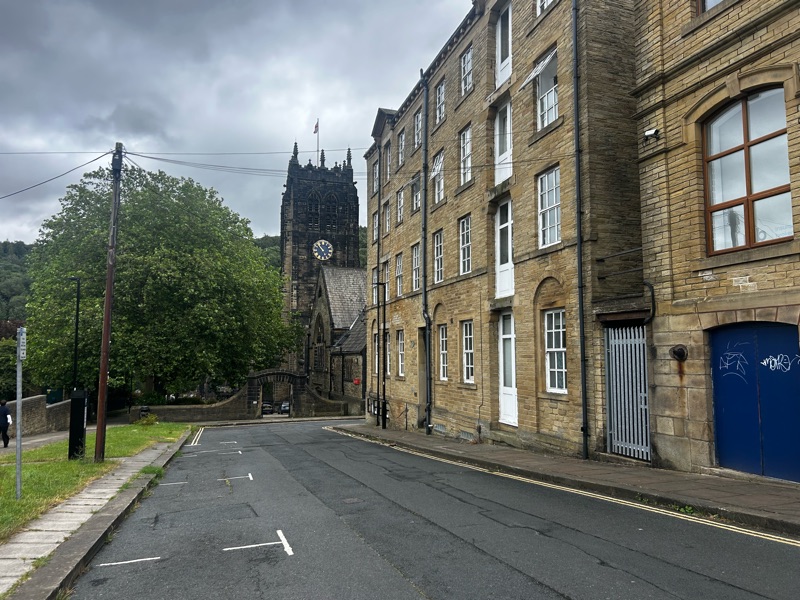
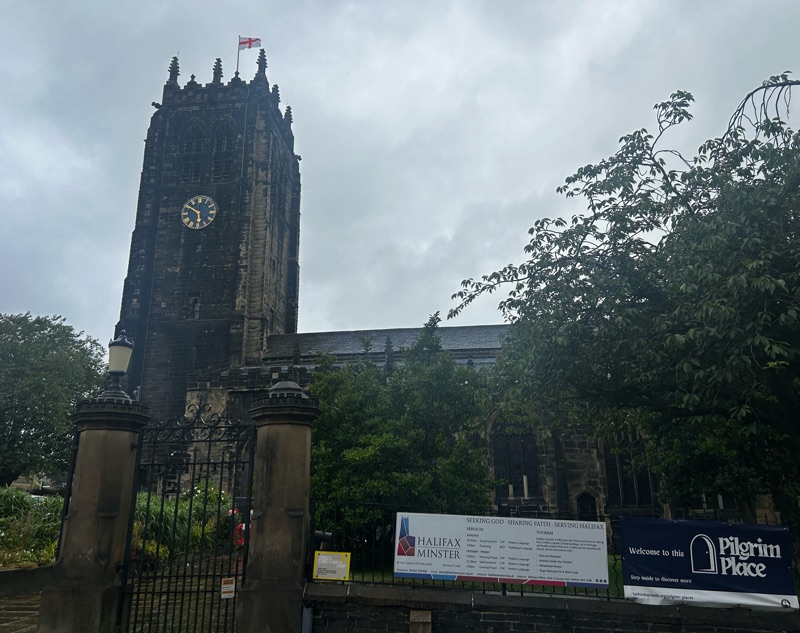
I know Jesus promise in today’s Gospel best in the King James Version: come unto me all ye that are heavy laden and I will give you rest. An alternative to stress! We were in Halifax yesterday as Lis was singing with a choir in Halifax Minster last night. Have you been to Halifax recently? They tell me the town has had roadworks in it for the last two years. You just go round and round trying to get anywhere, when you need to turn one way, you have to turn another.


I told some of you of my getting in the wrong lane driving in Leeds city centre the other week. I got a letter yesterday, apparently I drove on a bus lane so there’s a £70 fine to pay. Life is hard and we need to remember God is bigger than our stuff. We need to remain focused. 


This weekend, the United States of America is celebrating the 250th anniversary of the Declaration of Independence. Like Paul’s counter cultural writing and Jesus promise of rest when we are worn down, it was saying what is around cannot win. In 1776, the declaration launched a new nation with a document listing the 27 defects of a leader, our King,  who was “unfit to be the ruler of a free people” because he had the character of “a Tyrant”. George III’s catalogue of offences included “cutting off our trade with all parts of the world”, discouraging immigration, sending “swarms of officers to harass our people” and “transporting us beyond seas to be tried for pretended offenses”. A Guardian article says “Ring any bells?” 


“We hold these truths to be self-evident, that all men are created equal, that they are endowed by their Creator with certain unalienable Rights, that among these are Life, Liberty and the pursuit of Happiness.” Life, liberty, new possibilities… 


There are two Old Testament readings today I’ve not used. first reading from Genesis, Rebekah, who has been chosen to be Isaac’s wife, is asked a simple question: “Will you go with this man?”

And she answers, “I will.” She leaves behind everything she has ever known and steps into a future she cannot yet see.


In the Song of Songs, the beloved hears another invitation: “Arise, my love, my fair one, and come away.” Winter is over. A new season is beginning. Flowers are blooming. The world is coming alive. 


Both readings show moments of invitation. Neither is about coercion. Neither is about force. Both are about the freedom to say “Yes.” The freedom to respond to a call. The freedom to trust. The freedom to step into God’s future.


Jesus invites us to rest in him. 


So, what do we do? Simple, really. Jesus says, come to him. Take his yoke. Learn from him. And find rest for our souls. From Jesus. And only from Jesus. We can’t buy it. There is no pill that provides it. Rest for our souls can only be found through our faith, through our relationship with Jesus. Because we were created by God to be in a loving relationship with him. And God actually created our souls to be restless until they find their rest in God, as St. Augustine once famously said. 


But it is only when we realize that our souls are restless that we finally accept this invitation. So, the first step to find this rest is to realize how weary and burdened we are. If you are not weary, and are doing just fine without Jesus, this invitation probably won’t have much meaning. 


It reminds me of a book by Brennan Manning called “The Ragamuffin Gospel.” It is a book, he wrote in the forward, for a specific audience, the same audience Jesus’s invitation is for. The Ragamuffin Gospel, he wrote, is for:

The bedraggled, beat-up, and burnt-out. It is for the sorely burdened who are still shifting the heavy suitcase from one hand to the other. It is for the wobbly and weak-kneed who know they don’t have it altogether. It is for inconsistent, unsteady disciples whose cheese is falling off their cracker. It is for poor, weak, sinful men and women with hereditary faults and limited talents. It is for earthen vessels who shuffle along on feet of clay. It is for the bent and the bruised who feel that their lives are a grave disappointment to God. It is for smart people who know they are stupid and honest disciples who admit they are scallywags


The Ragamuffin Gospel, he concludes, is for anyone who has grown weary and discouraged along the Way. 


And that is exactly who this invitation from Jesus is for today. For all of us who have grown weary. For all of us who are carrying heavy burdens. For all of us who long for true rest for our souls. Come to me, Jesus says, all you that are weary and are carrying heavy burdens, and I will give you rest. 


But how does this happen? What happens when we come to Jesus? Well, he says, we take his yoke upon us. A yoke that is easy. A burden that is light. Paradoxically, we find rest for our souls by taking up his yoke. How is this possible? First, let’s remember what a yoke is, in this case. And it is not the yellow part of an egg! A yoke, by definition, is: “a wooden cross piece that is fastened over the necks of two animals and attached to the plow or cart that they are to pull.” This wooden cross piece helps the two animals to pull together. 


Take my yoke upon you, Jesus says. When we come to Jesus, and learn from him, we become yoked with him. He pulls with us. Jesus doesn’t take away whatever we are pulling, but we no longer have to pull it alone. Jesus pulls our burden with us. And he goes on to say that his yoke is easy. Which, in this case, really means “well-fitting.” His yoke is well-fitting. 


I like how the biblical scholar William Barclay explains what Jesus means by this:


“In Palestine,” he writes, “ox-yokes were made of wood; the ox was brought, and the measurements were taken. The yoke was then roughed out, and the ox was brought back to have the yoke tried on. The yoke was carefully adjusted, so that it would fit well, and not gall the neck of the patient beast. The yoke was tailor-made to fit the ox.”


So, think about that: the yoke that Jesus offers is tailor-made for us. Which means that it is not then a burden for us to live as Christ wants us to live. He doesn’t want it to be a burden. And he wants to be yoked with us. What a gift!

The person of faith says there is a different thing to write and share… one bishop in America has written this:


The renewal of the Church and our nation will not come through declarations alone.

It will come through disciples who remain in Christ’s love and bear the good fruit of holiness in families, parishes, communities and in their daily lives.

As we approach this great anniversary of our nation, we may be tempted towards nostalgia for the past or anxiety about the future. Today we choose something better: trust. Today we place the Church in the United States, and this nation we love, into the Sacred Heart of Jesus. Not because we have everything figured out, but because we know the One whose love endures forever. In his Heart, we find gratitude for the past, strength for the present, and hope for the future.


I was reminded it was the thirtieth anniversary of the IRA bomb exploding on a Saturday morning in Manchester City Centre the other week. I was living in Manchester 30 years ago and 15 June was the day after my second year in college ended. Friends were travelling home that morning crossing the city and some of us were going into the city but I think I overslept. I remember hearing the bang and saying it sounded like a bomb. We lived about three miles away. 


We made sure all of our friends were safe and that evening some of us went into the city - it was an eery experience. Absolute devastation but a miracle no one at all was killed. The bomb, which was the biggest device detonated in Great Britain since World War Two, exploded outside the Arndale Centre in the city centre.


While no-one died in the blast, more than 200 were hurt with many suffering life-changing injuries. An estimated 80,000 people were evacuated from the area.


The city rose again after a time with rebuilding. And the churches were at the heart of offering comfort and another narrative in the midst of fear. 


Let me end by quoting a huge theologian. 

Karl Barth once called joy a “continually defiant ‘Nevertheless’. I would suggest that this is the kind of joy which Paul is talking about because it isn’t based on circumstances. 


He was in a dire situation and he was writing to a church which was experiencing persecution. This joy and peace can be our reality

It requires a conscious effort on our part to remember who we are. In the face of all our problems and worries – ‘Nevertheless’ we are God’s children, loved by God, bought with a price by Jesus on the cross. Our hope is not just for the here and now, but for eternity. We have the promise of God that he is always with us, even in our darkest hours.


William Barclay tells of a legend about Jesus that may or may not be true, but is worth hearing:

“There is a legend,” he writes, “that [when Jesus was a carpenter], he made the best ox-yokes in all Galilee, and that from all over the country people came to him to buy his yokes. And, as the legend does, the carpenter Jesus had a sign over his shop that read, “My yoke fits well.” 


His yoke fits well. His burden is light. And when we take up this yoke, tailor-made for us, we begin to find rest for our souls. 


Then we will rejoice and be glad. We will know our blessings and we will be a confident people again. 


Are you tired? Worn out? Burned out on religion? Come to me. Get away with me and you’ll recover your life. I’ll show you how to take a real rest. Walk with me and work with me—watch how I do it. Learn the unforced rhythms of grace. I won’t lay anything heavy or ill-fitting on you. Keep company with me and you’ll learn to live freely and lightly.”