Sunday, 14 February 2021

Valentines Day


In the 1980’s the band Foreigner had a number one hit record called “I want to know what love is.” Today on Saint Valentines Day and preparing to enter the season of Lent on Wednesday, we are going to try and answer Foreigner’s question. 

On Valentines Day we remember love being all around us. There are all sorts of traditions and fun stuff in history about this day. Ladies - how about this. This weird thing was published in 1849. “On Valentines Day, take two bay leaves, sprinkle them with rose water and place them on your pillow in the evening. When you go to bed, put on a clean night gown turned inside out and lying down say softly: “ good Valentine, be kind to me, in dreams let me my true love see. “ then go to sleep as soon as you can in expectation of seeing your future husband in a dream! Weren’t Victorians a bit wacky?

We remember today love isn’t a word or just an emotion but something transformative. We don’t know much about St Valentine. One common story about him is that in one point of his life, as the former Bishop of Terni, Narnia and Amelia, he was arrested for trying to convert people to Christianity. The story is told that St. Valentine was imprisoned for marrying Christian couples and aiding Christians being persecuted by the emperor Claudius in Rome. Claudius became enraged and sentenced Valentine to death, commanding him to renounce his faith or be beaten with clubs and beheaded.

St. Valentine refused to renounce his faith and Christianity and was executed outside the Flaminian Gate on February 14.  While imprisoned he healed the jailer's blind daughter. On the day of his execution, he left the girl a note signed, "Your Valentine."

I want to know what love is. Well here’s three suggestions. 

1. Love is all around us. There’s another pop song. I think by Wet wet wet. I feel it in my fingers, I feel it in my toes. Today will see flowers and gifts and kindness and extravagant gestures, love is alive in Otley!


Imagine your loved ones face when you hand over a pork pie today! But love isn’t for a day it is for eternity. In the gospel reading for this Sunday, the Sunday before Lent. Jesus takes his closest friends up the mountain of transfiguration. They see the glory of God as Jesus dazzles in white before them. A voice describes him as Gods beloved. They are changed because they have encountered divine indescribable love that cannot ever be defeated right in front of them. So the bible teaches us that many waters cannot quench love, the bible teaches us that love never fails, the bible teaches us that perfect love casts out all fear, the bible teaches us that God is love. That’s how it is. We need no matter what life is bringing us at the moment to rest in that assurance. God doesn’t give us chocolates or roses to convince us, he gives of himself. We will discover as we journey through Lent what love is prepared to do. 

2. Love is something to do. The first epistle of John makes that clear. If we say we love God but hate our brother and sister we are lying about what we profess. People need to know that they are loved just as they are, and that we mean it. 

What is Christian love? It is genuine and it reaches out - it doesn’t wait for us to ask for it, it embraces us where we are. It is large enough to encompass all the worlds hurts and small enough to meet our every need. It is beyond price, it isn’t bought at a garage as an oh no I forgot. John says God’s love is perfected in us. If we are a community of love, whatever community we belong to this morning, that love brings responsibilities. 

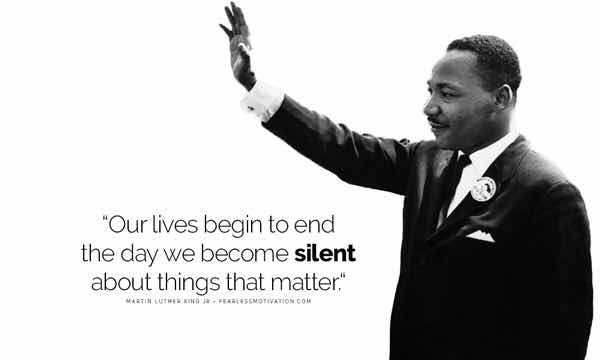
3. Then finally, love is transformative. I was reading a quote found last year in a handwritten note written by Dr Martin Luther King, it went up for auction at a price of 42,000 dollars. 


His words reminded me that Christ like love is radical. King wrote the note after someone asked him what he believed was the meaning of love.  The note reads, "Love is the greatest force in the universe. It is the heartbeat of the moral cosmos. He who loves is a participant in the being of God." There’s an old hymn which talks about losing the love of self and finding the love of God. Love changes everything - how many words of pop songs are hidden in this blog post? Jesus we will discover at the end of our Lenten journey will show us what love is: love gives of itself, it is sacrificial, forgiving, costly, it always has the last word. To be dazzled by its greatness and to be in its presence changes us and the world. 

Today we celebrate love, real love, the love of those around us, the love that puts itself out for us, the love of God in Jesus. We remember that God so loved that he gave, and that generosity is ours to have and share and our being the people of faith in this time is to worship him and to share him whose nature and whose name is love. 


Tuesday, 9 February 2021

Looking up...


Passage for reflection: Mark 9: 2 - 9

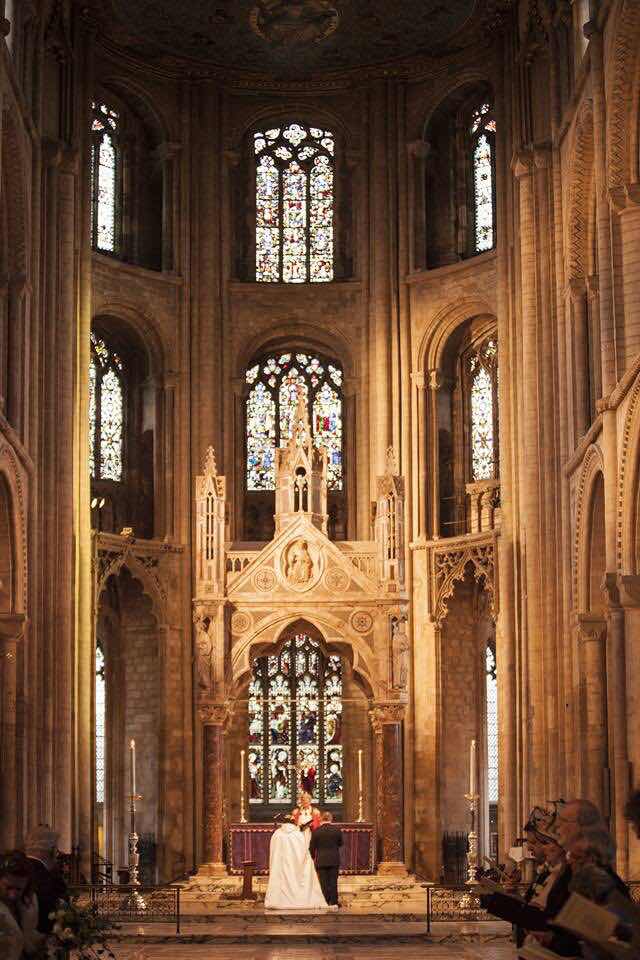
Are there times we need to look up so we don’t miss something special? I’ve been remembering our wedding service. We will have been married four years on March 3. We got married in the bride’s church as is traditional - Peterborough Cathedral. Wow! 

I remember holding it together until Canon Jonathan invited us to move with him to the high altar for the blessing of our marriage. I looked up at the vastness of that part of the cathedral and little us standing there surrounded as we set out on a new journey by the love of God broader than the measure of man’s mind as the hymn writer puts it. We have a fabulous picture of this scene - it reminds me when I look at it that we are held no matter what, by a divine power and presence far beyond that which we can understand. 

Sometimes faith is about entering a mystery and gasping at it. 


Don’t we need to look up to see what the glory of God is really about? Don’t we need intentional times of reorientation to learn again who we worship? Think about a time you didn’t look up. You can miss something vital or you can come a cropper. 

I’m watching Line of Duty on the I player. It’s pretty gripping. But I have a habit of playing with my phone while watching TV so I can easily miss something crucial in the plot if I haven’t been looking up at the set. Thank God we can now wind programmes back! 

In our Grewelthorpe LEP church they have a problem that the vicar and the Methodist minister have the same Christian name. Meetings on zoom mean you have to concentrate hard. But it’s easy to drift off, look out the window, evict the cat from the study, be writing when suddenly the chair of the meeting says “what do you think Ian?” and both of us look up suddenly to see which one of us she wants! 

I remember going to London for meetings when I did a Connexional job. How dangerous were people who walked along crowded streets checking their phones rather than watching for the kerb or people coming towards them? 

The Gospel reading for this Sunday, the Sunday before Lent, is all about looking up. Jesus takes his closest disciples up a mountain, and there he is transfigured before them. 

They are overwhelmed by the experience. It is good to be there. Moses and Elijah appear then a cloud which overshadows them in which a voice says about Jesus being God’s beloved Son and it tells them to listen to him. Then they are there with just Jesus before coming back down the mountain. They don’t say anything to anyone about their day out but I can imagine it became, like our standing at the cathedral high altar, a memory to go back to again and again to give them strength. 


Two things strike me about this mountain top looking up experience.

One, the need for us to rediscover a bit of awe in our faith and in our worship. Those three men saw a glimpse of the glory of God in Jesus. This Jesus was to be worshipped. He wasn’t just a fine preacher and healer worth following. He was God. People ask me what I’m missing most because of this pandemic. It is being in the holy space, the place set apart for this looking up ritual I need. Yes zoom worship works and is meeting a need, but I need to physically go up the mountain, gaze on Jesus and be overwhelmed at his presence in my life. Maybe our worship has become too cosy. Maybe we need to worship the Lord in the beauty of holiness again. And maybe we need to just expect the divine to envelope us when we enter that which is beyond us. Discuss! 


Then second, I think we need to remember where the lectionary puts this story. It comes just before Lent. 

Certainly, the location of this episode in the gospel narrative suggests we are to make some connection between what is unfolding on the mountain and what is about to happen in Jerusalem. Some church traditions hold that the Transfiguration occurred forty days before the Crucifixion. The glimpse of Christ’s glory makes it clear that something else is going on as that narrative unfolds, as Jesus becomes, apparently, yet another victim of the irresistible might of Empire. His glory, power, transfigured self will have the last word. 

Peter, James and John are given a revelation of who Jesus really is. We see quite clearly that Jesus is on a level with God himself. So, we, just before the contemplative and sometimes difficult season of Lent, are given a glimpse of who Jesus really is, resurrected, ascended, glorified. The disciples could not stay there but neither did they leave the mountain. They took it with them. It is what would carry them through the passion and crucifixion to the resurrection.

An Orthodox prayer puts it well:

Thou wast transfigured on the Mount, O Christ God,

Revealing Thy glory to Thy disciples as far as they could bear it. 

Let Thine everlasting Light shine upon us sinners, 

Through the prayers of the Theotokos, O Giver of Light, glory to Thee!


May we be ready to climb the mountain before we do Lent. May we worship in awe and in fear of what is above us. May we look up a bit more to cope with the world back down. And most of all, let’s expect a lot more. 


A journey up the mountain of transfiguration can bring us perspective. We have to get on with life in the world but we do so with an eye on things above to hold us and remind us. Knowing Jesus is God we can wow at and yet still empties himself of all but love, must leave us without words but held no matter what. Worry looks around, faith looks up...


Monday, 1 February 2021

Have you not heard?


Passage for reflection: Isaiah 40: 21 - 31 

“I believe in the sun even when it is not shining. And I believe in love, even when there’s no one there. And I believe in God, even when he is silent.” 

These words were written by a Jew trying to hang on during World War II. It was a desperate and dangerous time to be Jewish and the unknown person who wrote these words was proclaiming a word of hope where hope seemed dead.

These words could have been written or spoken by the prophet Isaiah trying to offer a word of hope to people who were desperate and whose faith was in trouble. Jerusalem was razed and sacked by Babylonian soldiers in 587 BC. 

The temple was destroyed, and the leaders of the community were taken to Babylon. The words of the prophet Isaiah, “Even youths will faint and be weary and the young will fall exhausted” may have reminded them of the forced march to Babylon.

Their faith was in danger. It felt as if God had deserted them, but the prophet tried to remind them of what they knew but seemed to be forgetting. “Have you not known? Have you not heard? The Lord is the everlasting God, the Creator of the ends of the earth. He does not faint or grow weary; his understanding is unsearchable. He gives power to the faint and strengthens the powerless.” “Even youths will faint and be weary and the young will fall exhausted;” but then comes a word of hope and inspiration, “But those who wait for the Lord shall renew their strength, they shall mount up with wings like eagles, they shall run and not be weary, they shall walk and not faint.”


The people of Israel had to adjust their understanding of what God was up to when the Babylonians took them into exile. They felt abandoned by God. But the prophet asks them to remember and reframe their experience, so they can live in confidence and hope as they will face restoration and more change. 

These words I read are helpful: 
“Isaiah relays the good news that the end of exile is in sight, although the people cannot see it yet.” They have not yet been told that they will be free to return home and to make new choices for their lives. Isaiah reminds them of experiences they have known and can build on: God is powerful and gracious. God who created still holds creation. God can free them and bring them home. ... The prophet asks the people of God to remember and ponder what they once knew about God’s action in their lives and to reconsider how they build on their trust in God.”


 We need to look beyond what we think we see, to what truly is, and what can be. We need to go beyond the chaos of the present, to step aside and to spend time with God building that relationship. We are reminded to open our eyes and our hearts to what only God can offer. There are times when we need to be intentional about this, but there are also unexpected times when we can experience God’s presence and promise in ways we didn’t imagine.

It’s sometimes about going through the motions even when we think nothing will happen. On days we don’t feel like praying, we need to pray more, on days we don’t want to read the Bible, we need to open it more, on days when we are too weary to go to that zoom service or make that phone call to someone in need, we need to be made aware our being with others even on a screen and down a phone line matters. For me attending evensong in a c of e church reminds me of the importance of regular time finding God. For me hearing and sharing in the same words day after day, words that have been said for centuries, gives me space to think of other than my weariness and problems. Working hard to find God when we think there is no God can be a transformative moment. 

For God breaks into his world in ways we do not expect and in his time, the right time. And for now, we are called to be his people, getting on with it in expectation. 


Once there was a town where one day all the clocks stopped working. No matter what the people tried, they could not get them going again. Though many in the village were handy, no one understood the inner workings of the springs and dials, the gears and pendulum. Because they were off the beaten path, many years passed until a traveller who entered the village was found to be a watchmaker.

Quickly the town became abuzz, each resident bringing their clocks to him and lined up, hoping this stranger could fix them. But each one went away, disappointed. After many long winters and wet summers, their clocks were too rusted to repair.

Yet, among all the heartbroken residents, there was one person who did get good news – the watchmaker could fix her clock. Soon everyone gathered around this lucky time teller, asking her secret. Why could the watchmaker salvage her clock and no other? “When our clocks stopped, I didn’t know what else to do,” the woman said, “so I kept winding my clock each morning as if it worked.” 

Isaiah is telling us that waiting, also translated hoping, in the Lord is when we expect His promises to strengthen us and empower us rise above the distractions and difficulties of this life. We must trust in God. Without trusting that He will never fail, we become weak and disheartened thus plunging us deeper toward despair. Patiently expecting his deliverance is our remedy from the afflictions and tribulations of this earth. 

Remember Longfellow on Christmas Day hearing the church bells ringing? 

On Christmas Day, 1863, the sound of bells ringing moved him to write, spurred on by his sorrow at the state of humankind:

And in despair, I bowed my head:“There is no peace on earth,” I said, for hate is strong and mocks the song of peace on earth, good will to men.”        

And yet hope won out as he penned the fourth verse:

Then pealed the bells more loud and deep: “God is not dead, nor doth not sleep;The wrong shall fail, the right prevail, with peace on earth, good will to men.”


Just as the eagle soars above the mountains we too can experience freedom to fly higher than conflict, aggravations, negativity and strife. God can and will strengthen us, shift the wind in our favour, and give us the spiritual vision needed to understand from a different position. We must worship vertically and expect help from above. Too often our worship and hope are affected by horizontal circumstances that dampen our praise and shorten our patience. Look up and allow your strength to be renewed, ascend to new heights with wings like eagles, and we will see God at work again. 

“I believe in the sun even when it is not shining.
And I believe in love, even when there’s no one there. And I believe in God, even when God is silent.”

This passage has always been important to me. Sometimes we just need a reminder we don’t face stuff alone. I remember preaching on it at my testimony service in 1999 at Heaton Moor Methodist Church in Stockport prior to ordination. My congregation in Mossley had taught me this hymn. I still love it.

Lord I come to you
Let my heart be changed renewed
Flowing from the grace that
I have found in you
And lord I have come to know
The weakness I see in me
Will be stripped away
By the power of your love


Hold me close let your love surround me
Bring me near draw me to your side
And as I wait
I’ll rise up like an eagle
And I will soar with you
Your spirit leads me on
By the power of your love.

Lord unveil my eyes
Let me see you face to face
The knowledge of your love
As you live in me
Lord renew my mind
As your will unfolds in my life
In living everyday
By the power of your love.


Tuesday, 26 January 2021

100,000...


Passage for reflection: Luke 2: 22 - 40

I write this reflection on Tuesday evening, 26 January, the day when this country has passed the 100,000 death toll from COVID 19. We’ve watched the number of people who’ve lost their lives go up dramatically over the past few weeks. 

Today I invite you as you read this to pause and remember all those who have tragically been taken from loved ones since this awful virus came into our lives almost a year ago. The Prime Minister answering a question in his press conference on Tuesday referred to a “thesaurus of misery” - there are only inadequate words to describe such a point in our shared humanity. We stand with those who mourn and with those who today stand helplessly as others will soon slip away.

One day last year, the daily total of fatalities was the same as the entire membership of The Fens Circuit where we were living then. I was horrified by that. But 100,000, that’s so many people. The old Wembley stadium I think could hold 100,000 people. Imagine that with everyone gone. While I was writing this, Lis was watching a harrowing Panorama programme in which some bereaved families told their story. I was glad to be writing. It was too hard to watch. 


This third period of lockdown is by far the hardest. We are all tired as this has been going on for such a long time now. We have no idea when as someone in a meeting I was in said “we will be allowed out to play.” The new variant is scary. Some who have to go out to work are frightened having to be out there. Those of us who are shielding have cabin fever. Our church buildings remain closed. A vicar I was speaking to thought it might be June when we might just be able to go back into our churches. Some of us are all zoomed out. Four zoom meetings in a day leaves us with migraines. Home schooling youngsters is a challenge. Some people are finding their mental health is suffering. We can’t do the things we want to. We shout at God “how long, O Lord? How long?” I’m glad now dates it will be better aren’t being bandied about. 

But we do wait for this to begin to be better. We hold on to the hope of a vaccine which is the only way out of this. We wait for some restrictions to be eased to what that does to cases, to hospitals and to the number of lost lives. COVID affects every decision, almost every conversation and stifles planning. And yet in the middle of all of this we are called to wait and hold on and believe this soon will pass. We wait for a better future. 2022! I’m on sabbatical in just over a year’s time! I want to begin to make plans but it is too risky to do that yet. 

Waiting isn’t easy, but sometimes it’s what we are called to do. This Sunday the Church marks Candlemas: the presentation of Christ in the Temple, and the character of Simeon. 

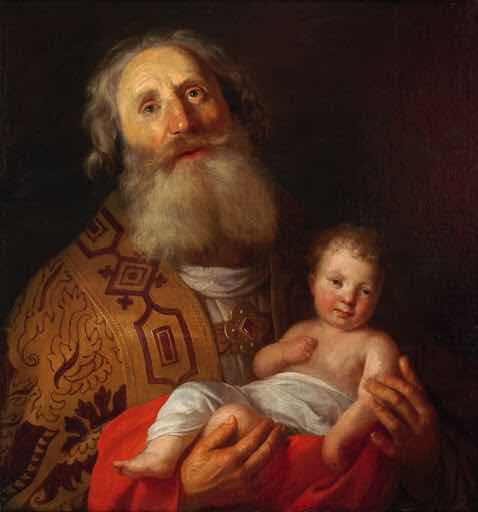
The story in Luke 2 is the lovely end of the Christmas story. Simeon was an elderly man who spent every day and every night waiting. He waited for the consolation of Israel. He believed in a different future. He knew that one day in God’s time, God would break into his world. Mary and Joseph brought the infant Jesus into the temple to be circumcised and presented before God, and they came for Mary to be purified after giving birth. We used to call it “churching” of women. I had a high church vicar colleague in my first appointment, Father Lindsay, who still offered that in his church notices! 

Simeon took the child Jesus in his arms, and prayed the beautiful prayer we call the Nunc Dimitis. Who was this child? A light for revelation to Gentiles and the glory of God’s people Israel. Simeon’s eyes had seen the salvation God had prepared for his people right there in his arms. 

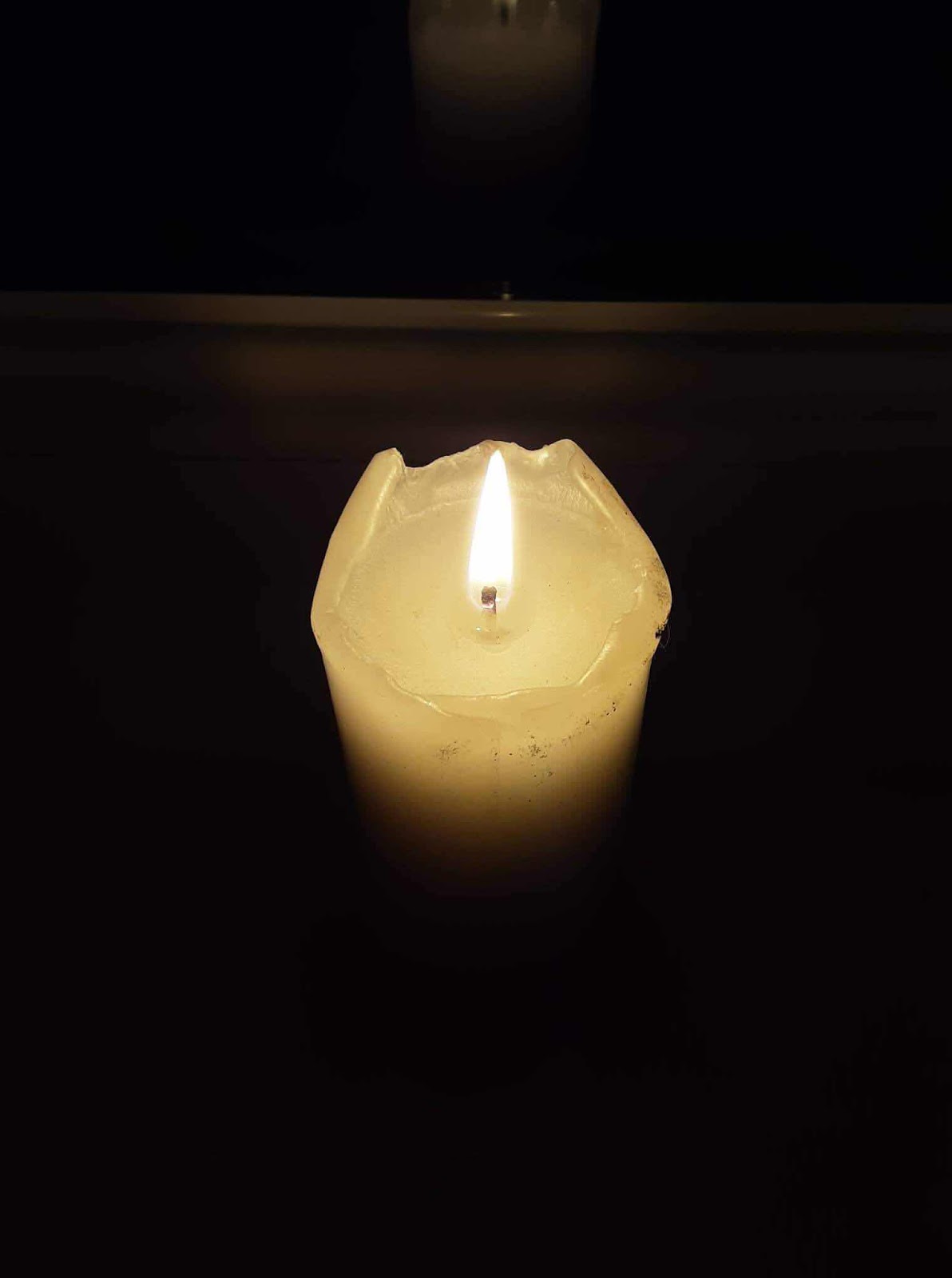
He had waited for years for this moment. He could now depart in peace for what he had waited for patiently had come to be. I imagine for the rest of his old age he remembered that moment. I imagine every day he lit a candle and quietly thanked God the long awaited future he yearned for was now a reality. I imagine during his waiting, others would have told him he was quite mad. If something doesn’t happen quickly, we easily give up on it. Waiting with patience is tough as we accept delay and uncertainty as we hold on but in the waiting we believe a better day is coming. 


100,000 plus deaths from a dreadful virus is a cause to lament and mourn. But amid the tears and shock there is hope. Why? Because God is here with us in the waiting and God will lead us from here to where he wants us to be. Perhaps there will be a better appreciation now that life is precious. Perhaps the good things that have brought community together will not end when this is a mere memory. Perhaps... 


I take comfort from Simeon. The quest for God ends with God in our arms. The presence of God enables us to find peace. The consolation we long for will in the end save us. And when we hurt, God hurts. That’s the point of the cross. 

And you know what? It’s okay while we wait to cry and shout a bit! If we aren’t moved by loss and tragedy we aren’t human. 

A prayer by Pete Greig:

One hundred thousand deaths. How do I even compute a stat like that?
~ Kyrie Eleison. 
A story told 100,000 times of loved-ones lost; prayers unanswered; hospitals too full; funerals too empty; millions of broken hearts. 
~ Kyrie Eleison
God help me the day I become numb to this tragedy. 
~ Kyrie Eleison
Wake my zombie heart before these stories become stats. 
~ Kyrie Eleison
Shake my selfish senses with the urgency of this hour
~ Kyrie Eleison
Take my despair and make it a prayer; the necessary lament of love. 
~ Kyrie Eleison


Wednesday, 20 January 2021

Where was your clincher young man?


Passage for reflection: John 3: 16 - 21

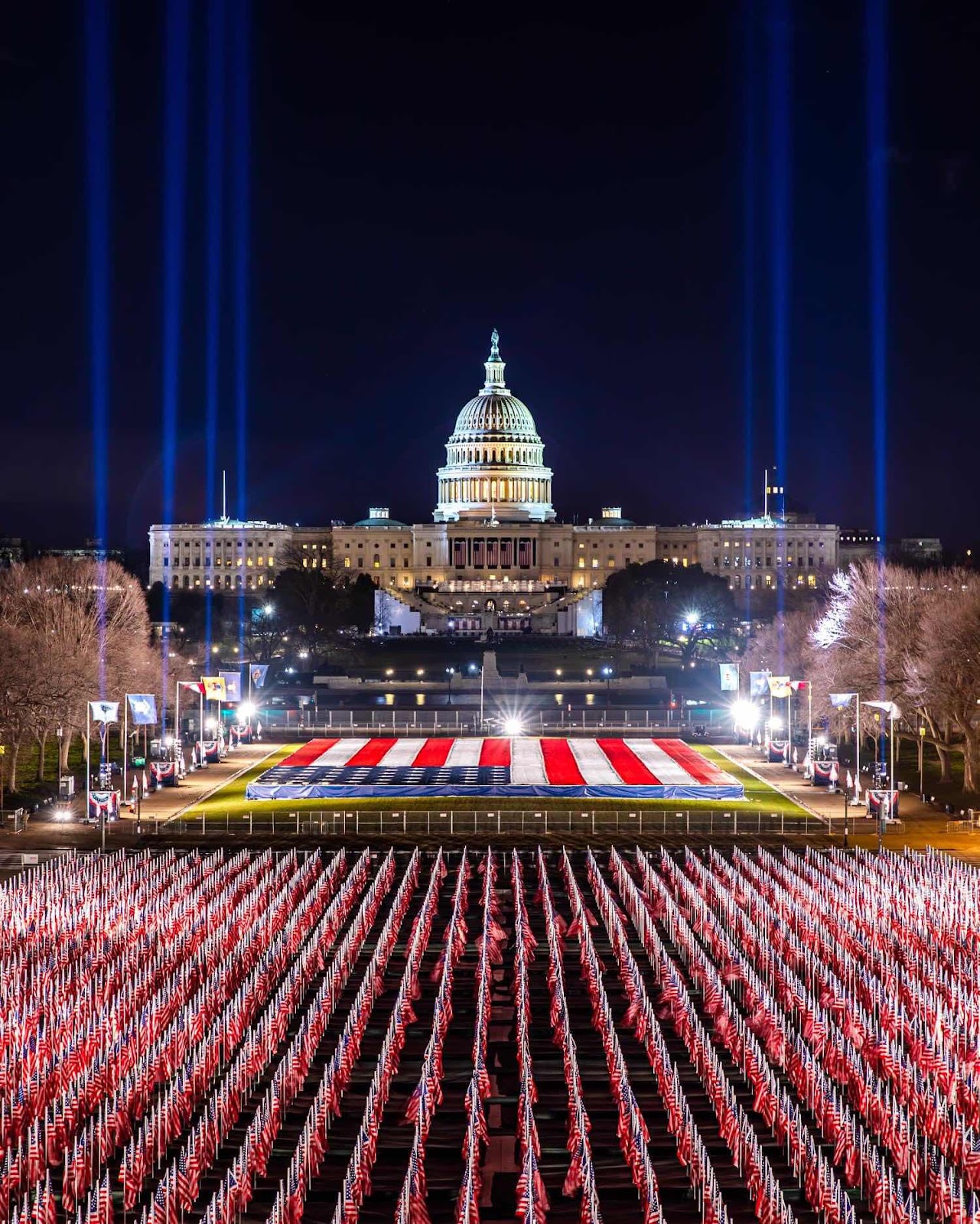
This Sunday will be the first Sunday after a new American President has been inaugurated. The rumours are that President Biden will, in his first few days, sign a lot of executive orders, setting out his stall for the way the country, and therefore how its influence on the world will go. It’s time to put the promises and words of a campaign into practice. We pray for Joe Biden and for Kamala Harris. Their task will not be easy. The last four years have been extraordinary whether you supported Donald Trump or not. 


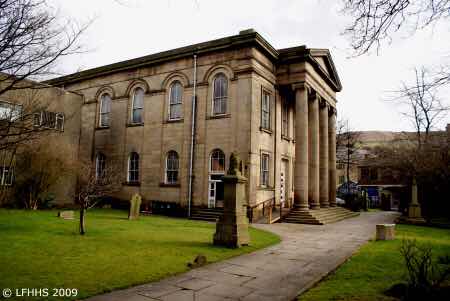
When we were in college, some Sundays our services would be assessed by the college staff. Our beloved principal, Graham Slater, would come to the service to hear us. We would be planned miles away from college in delightful places like Leigh and Bacup and the fabulous Longholme in Rawtenstall. We thought “he will never come all this way.” But as we came out of the vestry, there he sat. He used to sit the whole service with his eyes shut like he was asleep but he wasn’t. A few days after the service he would summon us for his crit on it. He’d remembered every word. He was particularly concerned with how a sermon would end, so he would ask “where was your clincher, young man?”

In other words, what are they going to do about the Gospel you’ve just shared with them? It’s about turning words into actions. 


The third chapter of John’s Gospel has in it the most well known verse of the Bible.

“For God so loved the world that he gave his only Son, that whoever believes in him will not perish but have eternal life.”

Martin Luther called that verse “the Gospel in miniature.” If the heart of the Gospel is that God loves, God gives, of his best, to us wretched creatures now and also a promise of life to come, can we really just hear that verse and do nothing about it? 

A preacher was appointed to the same church three weeks running. He preached the sermon on week one, then the next week he preached the same one again. Then on the third week as he began to preach the same one yet again, an elderly steward stood up and said “excuse me, we’ve heard this three weeks running. Can’t we have a new sermon?”
To which the preacher replied:
“No, I’m going to keep preaching this one until you live it.”

“Where was your clincher, young man?”

The clincher is challenging each other to live out what we believe again. The clincher is challenging each other to make love and generosity live. The clincher is to be so in action that people see our faith matters to us. 

Joe Biden called people to honour a day of service this week but more than that in the week we remember another Martin Luther, Dr Martin Luther King, in a Facebook post he said this:

“Dr. Martin Luther King, Jr.’s words remind us that darkness cannot drive out darkness and hate cannot drive out hate — only light and love can. As we seek to overcome this season of darkness in America, let us choose love and light and begin to heal — together.”


What difference will what you believe or profess make this week where you are? It isn’t enough to say God so loved, we have to be committed to a radical way where love is shown and wins. The rest of our passage hints we will be judged on whether that happens. So how are we really doing? How about this week we have a commitment to make a difference to somebody’s life, no matter how small. It might be a phone call or writing a card or offering to get some shopping. It might be saying we will help with something in church that nobody else wants to do, it might be to say thank you more and moan less. How do we show people our deeds are done in God? I will leave sorting out the world to President Biden and others. I will be committed to living the Gospel where I am.  

“And this is the judgement, that the light has come into the world, and people loved darkness rather than light because their deeds were evil. For all who do evil hate the light and do not come to the light, so that their deeds may not be exposed. But those who do what is true come to the light, so that it may be clearly seen that their deeds have been done in God.”  


"The Hill We Climb" 

When day comes we ask ourselves where can we find light in this never-ending shade,

The loss we carry a sea we must wade. 

We have braved the belly of the beast.

We have learned that quiet isn't always peace,

And the norms and notions of what just is isn't always justice.

And yet, the dawn is hours before we knew it.
Somehow we do it.

Somehow we have weathered and witnessed a nation that isn't broken but simply unfinished.

We, the successors of a country in a time where a skinny black girl descended from slaves

And raised by a single mother can dream of becoming president, 

Only to find herself reciting for one.

And yes, we are far from polished, far from pristine

But that doesn't mean we are striving to form a union that is perfect.

We are striving to forge our union with purpose,

To compose a country committed to all cultures, colors, characters and conditions of man.

And so we lift our gazes, not to what stands between us, but what stands before us.

We close the divide because we know to put our future first

We must first put our differences aside.

We lay down our arms so we can reach out our arms to one another.

We seek harm to none and harmony for all.

Let the globe, if nothing else, say this is true,

That even as we grieved, we grew.

That even as we hurt, we hoped. 

That even as we tired, we tried that we will forever be tied together. 

Victorious! 

Not because we will never again know defeat, but because we will never again sow division. 

Scripture tells us to envision that everyone shall sit under their own vine and fig tree,

And no one shall make them afraid. 

If we are to live up to our own time, then victory won't lighten in the blade, 

But in all of the bridges we have made. 

That is the promise to glade, the hill be climbed. 

If only we dare it because being American is more than a pride we inherit. 

It is the past we step into and how we repair it. 

We have seen a force that would shatter our nation rather than share it,

Would destroy our country if it meant delaying democracy. 

And this effort very nearly succeeded. 

But while democracy can be periodically delayed, 

It can never be permanently defeated. 

In this truth, in this faith we trust. 

For while we had our eyes on the future, history has its eyes on us. 

This is the era of just redemption. We feared it at its inception. 

We did not feel prepared to be the heirs of such a terrifying hour, 

But within it, we found the power to author a new chapter.

To offer hope and laughter to ourselves. 

So, while once we asked how could we possibly prevail over catastrophe, 

Now we assert, how could catastrophe possibly prevail over us? 

We will not march back to what was, but move to what shall be. 

A country that is bruised, but whole. 

Benevolent, but bold. Fierce and free.

We will not be turned around or interrupted by intimidation,

Because we know our inaction and inertia will be the inheritance of the next generation. 

Our blunders become their burdens. 

But one thing is certain, if we merge mercy with might and might with the right,

Then love becomes our legacy and change our children's birthright. 

So let us leave behind the country better than the one we were left,

With every breath in my bronze-pounded chest, 

We will raise this wounded world into a wondrous one.

We will rise from the gold limbed hills of the west. 

We will rise from the windswept northeast where our forefathers first realized revolution. 

We will rise from the lake rimmed cities of midwestern states. 

We will rise from the sunbaked south. 

We will rebuild, reconcile, and recover in every known nook of our nation

And every corner called our country. 

Our people diverse and beautiful will emerge battered and beautiful. 

When day comes, we step out of the shade aflame and unafraid. 

A new dawn looms as we free it,

For there is always light, if only we are brave enough to see it, 

If only we are brave enough to be it.

Amanda Gorman


Tuesday, 12 January 2021

Come and see...


Passage for reflection: John 1: 35 - 51

This Sunday, I was due to make my last debut leading worship in my new appointment. St James and The Methodist Church in Grewelthorpe have had to wait until January to have me and now we’ve had to revert to a Zoom service in the lockdown which is a huge disappointment. Hopefully I can make my proper debut in April. 

I think back to the invitation process for this appointment. You are rung up the day after your Chair of District tells you where they’ve matched you to. The Circuit invite you to come and see. The invitation isn’t issued or accepted until we’ve had a good look at each other! The idea is we both show what it is we might offer. 

So we came and saw the village of Grewelthorpe. A group of ladies met us at the church. It was good to see a place up until I got the description I’d never heard of. But the ladies made us welcome which was all we needed on our whistle stop tour of eight communities. 

A few months later we had a holiday in the area and returned to the village for a proper look round. The cafe looked inviting with a welcoming sign outside almost saying come and see. I didn’t let on who I was. We had a lovely lunch, and it was a good experience. We left the village feeling it was inviting and would be a good place to work in and share with. 

I’ve invited the congregation at Grewelthorpe to join me on a computer screen to share a Covenant Service. Zoom has created a different sort of church experience. I often don’t know who is coming onto the screen. I have to be alert to who I see. Sometimes we see people we’ve never met before. I spent an afternoon writing out the annual Methodist membership tickets for the Grewelthorpe congregation this week. Most at the moment are just names. It will be good to see faces and put those names to them. 


The invitation to come and see is an invitation to enter into a relationship, to join a community, to be a part of something bigger than ourselves.

The invitation to come and see is at the heart of John’s Gospel and serves as the model of all Christian evangelism.  It all starts on the banks of the Jordan River with a man named John the Baptist, who was sent from God to witness to the light so that all might believe through him. 
One day, John was standing with two of his disciples when they saw Jesus walking by.  As they watched Jesus pass, John said to his friends, “Look, there goes the Lamb of God!”  Without hesitation, the two left John’s side and began to follow Jesus.  Jesus noticed them and asked, “What are you looking for?”  Not quite sure what to say, they replied, “Rabbi, where are you staying?”  And Jesus said, “Come and see.”

Jesus invited those two men into a relationship with him.  They spent the day together in the place where he was staying.  The Gospel writer doesn’t tell us what they talked about, but we know that they were changed in their encounter with Jesus.  They had answered his call to come and see and their lives would never be the same.  In fact, one of John’s disciples, a man named Andrew, was so excited about what he saw in Jesus that he ran off and found his brother, Simon Peter, to share the Good News and bring him to come and see Jesus.

Our story picks things up the next day.  Jesus was again walking around, this time on his way to Galilee, when he encountered a man named Philip who he called and said “follow me.”  Philip did, and like the two the day before, his encounter with Jesus forever changed his life.  Again, we have no idea what went on while Jesus and Philip were hanging out.  We don’t know what Jesus said other than, “follow me.”  We don’t know if he performed any card tricks or turned water into wine.  All we know is that Philip was so enthusiastic about what he saw in Jesus that he ran off to find his best friend, Nathaniel.  

Breathless, Philip shared with his friend, “We have found the very person Moses and the prophets wrote about! His name is Jesus, the son of Joseph from Nazareth.” 

Philip was soon brought down to earth.

Nathaniel wasn’t convinced that Philip had found what Philip thinks he had found.  He was cautious at best, most likely skeptical, and perhaps even cynical of the whole thing. “This Jesus character is the son of a carpenter from Nazareth? You just met the guy this morning?  Really, Philip?  Think about it.  Can anything good come from Nazareth?”

Nathaniel scoffed at the very idea of Jesus being the Messiah, but notice Philip’s response.  He didn’t get defensive, but he didn’t back down either.  He didn’t start into a long list of reasons why he said what he said.  He didn’t get angry.  Instead, he said three simple words, “Come and see.”  Despite his misgivings, Nathaniel goes off to meet Jesus and his life is changed by the encounter. 

Come and see.


This Gospel passage falls in the season of Epiphany. Someone once said “there can be no Epiphany without searching.” The searching can be as vital spiritually as the destination. 

Jesus encourages us to look for him every day. He gives us an invitation to journey towards him and open our eyes to see new things that he is doing. 

But more than that, he then inspires us to be invitational. Are we there for the sceptical Nathanaels of the world who just aren’t sure and need time? We need to have a something worth seeing. We need a commitment to make the outside of our buildings attractive. I remember a church now closed in Ashton under Lyne. The notice board outside said “no lunchtime service in August.” The trouble was it was about August three years previously, now tatty, irrelevant and out of date. 

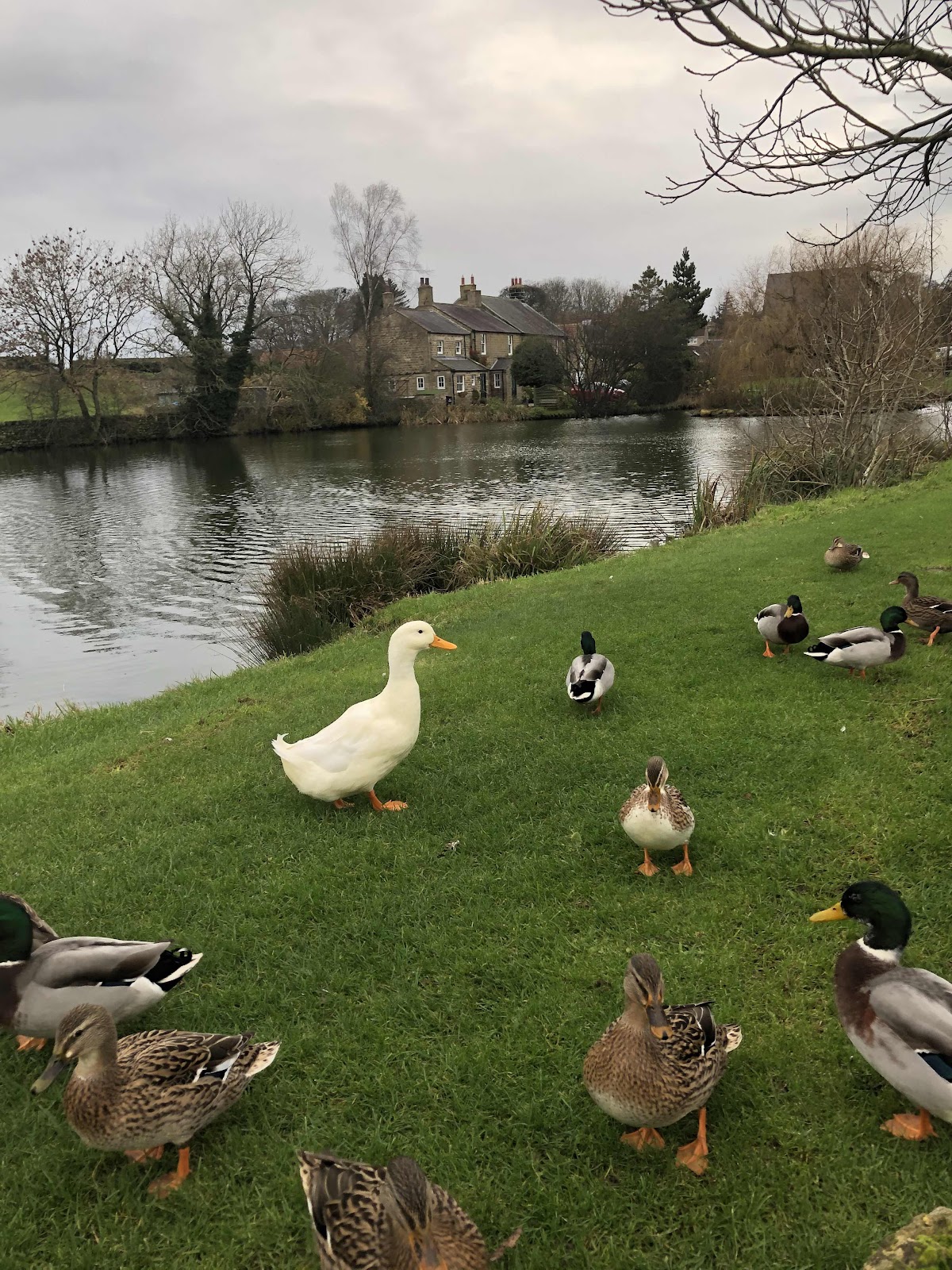
I sat by the duck pond in Grewelthorpe in December to record a talk as part of an Advent quiet day. There are quite a lot of ducks in Grewelthorpe and as I started talking, about forty ducks waddled over to me, surrounded me and started quacking very loudly. I was worth finding and seeing — until they realised I hadn’t got any bread! 

Come and see.


I was watching an episode of Winter Walks and it had the Rev Richard Coles walking to Rievaulx Abbey. A friend had asked him what he planned to do in retirement. His reply was - “walk around looking at things.” That’s not a bad Christian lifestyle. For Jesus is ahead of us with more and more of him to discover. If our faith is not about discovering and seeing what’s possible, then our faith surely will die. 

I like this quote. How would it be if we lived this?

“The invitation to “come and see” is an invitation to leave our comfortable vantage points, and dare to believe that just maybe, we have been limited and wrong in our original certainties about each other, about God, and about the world.  To “come and see” is to approach all of life with a grace-filled curiosity.”


. 


Wednesday, 6 January 2021

A Covenant Prayer in a lockdown


Passage for reflection: Jeremiah 31: 31 - 34

For me, one of the greatest treasures of Methodism is its annual covenant service, which John Wesley instituted as a new year festival to remind the Methodist people of the promises of God and to ask them to examine their commitment in the light of those promises. 

This year, of course, we cannot do the service as we would normally. I had six of them in my diary this month, two of which were sharing the service ecumenically. I’ve had to do two on Zoom, and one on you tube and encourage people to say the prayer at home. 

Why is the covenant prayer so important? 

The Rev. Dr. Calvin Samuel, preaching on the covenant prayer on Radio 4 in January two years ago said this about what we are doing when we make our covenant promises every year:

“The covenant is an annual attempt to remind ourselves that we belong to God and God to us. One of the striking things about God is that God is revealed in scripture as a covenant making God, a Creator God who chooses to bind himself to his creation in a covenant of love. This is important: we celebrate Covenant Sunday not because we have made a covenant with God but because God has made a covenant with us.”


I want to look at some phrases in the prayer which leap out at me in the midst of another national lockdown. 

I am no longer my own, but yours...

We’ve just reminded ourselves that God has come down to us to share all of life with us in Jesus Christ. But in the dark days of January perhaps even more so this year, we soon forget that and we bumble on in our own strength and wonder why it all feels like hard work. We need to know, as we start a year whose beginning we now know will be very difficult, that we are held by a God who never lets us go. We are his, he reaches out to us and never gives up on us. 

To know we matter to such a God is vital for our confidence and our wellbeing. John Wesley described the covenant as an “abandonment to divine providence.” Perhaps we need to alongside praying this prayer, rediscover what early Methodists were disciplined in: accountability to each other in a small group. In those groups questions were asked how it had been for folk with God since last they met. They encouraged each other and built each other up. We are now pretty hopeless at talking about what God is up to. But God is still working his purpose out and maybe this prayer each year is a wake up call to us out of our malaise. The gift of God is that we are his people. We came from him, we will return to him, and for now we are made to serve him, being God shaped in our words and actions, and God bearing in our mission. 


Put me to doing, put me to suffering.
Let me be employed for you or laid aside for you.

After remembering God’s side of the covenant, there are some hard things for us to think about. Some people avoid the covenant prayer as it is too hard for them and they don’t want to make promises that they can’t keep. I understand that viewpoint. Does God really put us to suffering? Does God really lay us aside? Are we really content he appoint us our place and work, ranking us with whoever he chooses?

Roger Walton tells us that it was suggested to him some years ago, that before you say the covenant prayer you should imagine the words on the lips of Jesus speaking to God for the sake of the world he enters.  “I am no longer my own but yours, put me to what you will, rank me with whom you will, put be to doing, put me to suffering…” takes on a new depth of meaning, if you hear these words as the self-surrender of God’s Son to the task before him.  Then, when we say the covenant prayer, we are mirroring what God has done.  ‘We love because he first loved us’.


Perhaps we can say the prayer confidently only if we are confident in God’s love and grace holding us through whatever happens to us. At the beginning of a year, we instinctively try and have a new start, a wiping of the slate clean, a more positive outlook. The hard thing is to sustain that positive outlook when the tough stuff comes. 

We will suffer. Can we find God in that suffering? 
We will be brought low. Can we find the resources to cope in those times? 
We will be laid aside. That’s a hard thing to cope with. 

I remember saying this covenant prayer while off work and getting really upset saying it. But there was a peace and a renewal knowing I might be able to use that laid aside time to be useful in another way. I discovered writing and that writing is ministry. I’m thinking of the church I led the covenant prayer with a year ago at Outwell in the Fens. This was pre pandemic. None of us knew they would sadly make the decision to close never reopening after the first lockdown. We said the prayer in faith. But none of us know what the future would bring. 

Maybe you feel laid aside as we enter another period of lockdown which looks like it might be a lengthy one. Maybe our church buildings have been laid aside. Maybe we will be less building centred when we can use them again. Maybe we need to refocus in a time of not being able to do what we want. I’m shielding again and that’s hard. I have to do my ministry differently. I can’t visit people. I can’t shop. I can go for a walk. I’m stuck in and I’m frustrated!!! But God can use this period. He works in us no matter where we find ourselves. 

We will be asked to take the yoke of Christ sometimes. Help! A yoke is heavy. But sometimes we need a reminder that genuine Christianity isn’t easy. We may need to stand up for what we believe in. We may need to be in the world more. We may just need to keep going when it’s easier to give up. 

And, horror of horrors, we will be ranked with people we’d rather not be ranked with! 

To return to Calvin Samuel:

“So, what kind of mad person prays such a covenant prayer?  Turns out they’re not so mad after all.  Those who pray that prayer recognise that the God whom we worship is a God who calls us into covenant relationship and that in that relationship that we find our true identity and vocation as covenant people.”


The key to not just saying this prayer but living it is a relationship with God. In Wesley’s time the covenant service would be preceded by a period of preparation, including prayer, fasting and exhortation, which helped to underscore the importance of what was taking place. We have lost that. But it’s clear the covenant service was a time of great spiritual blessing as these words  from Wesley’s Journal show.
 
On Sunday 1st January 1775 Wesley wrote: “We had a larger congregation at the renewal of the Covenant than we have had for many years; and I do not know that ever we had a greater blessing. Afterwards many desired to return thanks, either for a sense of pardon, for full salvation, or for a fresh manifestation of his grace, healing all their backslidings.”

Jeremiah saw that a covenant made between God and his people as a radical new beginning because it was mind blowing! It would be written on the heart. Not something to know about but something to know inside you. 

The Methodist website helpfully reminds us:
“God's gracious offer to us is therefore simultaneously a challenge. If God is committed to us, are we prepared to accept that as reality and commit ourselves in return to God? Even if we do choose to accept it, how can we manage to live out our commitment adequately, frail and human as we are?” 


So it seems to me we need to take time this year to know God’s love and grace more. Let’s be more disciplined in prayer time, let’s open the Bible, let’s talk about what God might want of us. Let’s prepare to be surprised. And when it all seems too much, let’s support each other as the early Methodists in their classes and bands did. 

This year we cannot say the covenant prayer together except if we try it unmuted on Zoom. I encourage you after reading this reflection to find a quiet space, read the Jeremiah passage again, think about your call to be faithful and what’s going on for you at the moment, then just pray the prayer as a promise you will do your best and you will turn to God whose grace is all sufficient whatever mess we find ourselves in. In January 2022, I hope we shall be saying the prayer in every different circumstances.

I am no longer my own but yours.
Put me to what you will,
rank me with whom you will;
put me to doing,
put me to suffering;
let me be employed for you,
or laid aside for you,
exalted for you,
or brought low for you;
let me be full,
let me be empty,
let me have all things,
let me have nothing:
I freely and wholeheartedly yield all things
to your pleasure and disposal.
And now, glorious and blessed God,
Father, Son and Holy Spirit,
you are mine and I am yours. So be it.
And the covenant now made on earth, let it be ratified in heaven.'