Sunday, 23 January 2022

Listening to a radical preacher


Have you ever been sure you know a person then realise you don’t? I was visiting someone poorly in Sawley. Her address was Church Farm. I found Church Farm and knocked the door. A lady answered. She was the lady I wanted to see … at least I thought so. We chatted for twenty minutes. Then I spotted some post on her dining room table. The name on the post was not her. I knew this wasn’t Christine! She looked just like her. I said not wanting this dear soul to think I hadn’t intended visiting her “where does Christine live?” “Next door” she said. Next door was also Church Farm. It turned out Christine was out. I said goodbye to the lady and left after a nice if unscheduled visit. I then bumped into Janet from the chapel. She told me when I told her my wrong door story I’d just visited Christine’s sister who looks just like her! I’d got the wrong person. You have to remember folks that mostly ever since I’ve arrived here I’ve seen my flock in face coverings! 

Do we know people as well as we think we do? 

This Sunday is the third Sunday after Epiphany. The Epiphany is in most people’s minds just the story of the coming of the magi to visit the Christ child. But it’s actually a season in the church year which lasts until Candlemas, 2 February. Epiphany literally means a manifestation, a showing, something made clear. The readings in these early weeks of the year give us lots of information about the nature of Jesus.

Imagine you are sitting in your local synagogue. It isn’t in Bishop Monkton or in Dallowgill but you live in Nazareth. Today’s preacher is the local lad you’ve seen grow up in the carpenter’s shop, the son of Joseph and Mary. It’s his first time in your pulpit, if the synagogue has one of those. You know him well. He’s now about thirty. It’s going to be a nice service. He had been among them growing up learning the faith with the rabbis so it was a big day that he was old enough to read to them. They knew those words from Isaiah, words of promise about the Messiah to come. How nicely he read them, they were so proud of him. Well done, Jesus, well read.

But wait a minute, what did he mean “Today, in your very hearing, this text has come true?” If you read on, there was a stirring in the pews, muttering amongst the elderly, huffing and puffing – and he talked about how they would be saying “Doctor, cure thyself,” a Jewish proverb which would mean in our language, charity begins at home – and he spoke about Capernaum and all the exciting things that had happened there, and that a prophet is not accepted in his home town, and how Elijah the prophet had to go off to Sidon, and Elisha too went off to Naaman, the Syrian leper. 

The normally reverent place of worship became very uneasy, especially at the mention of these other places and what he was implying. But Jesus wasn’t going to be put off by people’s presuppositions and he wasn’t there to court popularity. In fact, he seemed to asking for trouble by sticking to his own agenda. There was no doubt the situation was getting nasty. 

They kicked him out of the service, he didn’t last long in their world. He had upset their religious life, their cosy Sabbath routine where they met with their God. They wanted him out of town too, and tried to drive him over the edge of a cliff. But he turned round and looked at them and they faltered, and then he simply walked through them, and no one dared touch him and he was gone… 

Maybe we can imagine what might have been said in the town and around the synagogue for days afterwards. Who did he think he was, talking to us like that! We thought we knew him but we dont at all. He isnt claiming to BE the Messiah, is he? 

This is the first public sermon of Jesus. Some people do funny things when the sermon begins. I had a church in Bishop Auckland, where when they came into church, would line up on the ledge of the pew in front of them, a row of sticky sweets. When the sermon began, the first sentence, there was a commotion of rustling paper as the sweets were opened and put in the mouth.

Why does a sticky sweet get you through the sermon? Why does the proclamation of God’s word have to be something to be got through? The congregation in the synagogue were waiting for Jesus’ words with expectation – what did he say to them and to us today? The message was urgent. The good news of God was being fulfilled today. Now was the hour of grace. Now was the moment of opportunity. Will we accept it, or will we drive it out so we can get on with being the church? We need to be open to the moving of God’s Spirit. As I said atthe beginning, this is the season of Epiphany. Epiphany is like one of those detective series we watch working out where the clues are, like Vera or Line of Duty or Father Brown. Eventually the penny drops and the mystery of the killer or wrongdoer is solved

Epiphany bible readings are a series of clues, we behold the glory of God in Jesus, we see him affirmed in baptism, we see him give us a sign of his abundant generosity at a wedding in Cana, we today see him set out quite clearly to his home synagogue, to people he knew well, the heart of his message and programme, good news to the poor, freedom for the oppressed, liberty for captives, sight to the blind, and the herald of a new age of Gods reign. Believe me, it isnt easy to preach to the church you grew up in. Igrew up in a small village church where everyone was related to me. So preaching there, and I went on note as a local preacher aged 18, was horrific. My late mother who was my biggest critic used to hide under the pew and then when we got home shed say why did you pick that hymn? and what did you say that for? and you went on a bit long! I wasnt exactly hurled over a cliff but it wasnt a very happy experience. Much easier to be honest and challengingto people you donknow.

God is working his purpose out – there will be good news for the poor, sight for the blind, release for captives, freedom for the oppressed, the breaking in of God’s time, whether we are part of it, or not. 

The danger is we have no time to see God’s Spirit moving or we are too exhausted to see it! That Nazareth assembly didn’t like it and they kicked Jesus out. 

What about us? Do you want Jesus manifesto at your heart or will you boot him over a cliff. I don’t know where the nearest cliffs to here are, but we could go there.  

I like what Tim Baker has made of this passage in the Vine at Home material for today: Jesus says he will stand for: - Good news to the poor - proclaim release to the captives - recovery of sight to the blind - the oppressed go free - proclaim the year of the Lord’s favour. That last one, perhaps the most poetic, has been translated a whole range of different ways, including ‘this is God’s year or this is God’s time’, but there is also a hint of the Old Testament idea of the ‘jubilee’ here: the idea that there is a time when all debts and injustices are wiped away. A time of equity and equality. In which case, all five of these ‘manifesto statements’, these ‘strategic goals’, are about social justice. Jesus is committing to a transforming of the social order – a transforming that begins with the prophets of the Old Testament, and which he comes to continue, to update and to renew. A reminder that his ministry – indeed all God’s ministry – needs to include good news to the poor, the possibility of people’s potential being fulfilled, a hope for and a working towards a better time. 

But, crucially, Jesus doesn’t stop there. He says his five points, about social justice, but he is actually reading from the scroll of Isaiah. Many of his original audience would have already known all these words. Perhaps they were mouthing along with him. Perhaps a few groaned, muttering to themselves, ‘not another one on this passage, surely’. Perhaps a few lent forward, thinking, ‘I wonder what this young rabbi makes of this passage, it’s one of myfavourites…’ And this is when Jesus says a sixth thing. ‘Today, this scripture is fulfilled in your hearing.’ It’s a bold and a brave statement. But it is also the most important, most exciting moment in this gospel passage – and for us, the most relevant. It might even be the single most important thing Jesus says in the whole of his ministry. Today, this scripture is fulfilled in your hearing. And in that moment, what was word, becomes flesh, what was old becomes new, what was law becomes relationship, what was dead has come to life. Jesus hasn’t just reminded people of the principles Isaiah was writing about thousands of years before, he’s embodied them, brought them to life, moved them out of an ancient scroll and into the world of people who are living, moving and breathing. Can he do the same for us today?

I think this quote from the Lutheran pastor John Stendahl brings all I have tried to share with you from this challenging episode to a close:

“As we visit Jesus in Nazareth, as Jesus visits us here, ought we perhaps to understand his impatience and perhaps even feel it ourselves, this irritation with old suppositions and preoccupations? We live in a strange culture in self absorption is dominant, a culture in which our churches participate and cater to please. It may need a voice of anger to lead us into action. We shall perish if we cannot see a larger world and understand what we are doing to this world and to people beyond the compass of our lives. Do we feel the restlessness of God’s stirring, or can we at least hear it from him with getting too scared or taking offence?”

Today, like worshippers in Nazareth of old, we have come to meet God together. We have heard God’s word. How we respond to it from here is up to us…     

When we think we know who Jesus is, my friends, he will challenge us and surprise us. When we think we have him sorted, he will unsettle us and remind us of the nature of God. In our church, when people are searching, may we show by our life and our words, today, this Scripture has been fulfilled in your hearing.


Saturday, 15 January 2022

17 January Light


Passage for reflection: Psalm 139: 7 - 12

They say next Monday, 17 January, is the most depressing day of the year. It’s known as Blue Monday. It’s the day when the financial pressure of the Christmas just past hangs over us most, the weather is at its worst, and the extra pounds we’ve acquired over the holiday season are proving harder to shift than we anticipated. The daily grind just gets us down. 

I’ve spent the last few days with people who are facing really hard stuff at the moment: uncertainty, illness, challenges ahead, and bereavement. I’ve five funerals to take in the next fortnight. The world seems a hard place to be at the moment. The numbers down with Covid, even if it is milder than before, are rising. There’s real anger about parties being held at 10 Downing Street in May 2020 when we weren’t allowed to mix and people couldn’t see dying loved ones or visit those in need. There are people with real financial worries and there are others who are fearful about the future. There’s a lot of darkness about. Blue Monday? More like Blue January. 

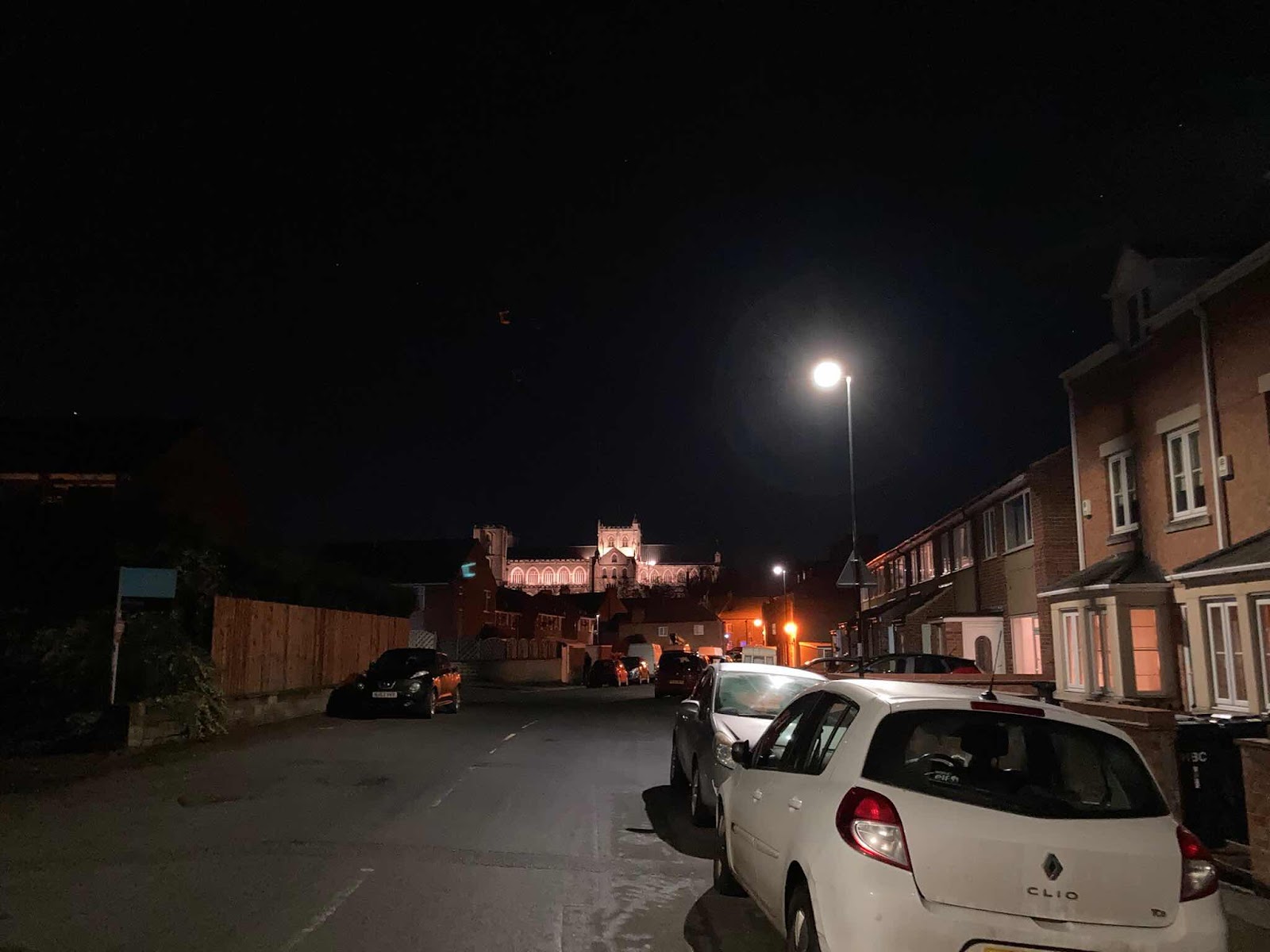
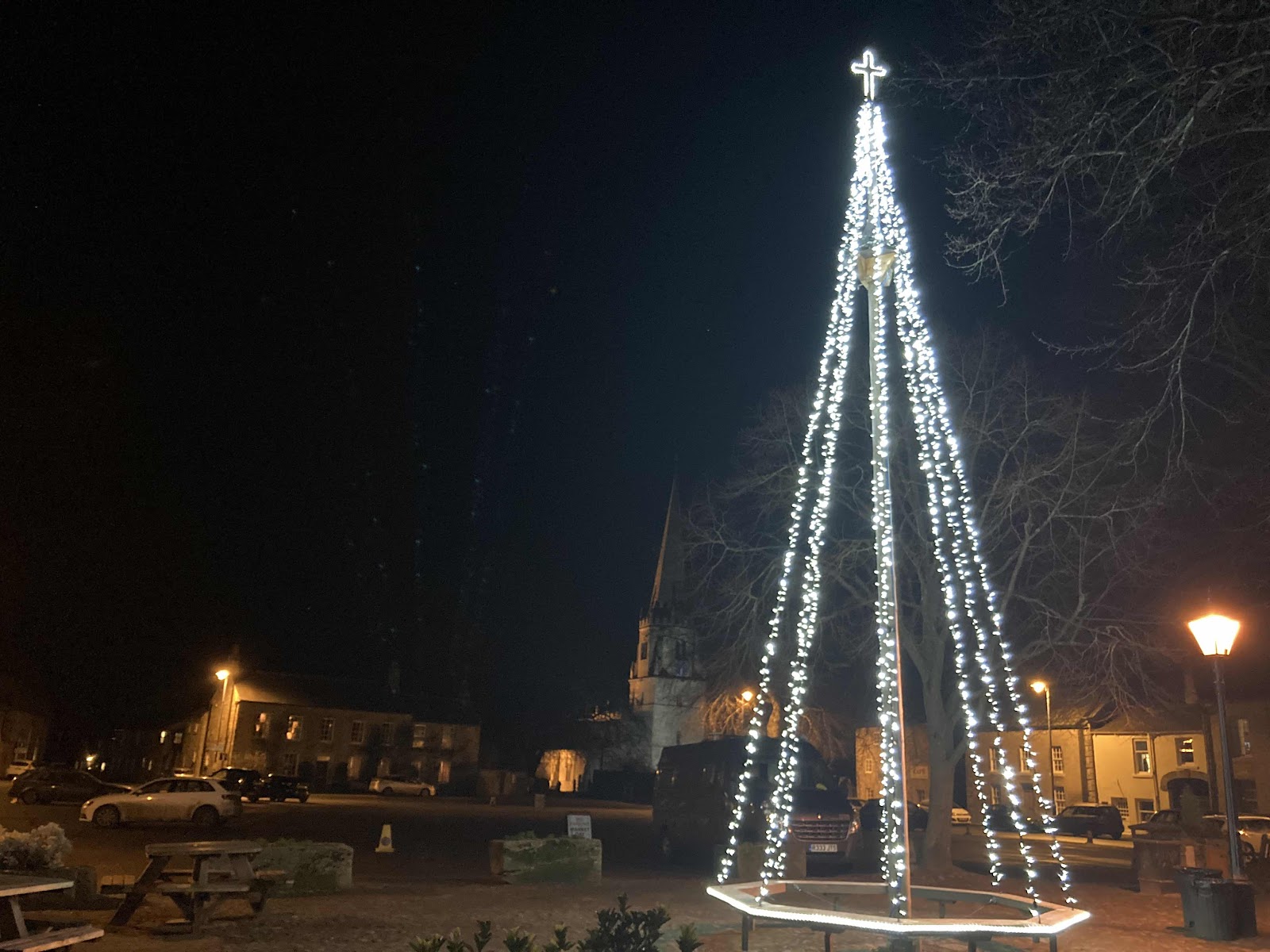
After visiting a family to prepare for a funeral the other night I went back to the car and noticed the lights of the cathedral shining down the street above it. The light of Christ is always above, ahead, and around us. When we think the darkness and the state of our lives is all we have, God comes. Remember the old hymn: “Sometimes a light surprises the Christian while they sing. It is the Lord who rises with healing in his wings.”

Psalm 139 is one of the most beautiful of the Psalms. It reminds us very powerfully of the nature of God. The theologian Paul Tillich once said it is the reality of our human condition to run from God, to be on our own, to live in the world as if God were not here. He argued it is not God whom we reject and forget, but rather some distorted picture of God. The God who is really God is inescapable. There is, he said, “no place to which we can run or flee from God, which is outside of God.”

To me, this is a huge comfort on grey and difficult days like perhaps Monday will be. The light shines in the darkness and the darkness shall not ever put it out. A city on a hill cannot be hidden. Even the darkness isn’t a thing that we need fear because God is in it. There’s a lot of “how do we get through Monday” articles in the papers and on line this weekend. Maybe we need to remember the eternal light which shines into difficulty, into uncertainty and into bereavement. We don’t need to wait for Sue Gray to tell us this after an enquiry, it is a truth for every day we can know now.

And maybe to get through hard days we need to be the light for others. I’ve sat and heard five stories of people who’ve clearly made a difference to others through the way they lived their lives. So as we celebrate in the next two weeks, Vanessa and Dorothy and Bob and Barbara and Sheila, we also celebrate God.

The funeral I’m doing on Monday will include this poem by Longfellow. There was a tiny pink post it note in the funeral plan which has “to be read” on it. I think Longfellow is saying we need to live life to be full and in doing so we make a difference to others. Read it and see what you think. I don’t know what you are doing on Monday. Let’s hope for light to surprise us to enable us not just to get through it but to remember every day it never goes out. 

What the Heart of the Young Man Said to the Psalmist

Tell me not, in mournful numbers,
   "Life is but an empty dream!"
For the soul is dead that slumbers,
   And things are not what they seem.

Life is real! Life is earnest!
   And the grave is not its goal;
"Dust thou art, to dust returnest,"
   Was not spoken of the soul.

Not enjoyment, and not sorrow,
   Is our destined end or way;
But to act, that each to-morrow
   Finds us farther than to-day.

Art is long, and Time is fleeting,
   And our hearts, though stout and brave,
Still, like muffled drums, are beating
   Funeral marches to the grave.

In the world's broad field of battle,
   In the bivouac of Life,
Be not like dumb, driven cattle!
   Be a hero in the strife!

Trust no Future, howe'er pleasant!
   Let the dead Past bury its dead!
Act,--act in the living Present!
   Heart within, and God o'erhead!

Lives of great men all remind us
   We can make our lives sublime,
And, departing, leave behind us
   Footprints on the sands of time;

Footprints, that perhaps another,
   Sailing o'er life's solemn main,
A forlorn and shipwrecked brother,
   Seeing, shall take heart again.

Let us, then, be up and doing,
   With a heart for any fate;
Still achieving, still pursuing
   Learn to labour and to wait.


Thursday, 6 January 2022

Epiphany: are we stuck in the palace?


We have reached the end of our Christmas story: the feast of Epiphany. The Christmas season now has a second part - the story of Jesus now opens itself to all the world. The magi travelling from the East is a reminder the gift of love given to us can be found by everyone. It may take some journeying to find him but the Epiphany story makes it clear it’s worth it. The wise men bowed down and worshipped and then gave the new king the best they could. And so must we.

I read a blog the other day which asked this question: “are we stuck in the palace?”
I wonder whether that is a really good question for us spiritually as we trudge through 2022. Are we open to divine surprise or are we rooted firm to our tradition and what we are comfortable with? Or even worse, do we find this radical new way God works in the world threatening so we lash out in a negative way because we just don’t want our life rocked. It’s easier to be stuck in the palace than to look for stars in the sky showing us a new journey we must take. 

Nadia Bolz Weber, whose writings inspire me and lift me, has a powerful take on the choice we have this Epiphany day. I read her book “Cranky Beautiful Faith” on a national express coach from London to Blackpool on my last sabbatical and it changed my life. Read it and see how contemporary this story is. For God is ahead of us and we can choose to see him or we can try to get rid of him from life… we can even try to do that in our church planning. How frightening is that? 

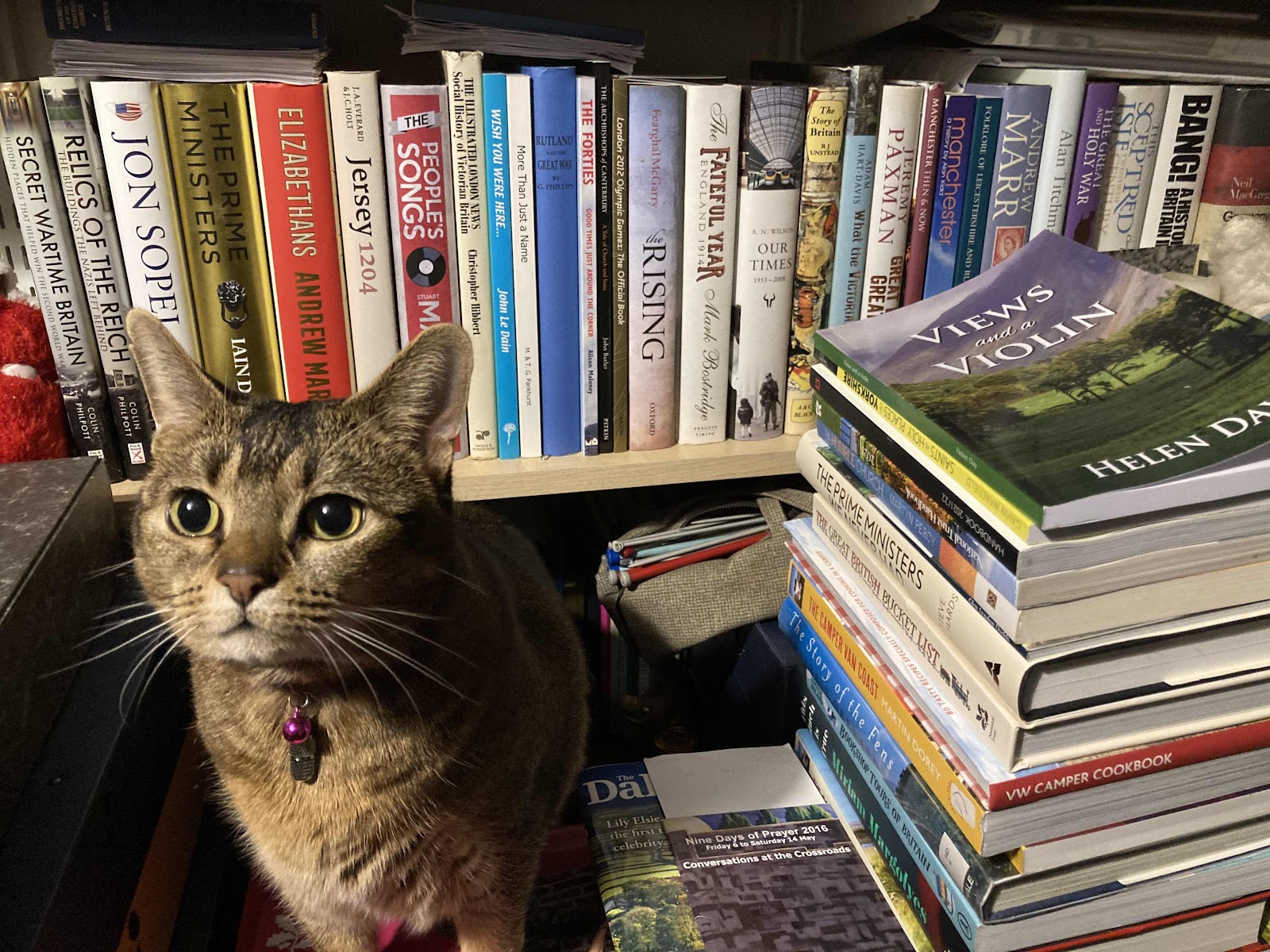
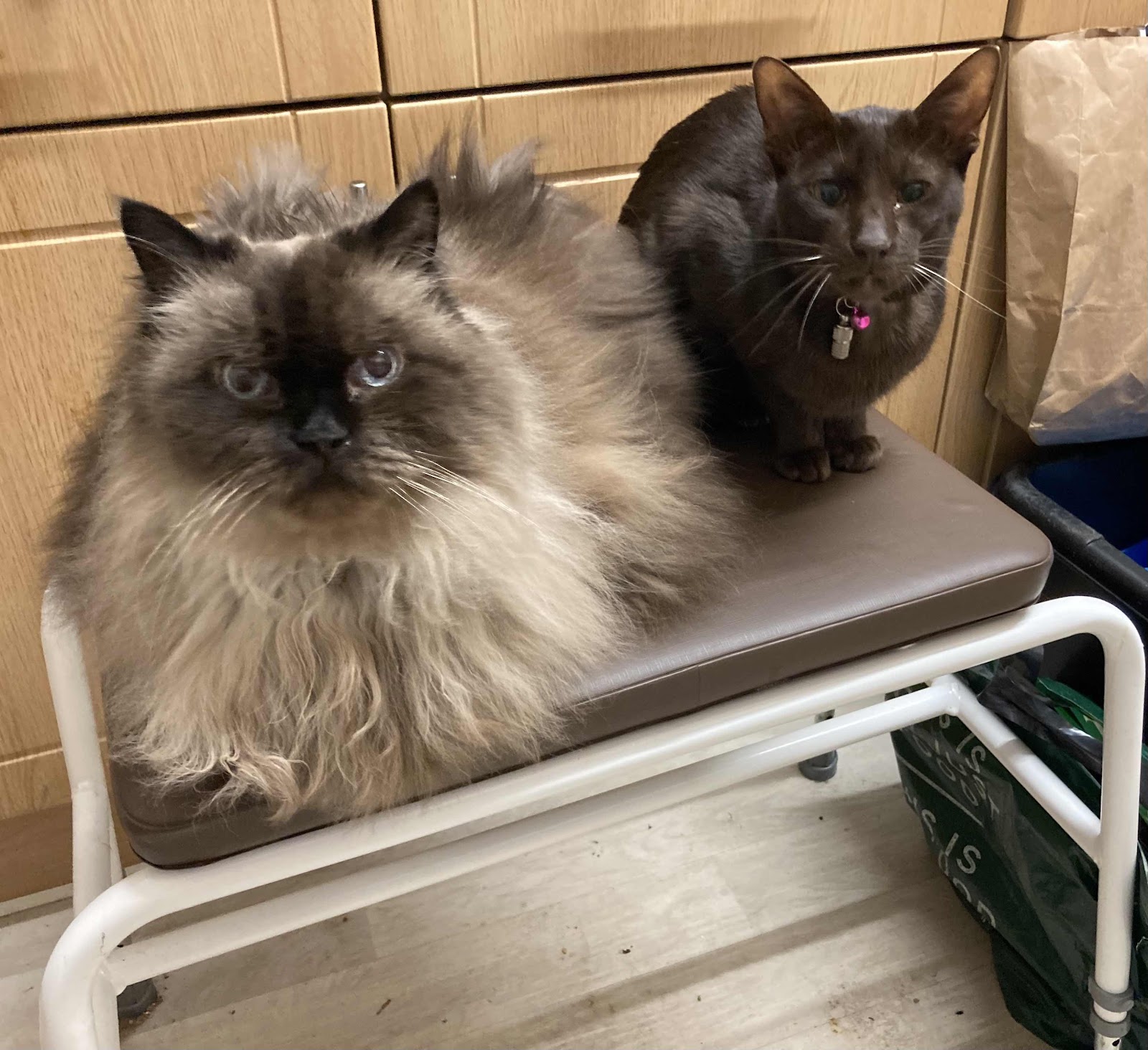
My picture above is of a very inquisitive Alice cat who just loves the wonder of discovering new places to explore in my untidy study. Can we be like her? Can we journey hopefully, with vision, with patience, with expectation, and let our hearts leap with joy when we catch up with where God is, or will be so obsessed keeping safe and secure in our palace, even though we are unhappy there? Thank you for journeying with  me through this little series of reflections. I hope together we have found God born among us anew… 

Enjoy Nadia below…


An Epiphany Story of 2 Masculinities 

A story of 2 men - 

Herod, who is a ruler on a throne of power, and Joseph who is a peasant in an unconventional marriage. One man is powerful and one man is not. And yet the text only describes one of these men as being afraid. 

And it wasn’t the peasant.

Matthew’s Gospel tells us that King Herod made the Magi tell him where this baby was because he was frightened. 

Frightened of a baby. 

Threatened by a horoscope and a newborn. 

And this fear that his position in life is so tenuous that it must be fortified by sacrificing whoever it takes is not a theoretical by the way - this Herod guy literally killed two of his own sons because he felt threatened by them. 

His own sons. 

Fear that what he had could be taken away, or fear of not getting what he wanted turned him into a monster. So much so that when he can’t quite locate the right baby, the one that is so threatening to him, he just sends for all the children two and under in and around Bethlehem to be killed. 

Take that in. 

This is what fear does.  

This is what fear does. Fear disguises itself in so many ways: as greed, hate, isolation, addiction…the list is endless. But in the end fear is at the root of all of it. And while you and I might not be murderous tyrants, none of us are free from the effects of fear in our lives. It keeps us isolated and small and it steals away joy and possibility.

But in Joseph we see a different kind of man than Herod. Joseph was not afraid.

An angel came from God and spoke love, was love, embodied love, sought to protect love – like a divine can of compressed air, and this cast out Joseph’s fear so that he could function the way he was intended to.  And here’s one clue – one way that we can know that Joseph was not afraid: he didn't bat an eye when the angel said that his baby and wife weren’t safe so he should take his family to Egypt.

Egypt.

The place his ancestors were enslaved. The place that God rescued his people from slavery.

With fear cast out, Joseph was able to believe it possible that God’s redemptive work can happen anywhere - even Egypt. With fear cast out, Joseph no longer had to see everything through the lens of what it was in the past. With fear cast out, he was able to beat a king, protect his wife and child, and preserve that which is good in the face of tyranny. (Just as an aside, we really need to start having better conversations about men. I don’t think that maligning traits that have historically seen as “masculine” is helpful. I want to start lifting up examples of beneficent masculinity, but I digress...)

Herod’s fear caused death and Joseph’s fearlessness protected life. Of course the irony is that Herod feared this baby for all the wrong reasons. The Christ child did not knock Herod off his pathetic little throne. History took care of that.  

No. Jesus of Nazareth did not overthrow Rome, he laughed at Rome. He saw Rome for what it was: temporary. Fleeting. Harsh and demanding and tyrannical, yes, but temporary. 

And this child, protected by the songs of angels and the heart of his mother and the fearlessness of his father, came to free the people.  Free us from the shackles of sin and fear. Gospel people are free people and free people are dangerous people.  Free people aren’t ruled by fear. Free people see Rome for what it is. 

And you know what?

There are angels hovering round us, good people of God.  There are messengers of love all around.  And again, and forever, they say: do not be afraid.  Do not be afraid. For in the heart of God there is enough love to cast out fear. Herods of the world, take note.

Happy Epiphany.


Tuesday, 4 January 2022

The Tuesday before Epiphany: in a heap?


I went into church this evening and was amused to find all the characters of Christmas in a heap! 

Perhaps we feel like them on this first proper working day of 2022. Do we contemplate the reality of January and want to collapse in a heap just thinking about it? Ice on the inside of the windscreen going out just now; a disappointment with something not turning out how I had hoped that I’ve had to accept today; trying to plan a sabbatical with so many uncertainties: 217,000 Covid cases and hospitals, schools and other things we rely on nearly at breaking point, but an insistence tonight we stick with the government plan b and too many zoom meetings today! A minister colleague reflected with me earlier with nearly two years of Covid now, we are professionally knackered! 

I’m not sure being knackered is in the Bible but weariness certainly is. How do we find the strength to face what we need to face ahead? We cannot lose what we’ve just declared four days into a New Year! Well, some verses for us from Isaiah chapter 40 if we feel like those characters in church who did Christmas but are now just in a heap with stuff. 

28 Do you not know?
    Have you not heard?(
The Lord is the everlasting God,
    the Creator of the ends of the earth.
He will not grow tired or weary,
    and his understanding no one can fathom.
29 He gives strength to the weary
    and increases the power of the weak.
30 Even youths grow tired and weary,
    and young men stumble and fall;
31 but those who hope in the Lord
    will renew their strength.
They will soar on wings like eagles;
    they will run and not grow weary,
    they will walk and not be faint.

Isn’t that great? I think perhaps that’s the greatest promise in the Bible. Life can be really tough and January isn’t easy for many people. We need to hold on when we think we are too exhausted to do anything very much. And let God into those moments. And also to admit we are in a heap!

(Author’s note: I am fine! I’ve just had a lot of people tell me they are exhausted and it’s only January 4th :))


Monday, 3 January 2022

The Monday before Epiphany: Wisdom from Nadia


I can’t better what the fabulous Nadia Bolz Weber has to say about a New Year so I won’t try. Enjoy! 

A blessing for the new year:

As you enter this new year, as you pack away the Christmas decorations and get out your stretchy pants

as you face the onslaught of false promises offered you through new disciplines and elimination diets

as you grasp for control of yourself and your life and this chaotic world

May you remember that there is no resolution that, if kept, will make you more worthy of love.

There is no resolution that, if kept, will make life less uncertain and allow you to control a pandemic and your children and the way other people act.  

So this year,

May you just skip the part where you resolve to be better do better and look better this time.

May you give yourself the gift of really, really low expectations.

May you expect so little of yourself that you can be super proud of the smallest of accomplishments.

May you expect so little of the people in your life that you actually notice and cherish every small lovely thing about them.

May you expect so little of the supply chain and the service industry that you notice more of what you do get and less of what you don't and then just tip really well anyhow.

May you expect to get so little out of 2022 that you can celebrate every single thing it offers you, however small.

Because you deserve joy and not disappointment

So, I wish you a Happy as possible New Year.

Love, Nadia.


Sunday, 2 January 2022

The Sunday before Epiphany: instructions for living a life…


The poet Mary Oliver’s ‘Instructions for living a life’ from her poem Sometimes, came into my head as I wrote my sermon for today.  In a line from that poem, she says: “Instructions for living a life: Pay attention. Be astonished. Tell about it.”

Consider the magi on their journey…

The Magi pay attention: they are faithful enquirers using all means at their disposal to follow the guiding of a star seeking this new king. But their own endeavours can only get them so far. Once in Jerusalem they pay attention to the revelation of scripture and are diligent in following where the star is leading them, even when that goes against their expectations and they are led beyond Jerusalem to Bethlehem.

We hear the magi are ‘overwhelmed with joy’ when they reach their destination, the place where Jesus is.  They are astonished. Their first response on seeing the child is to fall to their knees and to worship him.   They allow the truth of what they see to transform and delight them. These seekers and enquirers on pilgrimage have become worshippers.

They tell about what they see by the offering of gifts, gifts that affirm the identity of the one they have found; gold for a king, incense for Jesus’s holy priestly identity, and myrrh for his sacrificial offering of love for the world. 

This truly is the king they have been seeking, the holy Son of God, the suffering servant who will give his life for all.   And then these wise men defy Herod’s instruction. They do not tell Herod about what they see, but by their actions they tell the world where true power lies, here in this out of the way place, in this tiny child. See, this is where God is to be found, they say. They leave for their own country, not by the expected way but by another road.

In their paying attention, in their astonishment and worship, in their telling about what they see we see the world the right way round.  Not a world that rests on structures of power and privilege and might but on this humble gift for all, light for all the world, worshipped in the Christ child.


We are invited to pay attention, to be astonished and tell about this gift too in lives of loving humble service. God invites us to pay attention to be where the light is, to follow faithfully.  In his revelation of the incarnation, of Christ come to be with us, he shows us who he is, and who we are, in his light.  Our response can only be to be astonished and amazed and to bow our knee and worship too.  Transformed by that encounter and revelation, we cannot help ourselves from telling others about it, both by our actions and words. As we respond to his light we become witnesses to his revelation too, signposts of his love for others, the star that points his way.


How might we pay attention?  Be faithful in following, in  seeking after the light and goodness of Christ.  Be open to looking beyond the boundaries of life, our experience and our expectations –  our expectations of yourself, of others and of God. Seek encounters with those who seem to be other to us because it is with them you will come to find and know God. Pay attention to the marginal places and the people we find there. Because that is where we will find God.

How are we astonished?  Be open to the wonder, beauty and mystery of God in all that we encounter and allow ourselves to be transformed. 

How are we going to tell about it?  We tell of God’s love and revelation to us by how we give your gifts. What do we have that only we can share with the world?  Be generous in the giving of the gift of ourselves.  Allow this Epiphany story to change us so that we also go a different way. See life as touched by the light of God and allow yourself to be that light, a gift for our world.  

The Epiphany lesson? Pay attention, be astonished, tell about it.


Saturday, 1 January 2022

New Years Day 2022: a blessing


Passage for reflection for this blog:
Numbers 6: 22 - end of the chapter 

The TV programmes as 2021 turned into 2022 oozed positivity. BBC1 had Olly Alexander of Years and Years in a skirt bopping about with the Pet Shop Boys and Kylie. 

Remember back in 99'? 
Oh, we danced like maniacs all night, oh
Now the world is turning
Faster with time
And I'm slowly going outta my mind
Yeah, I, I think we're the same
Yeah, I think we're the same.

And oh-oh, where do we go, oh?
I gotta know, show me your page
Cause the clock keeps ticking the tock
I ain't gonna stop, no how, no way.

I'm chasing after midnight
Show me the way to your heart
Ready for the start of my real life
To shine like a light in the dark
Waiting for this moment to work right for you
I'm done hesitatin'
Oh yeah, only got a second to midnight.

Then there were fireworks in London lighting the night sky around Greenwich I think. And on BBC2 was the usual Jools Holland gathering, which is always good fun. While we were watching this, friends were sending us messages wishing us a happy and blessed New Year. We always start a New Year well and with confidence in each other and that this year might just be better! One of my friends on Facebook posted about midnight these words:

“Happy new year! Get in the bin 2021, you will not be missed!”

We begin 2022 believing it isn’t just friends who want the best for us, that’s what God wants too. The whole point of the Christmas story is that despite ourselves, God sends his Son into the world not to condemn the world but that we might believe… he wants to bless us. 

I looked up the lectionary for January 1 and was pleased to see the Old Testament passage is part of Numbers chapter 6. In this chapter God instructs Moses to speak to Aaron and his sons and he says “thus you shall bless the people of Israel, you shall say to them…”

Then we get what we now call the great Aaronic blessing. What does God do?
He blesses us and keeps us.
He makes his face to shine upon us.
He lifts up the light of his countenance upon us.
He gives us his peace.

We so need this stuff! We need blessing. We need keeping safe. We need light. We need someone to notice us and love us. We need some peace. Some people think the year changing will be like that sickly Christmas song: from now on our troubles will be out of sight. We need this in January! Once we’ve forgotten the good wishes and fireworks, we face uncertainty. Apparently, January 18 is the most depressing day of the year. That day we notice our financial situation and our waistline and we recognise that we have hard graft ahead of us…

Here is good news: the Lord blesses us and keeps us. He’s working his purpose out. So today, celebrate how you can see the blessings and then be them for others. We are kept - for eternity and when we can’t see the way this year the light of his countenance will do its stuff and perhaps when it all gets too much we just need to stop and find his peace again. 

I wrote a service two of our churches are using tomorrow for an own arrangement. My final prayer talks about asking God to show us the stars. Maybe 2022 will be better if we worry less about the things in the world and look up a bit more and see the good things about and remember them. 

Happy New Year everyone. May the Lord indeed bless you and keep you.