Wednesday, 22 February 2023

Ash Wednesday blotting out


I am writing a daily reflection through Lent up to the evening of Easter Sunday. I’ll comment on what I might be thinking about and where God might be.

13 of us shared communion this morning and we shared Psalm 51, the Psalm written by King David seeking forgiveness from God after Nathan the prophet had confronted him about being a very naughty boy, going after someone else’s wife. He asks God to create in him a clean heart. I reminded the folk with me this morning that the word used for create in the plea is the same Hebrew word used to describe God creating the world in Genesis. Only God can create the sort of new beginning David craves in the prayer. 

I was reminded that the prayer asks God to blot out our offences. When we used to use ink at school and the bottle spilt we would use blotting paper to clean up the mess. I had a steward when I was a lay pastor at Markyate chapel in Hertfordshire from 1991 to 1994 called Frank Pearce. Frank had a vestry prayer I remember “Lord, we thank you for your servant, Ian, now blot him out.” 

Not only on Ash Wednesday do we pray for a blotting out of our offences but also a blotting out of our selfish agendas, pride, and ignorance. Lent reminds us of our place. That our life is simply to serve God and follow him faithfully and that we need to return to God urgently. 

I included a prayer time this morning to remember the world in its rawness. I suggest today as you between your Lenten journey you do the same. What needs blotting out? I hope your quiet time is quiet! Ours in a multi use church building had the Postman Pat theme tune blasting out in the hall behind us while we were at prayer. Afterwards I asked “what on earth are they doing in there?” “The Forum are having a talk on Royal Mail!”

May God give us grace to observe Lent faithfully. 

Saturday, 11 February 2023

A last sermon for a church I’m handing over…


Passage for reflection: Matthew 6: 25 to end of chapter


“Do not worry about your life, what you will eat, or about your body, what you will wear…”


Don’t worry! This is a bold message from Jesus in our gospel reading today. And yet, it is easier said than done. 

There seems to be a good deal to worry about in the world today. 

But today Jesus says “Don’t worry.” And immediately we think about the worries of the world that go well beyond Ripon and the UK:  And none of this is to mention any personal anxieties we have. We think today of Turkey and Syria and 24,000 people who have lost their life and others worrying loved ones might not be found under the post earthquake rubble.


There was a man who was a chronic worrier. He would worry about anything and everything. Then one day his friends saw him whistling.
"Can that be our friend? No it can’t be. Yes it is."
They asked him, "What’s happened?"
He said, "I’m paying a man to do my worrying for me."
"You mean you aren’t worrying anymore?"
"No whenever I’m inclined to worry, I just let him do it."
"How much do you pay him?"
"Two thousand pounds a week."
"Wow! How can you afford that?"
"I can’t. But that’s his worry."


The word "worry" comes from an old Anglo-Saxon word meaning to strangle or to choke. While we need to be attentive to life's concerns, worrying about them "chokes" the joy out of life.

“Don’t worry!” we hear. Surely, it is hard not to do so. The world has problems and the future is always uncertain. It’s amazing what we worry about in the church. Mostly money or dwindling numbers or petty trifles...  the dominant issue is for one minister I know at the moment this  – it is to chair a debate at Church Council whether to put a lock on the biscuit tin as 28 biscuits have gone missing in a month! 


In his sermon the mount, Jesus tells us not to worry. He reminds us that animals and flowers get along fine without worrying.

 They don't have to worry because God provides for them. Then Jesus goes on to say that since God provides for them, what have we got to worry about? We are worth much more to God than they are, so God will look after us infinitely better. So Jesus concludes: Don't worry!

People will say to us telling us something is afoot : “there’s nothing to worry about.” But our minds race. Gareth our Superintendent calls a Church Council on a Friday night with little notice. He walks in with two Circuit Stewards. We just don’t have Church Councils on Friday nights. Ian was nowhere to be seen! Perhaps there was something to worry about. Some amazing theories why the meeting was called were shared between being invited to it and it happening! I worried I wouldn’t get on with your new minister. I needn’t have. She’s really nice.


 I don’t want to hand you over but we have this opportunity and I’m struggling today because although I’ll be here still and your new minister  and I will share a service together here next month, this is my last service as your minister and I thought I had you for some years yet! 


It has always been natural to worry – for good reason. This is why the most frequently repeated command in the Bible is “Fear Not. Don’t worry.” In other words, trust in God’s providence, despite everything.


Do not worry about tomorrow, for tomorrow has enough worries of its own, today’s troubles are enough for today.


There are people who dread tomorrow. Some little children still dread school on Monday morning.  I used to worry enough to make myself physically sick on a Thursday morning at secondary school, because first lesson was swimming and the teacher was a bully. I could never convince my mother I needed the day off, so I’d walk the six miles to school deliberately missing the bus.  


 Many people can’t face tomorrow, perhaps they have a hospital appointment or in the world of work, not knowing what the demands of the day will be, they go off work with stress, others face crippling worries over money and relationships. 

To be told “don’t worry” or worse “get over it” can do huge damage. Indeed some Christians can do huge damage. Put “sermons on worry” in Google search and you get all sorts of nonsense especially from America. That worry is a sin.


 Worry is part of the human condition. Most of us will have come to church this morning with worries. 

I’m very conscious I’m speaking to a diverse group of people every time I lead worship and I can’t know how you feel this morning, but hopefully we support each other by being here. 


When Jesus talks about worry he just doesn’t say "Don’t worry", he tells us how to prevent worry from talking control. "Be concerned above everything else with the Kingdom of God and with what he requires of you, and he will provide you with all these other things."


That's simply saying: put first things first. What we need to do more than anything else is to realise that God can be trusted, we can depend on him, that he will take care of us, if only we would have faith in him as our loving God. Let God be God, as the saying goes, and let him take charge of your life. First and foremost, as a member of God's Kingdom, realise that you are dearly loved by your heavenly Father who is always watching out for you, as is seen in what he has done for us through his Son Jesus.
Get to know what great things God can and will do for you.

Learn to trust him.
Come to God  and "leave all your worries with him, because he cares for you" (1 Peter 5:7).


So what’s the pastoral response to Jesus saying worry doesn’t have the last word?

As I’ve said, there is nothing more damaging than glib Christian answers or no answers at all when you are walking in the dark. 

At times of worry in my life I’ve been ministered to by the Psalms. The Psalms allowed me to voice my anxiety and be honest about things and place the hard stuff into the hands of God and at the foot of the cross. The crucified Christ was there for me. I remembered how he was anxious before he died in the garden the night before. He placed his worry before his Father and found peace even in the midst of indescribable suffering.


It’s sad then that some Christians walk by when there is honesty or people need help and the person with the worry is left quite alone. If Christianity is real, it enters into the worry. 


And let’s remember worry if we believe our faith means anything does not have the last word.

 Gods mercy endures for ever. Do you know that? I love Psalm 136.


Do you know about Og? 

The Psalmist in Psalm 136 lists all the things God has done to make the world he made better again. He confronts evil. He subdues the likes of Og, King of Bashan.  He was, along with his army, slain by Moses and his men at the battle of Edrei.

The Jewish Talmud tells us that Og was so large that he sought the destruction of the Israelites by uprooting a mountain so large, that it would have crushed the entire Israelite encampment.


The Lord caused a swarm of ants to dig away the centre of the mountain, which was resting on Og's head. The mountain then fell onto Og's shoulders.


As Og attempted to lift the mountain off himself, God caused Og's teeth to lengthen outward, becoming embedded into the mountain that was now surrounding his head. Moses seized a stick of ten cubits length, and jumped a similar vertical distance, succeeding in striking Og in the ankle. Og fell down and died upon hitting the ground… 

Evil, death, threats, you see do not have the final word even if today you think they do. Who is your Og, King of Bashan? He might worry you now, but God’s mercy endures forever. It’s louder and stronger than anything that is crippling us with worry today. It may not feel like that now but Christian hope calls us to hold on, and those who can’t hold on need to be held and loved by others who don’t let them go. 


“Do not worry about your life, what you will eat, or about your body, what you will wear…”

Do not worry about tomorrow, for tomorrow has enough worries of its own, today’s troubles are enough for today.


I just say to us all today worry is real, but we need the confidence to place the worry into a bigger picture, that Gods purposes for us are good, and in the end all shall be well, even if we get a bit bruised getting there. I end with two quotes I find helpful. The first is from Rainer Maria Rilke: 

“Go to the Limits of Your Longing”: “Let everything happen to you: beauty and terror. Just keep going. No feeling is final.” 


But perhaps this is what we need to remember if nothing else as we go out of church into our worrying world again: 

Some words from the prophet Isaiah:
You Lord, give perfect peace to those who keep their purpose firm, and put their trust in you.
And a little later he says:
Israel why do complain that the Lord doesn't know your troubles or care if you suffer injustice? Don't you know? Haven't you heard? The Lord is the everlasting God... Those who trust in the Lord for help will find their strength renewed.


Harrogate Road friends. I’m not going anywhere. But I commend your new minister to you. Don’t worry. There’s a foundation of hope and possibility here if we give our church and our worries to Jesus. Thank you for the way you have let me be your minister for the last two and a half years. May your strength be renewed. God bless you. 


Saturday, 14 January 2023

A Covenant reflection: Mark 1: 14 - 20


We had our Covenant Service in Bishop Monkton last Sunday, Methodists and Anglicans together and I asked this question: what do Anglicans get right that Methodists get wrong? The answer? Anglicans keep the crib out until February 2, Candlemas, the end of the Christmas season liturgically. We need especially in dreary old January and tomorrow is Blue Monday. The third Monday in January marks ‘Blue Monday’, the most depressing day of the year.

It’s the day when the financial pressure of the Christmas just passed hangs over us most, the weather is at its worst, and the extra pounds we’ve acquired over the holiday season are proving harder to shift than we anticipated.

We need some hope. 

Simon and Andrew, James and John, are not looking for Jesus when we find them at the lake. They are too busy with the nets. It is another day of casting and mending. They may not have even noticed Jesus but he not only sees them he speaks to them. Jesus has a way of showing up in the ordinary places of life and interrupting the daily routines of casting and mending nets. That’s what he did to the lives of Simon and Andrew, James and John. That’s what he does to your life and my life.

“Follow me” is Jesus’ invitation to a new life. If these four fishermen accept the invitation, their lives will forever be different. They will be different.


Whatever your life is, however you spend your time, there is in that life Jesus’ call to “Follow me.” “Follow me” is the call to participate with God in God’s own saving work. It’s the work of change and growth. 


That work is always about moving to a larger vision, orienting our life in a new direction, and experiencing that our little story of life is connected to and a part of a much larger story of life, God’s life.


As Jesus walked by the Sea of Galilee he saw Simon, Andrew, James, and John. Jesus called them. Mark records no discussions, no questions, no good byes. They simply “left… and followed him.”


I’m afraid that if Mark were writing about me – when he gets to the part when Jesus says, “Follow me” – Mark would write, “and immediately the questions followed.” “Where are we going? What will we do? How long will we be gone? What do I need to take? Where will we stay?”


But this conversation doesn’t take place in today’s gospel. Jesus does not offer a map, an itinerary, or a destination, only an invitation. This is not the type of journey you can prepare for. This is the inner journey, a journey into the deepest part of our being, the place where God resides. It’s not about planning and organizing, making lists, or packing supplies. It’s not that easy. If anything this journey is about leaving things behind. Listen to what Mark says: “Immediately they left their nets and followed him. They left their father Zebedee in the boat…, and followed him.”


The invitation, “follow me,” is also the invitation to leave behind; to leave behind our nets, our boats, and even our fathers.

That’s the hard part for most of us. 

We’re pretty good at accumulating and clinging but not so good at letting go. More often than not our spiritual growth involves some kind of letting go. We never get anywhere new as long as we’re unwilling to leave where we are. We accept Jesus’ invitation to follow, not by packing up, but by letting go.


“Follow me” is both the invitation to and the promise of new life. What do we need to let go of and leave behind so that we might follow him?  


John Wesley had a desire for his people  to “join in a Covenant to serve God with all our heart and with all our soul.” (Wesley’s Journal entry on 6 August 1755). On his instigation, a gathering of 800 believers was first held for this purpose on 11 August 1755 at the former Huguenot chapel in Grey Eagle Street, Spitalfields London, after a day of fasting the preceding Friday. Wesley led the assembly of believers in repeating a prayer for the renewal of one’s covenant with God written by the Puritan Christian, Richard Alleine in 1663.


John Wesley saw the day you said the prayer as a day of solemn reflection and rededication. That these were times of great spiritual blessing is evident from Wesley’s descriptions in his Journal. 


For example, on Sunday 1st January 1775 Wesley wrote:

We had a larger congregation at the renewal of the Covenant than we have had for many years; and I do not know that ever we had a greater blessing. Afterwards many desired to return thanks, either for a sense of pardon, for full salvation, or for a fresh manifestation of his grace, healing all their backsliding.

In Wesley’s time the covenant service would be preceded by a period of preparation, including prayer, fasting and exhortation, which helped to underscore the importance of what was taking place. 


How do we respond to what God does? Calling us into relationship God invites us into the light, into possibilities. 


I was impressed Canon Matthew prayed the covenant prayer in his sermon in the cathedral last Sunday. He called the prayer “a gem” and he introduced it like this:


“A theme runs through the Old Testament - thus says the Lord. I will be your god and you will be my people. We are invited to reaffirm our commitment to being one of God’s people. Accepting the invitation to be in a covenant relationship with God. And the genius of the covenant service is that it is utterly realistic about what it is like for most people to be a Christian in life as it is really lived.  It doesn’t ask us to recommit to being super charged extravert evangelists who will talk about Jesus to anyone at the drop of a hat. It doesn’t ask us to commit to being spiritual powerhouses spending hour upon hour in prayer and Bible study. It simply asks us to commit to serving God in whatever life throws at us, thick or thin, in the rough as well as the smooth.”


Serving God as and where God chooses, with people God ranks us with, in every circumstance. I’m using the old version of the prayer this Sunday so need to read this sentence from the service book rubric: the words, ‘Put me to doing, put me to suffering’, have raised difficulties for some people. These words do not mean that we ask God to make us suffer, but rather that we desire, by God’s help, actively to do or patiently to accept whatever is God’s will for us.


The emphasis of the whole service is on God’s readiness to enfold us in generous love, not dependent on our deserving. Our response, also in love, springs with penitent joy from thankful recognition of God’s grace. The covenant is not just a one-to-one transaction between individuals and God, but the act of the whole faith community. So we make it together, because here is where we are called to be. We will get it wrong. We will need to say sorry sometimes. We will struggle to work out what the future holds. Circumstances beyond our control or decisions made by others may alter our journey. But there will be surprises if we look for them and there will be in the words of a prayer I heard once, “explosions of joy” if we are open to them and do less worrying about who is going to be on the coffee rota or how we fix the leaking roof – though both of these things are important.


A new relationship – written on people’s hearts – initiated by God; in fact, a gift of God. This is the covenant which we are renewing today. We thank God that he not only offers this covenant-relationship with him, but gives us the ability to keep it! 

If it were not so, the commitment we make today in the words of the covenant prayer would be quite foolish and would last as long as many of the resolutions made with the New Year and already broken. But there is grace here, and the power of God to change us, and it is this that makes us bold to renew the covenant today. May God bless us and keep us in all we do today and in this coming year then.

‘The time is fulfilled, and the kingdom of God has come near; repent and believe in the good news – the gospel.’

Long years – centuries – of waiting were over; God who had seemed so distant, was at last acting and intervening. And in Jesus, he was restoring the world to what it was intended to be all along, the kingdom of God – heaven itself – in the here and now. No wonder fishermen left their nets, wanting to know and learn and experience more of it. Are we as excited? I hope so. Saying this prayer is a commitment to trust, to life, to hope, and to each other. . 

John Wesley said “Lay hold on the Covenant of God, and rely upon his promise of giving grace and strength, whereby you may be enabled to perform your promise. Trust not to your own strength, to the strength of your own resolutions, but take hold on his strength.”

May that be our way forward as Christian disciples. Amen.


Friday, 6 January 2023

Post Christmas reflection ten: Epiphany


So we have reached the feast of the Epiphany: the day when we remember magi from the east following a star they were convinced would lead them to a new revelation of God. Epiphany opens up the Christ event to the whole world. This is now not a local story for local people. 

28 of us gathered for a short service after a coffee morning today, as I didn’t want my folk to miss out this part of the Christmas story. I was surprised how many people hadn’t realised the magi came a lot later and not to the stable! It was a long and much planned quest after a lot of deep astrological thinking. It was a risky quest. To travel across many lands on what for others might have seemed a whim was maybe stupid but the magi were convinced. Like Abraham in the Old Testament they set out not knowing whither they went to a place that God would show them. 

Three things struck me this morning as I led worship.

One, they had to take a detour. They thought they knew where the star led, to where new kings might be born, the might of Jerusalem. But no, it was to the little town of Bethlehem they needed to head: the least of all the clans of Judah. My father before we went on a holiday would send for an AA route. He would then meticulously study it. But he couldn’t cope on the journey if a road was closed. Maybe God is saying to us you might want to follow the road you plan to take, I might want you to take another one. There might be things at the end of it that you will never experience if you just travel on roads you know. 


Second, the coming of a new king rocked the world. Herod was threatened. He thought he could trick the magi getting them to report back to him once they’d found him. He ordered a massacre of infants to try and cull the threat and also to remind his subjects who was still in charge! It’s interesting today that Vladimir Putin, a Herod of today wants a ceasefire in Ukraine because it is the orthodox Christmas so he too might bow down and worship him. Nothing much has changed. The political meeting the theological has always caused ripples. Maybe we’ve lost the power of this event. Does Christianity rattle government today? We hear now and again of Archbishops challenging policy on refugees being condemned. There was that MP over Christmas who suggested clergy might stop preaching from their pulpits! 

Then thirdly they returned by another road. All the recipients of divine grace that first Christmas went home changed people. I suggested this morning we might be being led to try something new. What’s the different road for us? 

Will the stars align, O God, so neatly in the sky that it might feel like this is what you always dreamt would be?
Will the paths of planets reveal more to us
of your justice and love?

Will these celestial events change how we live 
in this world  as it was once sung in ancient song?
Will we see your justice come into the mountains and hills? Will hope for  the poor and needy rain down in stardust?
O God, we need a little bit of that hope right now.
We need some sign in the heavens that will assure us that you are leading us, all of us, into justice and joy. A different road. 
It’s been good to offer these ten post Christmas reflections. We began in Advent with a plea that God might tear the heavens apart and come down. We have reached Epiphany with the knowledge that the grace of God has dawned upon the world with healing for all humankind. That is the message of Christmas and one that must come with us into 2023 if we are to have a chance of getting through its ups and downs. My prayer is that we journey will, we have a star ahead of us and that we find hope and renewal. Every day. 
“Star Giving” by Ann Weems (from "Kneeling in Bethlehem")

What I’d really like to give you for Christmas is a Star . . .
Brilliance in a package,
something you could keep in the pocket of your jeans
or in the pocket of your being,
something to take out in times of darkness,
something that would never snuff out or tarnish,
something you could hold in your hand,
something for wonderment,
something for pondering,
something that would remind you of
what Christmas has always meant:
God’s Advent Light into the Darkness of this world.

But Stars are only God’s for giving, 
and I must be content to give you words and wishes 
and packages without Stars.

But I can wish you life as radiant as the Star
that announced the Christ Child’s coming,
and as filled with awe as the Shepherds who stood beneath its Light,
And I can pass on to you the love that has been given to me,
ignited countless time by others who have knelt in Bethlehem’s Light.

Perhaps, if you ask, God will give you a Star.


Thursday, 5 January 2023

Post Christmas reflection nine: A night out in Leeds


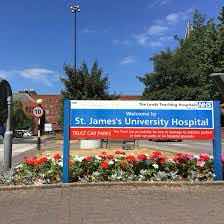
I’ve been to St James’ Hospital in Leeds tonight to visit one of my folk. I put a post on Facebook earlier which said “already lost - this hospital is HUGE!” Some people thought I had been admitted! I don’t like driving in a city and I don’t like driving in Leeds! Last time we were there I ended up driving in a buses only lane and was convinced I’d get a fixed penalty notice. Tonight we went in search of food after my visit and I think we went round the city centre three times. I kept saying “where do we go now?” It was stressful especially as I had cars right behind me so I couldn’t be hesitant. I am glad to be back in the rural sticks!! 

When the journey is confusing we need help. Sometimes the sat nav gets it wrong. I tried to find someone in a tiny village yesterday and nearly ended up in a field! We need a signpost, a right turning, a clear direction to end our confusion. 


Tomorrow is the feast of Epiphany. The word literally means making something clear. The readings from tomorrow to Candlemas in the lectionary ask us to look for the signs given us to work out who Jesus who has come is. The magi were certain following a star, however mad it seemed, was the right road to journey on. They didn’t know where the journey would end but they were certain it had to be taken. 

The journey to find God is worth the effort - it may be straightforward or it might, like my night in Leeds cause us to go round in circles, it might feel too difficult. But it is worth it. I wonder if the magi felt like giving up? Remember they didn’t travel for just a few days, it was a long trek meticulously planned - but remember even the most carefully planned journey can have a surprise in it. Jesus was not to be found where they thought he would be. There had to be a detour to an unlikely destination. 


I leave you tonight with the words of St Augustine: “Lord you have made us for yourself, and our hearts are restless until they find their rest in you.” 

Then some T S Eliot:

“A cold coming we had of it,
Just the worst time of the year
For a journey, and such a long journey:
The ways deep and the weather sharp,
The very dead of winter.”
And the camels galled, sore-footed, refractory,
Lying down in the melting snow.
There were times we regretted
The summer palaces on slopes, the terraces,
And the silken girls bringing sherbet.
Then the camel men cursing and grumbling
And running away, and wanting their liquor and women,
And the night-fires going out, and the lack of shelters,
And the cities hostile and the towns unfriendly
And the villages dirty and charging high prices:
A hard time we had of it.
At the end we preferred to travel all night,
Sleeping in snatches,
With the voices singing in our ears, saying
That this was all folly.

Then at dawn we came down to a temperate valley,
Wet, below the snow line, smelling of vegetation;
With a running stream and a water-mill beating the darkness,
And three trees on the low sky,
And an old white horse galloped away in the meadow.
Then we came to a tavern with vine-leaves over the lintel,
Six hands at an open door dicing for pieces of silver,
And feet kicking the empty wine-skins.
But there was no information, and so we continued
And arriving at evening, not a moment too soon
Finding the place; it was (you may say) satisfactory.

All this was a long time ago, I remember,
And I would do it again, but set down
This set down
This: were we led all that way for
Birth or Death? There was a birth, certainly,
We had evidence and no doubt. I had seen birth and death,
But had thought they were different; this Birth was
Hard and bitter agony for us, like Death, our death.
We returned to our places, these Kingdoms,
But no longer at ease here, in the old dispensation,
With an alien people clutching their gods.
I should be glad of another death.”

Let’s be brave and make the journey — but maybe next time I need to go to Leeds I’ll take the train!


Wednesday, 4 January 2023

Post Christmas reflection eight: Come and see


When I was minister in Storrington and we used to share worship with the Anglicans a lot at St Mary’s and with the rector Malcolm Acheson (known as the “late Malcolm” as he was never on time for anything!) I learnt the clergy or choir  director pick all the hymns for services way in advance so you soon got to know their favourites as they appeared a lot. We used to sing this a lot !!! 

Come and see the shining hope that Christ's apostle saw;
on the earth, confusion but in heaven an open door,
where the living creatures praise the Lamb for evermore:
Love has the victory for ever!


I’m intrigued by the invitation in the Gospel in the lectionary for today  “Come and see.” John the Baptist seeing Jesus pass by declares: “Look here is the Lamb of God” and naturally enough, his disciples are intrigued and go to see what all the fuss is about. “What are looking for?” asks Jesus, (it’s as if his way isn’t something that everyone will be able to accept) and when they ask him, a little awkwardly, where he is staying, he invites them to take a closer look – to come and see. 

Come and see. What is there to see God is inviting us to experience? I was with a colleague minister this afternoon who is pondering Epiphany and said helpfully in our discussion that God is found where we least think we need to look and yet we expect God to be where we think he ought to be — and he may have moved on from that place years ago! Isaiah reminds us in his prophecy that God is doing a new thing. The excitement of discipleship is to discover him in new places, in new encounters, in surprises and in silence. It’s almost like God is saying to us “come on, clean your glasses, look up, look around, see, I am here, starting a new story. Get excited - come and see what’s going on. Break out a bit!” 

Have we lost in our churches the courage to invite? Have we anything worth seeing? Which gets me started on how the outside of our churches look. Are our notice boards up to date? Does it look like we are open? Also if we dare to say to someone “come and see” we need to be there when they might do it! I’ve done a funeral today and I’ve invited the dear lady who buried her husband today after over sixty years of marriage to church coffee morning on Friday to meet people. I told her I’d be there. Remember going in anywhere new can be scary. 


I’m grateful to the writer of the Peterborough Cathedral Facebook page daily reflection for these thoughts: 

“The pattern of invitation to dig deeper, look more carefully, to try and picture what lies beneath the surface is a distinctive characteristic of Jesus’ style of ministry. He tells stories and, in a sense, says, ‘Here’s a parable – what do you make of it? Where do you fit in the story?’

As a church we believe we have something very special to share about the fullness of life, what it means to be a human being and where God fits into all that. So, if you get it, well done! If not, come and see.”

Tonight what is it you are being invited to come and see? And tomorrow what might you invite others to come and see themselves? 


Tuesday, 3 January 2023

Post Christmas reflection seven: Dreariness


Malcolm Duncan’s nite blessing for today is really helpful…

May you see Hope where others see despair 
May you see Light where others see only shadows 
May you hear the whisper of new beginnings when others hear the voice of fading dreams 
May God give you grace, and may you receive a fresh gift of faith and hope for today.

As Christmas decorations are slowly being taken down it’s getting very dark out there again. We’ve had nativity figures on the roof of the church at Harrogate Road. Their light could be seen from quite a distance. They were dismantled yesterday and the church and its grounds are dark. It’s a dreary wet day today and maybe it feels like darkness is the norm again. 

But, remember this: the people who walked in darkness have seen a great light. The light shines and the darkness cannot overcome it. Arise, shine, your light has come and the glory of the Lord has risen upon us. The light of Christ shines everyday. Even when thick darkness and gloom seem to be winning. 

Here’s a nice story for you:

Burdened by his inability to reach out to people in their time of need as his church was locked down during the pandemic, one resourceful pastor thought of his church’s magnificent stained glass windows. Those windows faced a main street and many people passed by the church everyday.

The pastor had numerous floodlights placed inside the church; the light shining through the glass to the outside world gave passers-by the full effect of the windows’ story.

There for all to see were the timeless portrayals of Jesus:

• Jesus the good shepherd carrying a lamb;
• Jesus the searching Saviour rescuing the lone lost sheep while the ninety-nine rested safely in the fold;
• Jesus praying in Gethsemane;
• Jesus on the cross;
• Jesus risen from the dead.

 These windows were silent sermons of light and stained glass.

People who passed by the church would stop reverently, silently. They found themselves filled with new determination and encouragement. In the darkness that filled their lives the light streaming from those windows the words of Isaiah took on new meaning, “Your sun shall no more go down, neither shall your moon withdraw itself; for Yahweh will be your everlasting light, and the days of your mourning shall be ended” (Isaiah 60:20)

May you see Hope where others see despair 
May you see Light where others see only shadows 
May you hear the whisper of new beginnings when others hear the voice of fading dreams 
May God give you grace, and may you receive a fresh gift of faith and hope for today.


There was a story about a church that was built way in the highest mountains of Switzerland. It was a beautiful church that had been built with great care by the villagers who lived nearby. But there was one thing that the church didn’t have. It didn’t have any lights. You couldn’t just go into the church and switch on the lights like we would be accustomed to doing. Yet, every Sunday evening the people who lived on the mountain-side opposite the tiny church saw something remarkable happen. The church bell would ring and worshippers would make their way up the mountainside towards the church. They would enter the church and then all of a sudden, the church would light up brightly. Why do you think that happened?

You see, the people had to bring light with them – so they brought lanterns. When they arrived at church they would light their lanterns and hang them around the church on pegs set into the walls, so the light would spread all around and all through the church. If only a few people came to church the light would be very dim because there would only be a few lanterns. But when lots of people came to the church there would be plenty of light.

 After the service the villagers would take their lanterns home. At this time, to those who watched from a distance, it was as if a stream of light poured out of the church and over the mountainside. For many it was a sign that all was well. God’s light was with them and in them and among them. The only time the little church lit up was when people were there. That’s when it truly became a church. That’s when the light shone most brightly.


And that’s why Jesus told his first followers, “Hear the good news: ‘The people who sat in darkness have seen a great light, and for those who sat in the region and shadow of death, light has dawned.’ We are to follow God’s light and be light in the world. Especially on dreary January days like today…