Monday, 17 June 2024

A third reflection on Genesis: Jacob


Genesis 28: 10 – 22 


I wonder if you have had encounters with people that brighten up your day or bring back memories of past encounters with them if you meet again after several years apart. I’ve had two such encounters this week. Last Sunday we were at the Golden Wedding service in the cathedral. There was a man there I kept looking at because I was convinced I knew him but I couldn’t think from where. After the service all the couples who’d booked to go had their pictures on a screen. The name Nutter came on. The man was with his parents, Mr and Mrs Nutter. The name Paul Nutter came into my head. I went up to him. 

“Are you Paul Nutter?” I asked. “Yes,” he said clearly not having a clue who I was. I said having worked out who he was. “I did your wedding when I was in Rutland.” His wife Sophie then appeared. That was twenty years ago.

They were there last Sunday supporting Mum and Dad who live in Wakefield and had come to Ripon for this service. 


Then we were at the summer concert of Harrogate Choral Society who Lis sings with. Elizabeth Wearing was there. I’ve not seen her since 1988. Her husband Michael was the minister who started me on my preaching journey when he was Superintendent in Harpenden, where I grew up. 


At the heart of our faith as Christians is encounter. And what is powerful about the Jacob story is that God will encounter not very nice people and reach out to them. Jacob is not very nice, he’s a cheat basically. Yet God’s grace is greater than human failing. All of us, even if we are vile, deserve at least a divine hearing. Jacob, means “grasper,” because when the twins were coming out of the womb Esau came out first but Jacob’s little hand came out right after Esau and grabbed ahold of his heel, like, “Come on back in here; I want to be first”). But the name “Jacob” can also mean, “deceiver,” and those two meanings pretty well sum up Jacob’s life.


Jacob has two encounters with God. One involves a ladder and the other a wrestling match. We will come to that later. Jacob had of a stairway to heaven.

You may remember that the rock band Led Zeppelin had their own version of a stairway to heaven, this time one that could be bought by someone who thought that everything that glittered was, after all, gold.  There have been arguments about where the musical inspiration for the Led Zeppelin song came from, but it is clear that the idea of a stairway to heaven comes from this story of Jacob.

The idea of a stairway to heaven, though, does not begin with Jacob; it begins with the Babylonians and their ziggurats.  These temples were built to be high towers, built with different levels, built with a staircase connecting each level with the one above.  And so the dream arises from a built reality being transformed not only into a ladder upon which one may ascend, but one upon which descent is also accomplished – heaven comes to earth in Jacob’s dream.


And that is why in John’s gospel virtually the same words are used by Jesus to describe himself: ‘very truly, I tell you, you will see heaven opened and the angels of God ascending and descending upon the Son of Man’.

In John’s gospel Jesus is portrayed as the ladder, the way, between heaven and earth, between time and eternity, between God and humanity.


Jacob has his dream at Bethel.  It’s a significant place: it is mentioned more often in the Hebrew scriptures than anywhere except Jerusalem and Samaria.  Bethel was visited by Abraham, who built an altar there, and returned there after disgracing himself in Egypt.  Bethel was captured by Joshua after the Exodus, recaptured by the Canaanites, then taken again by the Israelite tribes.  The Ark of the Covenant was housed for a time at Bethel before being taken to Shiloh, and later to Jerusalem.  Bethel became the principal shrine of the northern Kingdom of Israel, a rival to Judah’s Jerusalem.

Bethel was an important place, a holy place – a place recognised as a place of God – but it had not always been so, at least not by everyone.  ‘Jacob woke from his sleep and said, ‘surely the Lord is in this place—and I did not know it!’’  


Jacob goes to sleep quite unaware of where he is, quite unaware of the company he is keeping, quite unaware of where God is to be found.  And in that, we might think, even today, he is not unusual.  He is, probably, in the city of Luz – and it clearly has nothing remarkable about it.  It is just a place pretty much like any other place – but, on his journey, fleeing, he thinks, from the wrath of his brother whom he has robbed and cheated, it is a place which seems to offer a place to pause, a place to catch his breath, a place to rest his head.

It is not even much of a place for that – a rock for a pillow; a rock, allegedly, long and flat, stretched out across an open space, the kind of rock that could, in the morning light, in the enlightened tomorrow, be raised on its end, and stuck in the ground to become a pillar, a monument, a marker of the discovery that, all this time, all unknown, this was God’s place.


And all this was unknown to Jacob – but not unknown to others.  Luz, this city through which he was travelling, was already known to the Canaanites as Beth-el – the House of El, the chief Canaanite deity.  


And now, like other holy shrines in other places at other times, it becomes adopted, embraced, re-packaged; so now it is not the House of El, but the house of God.  

The name of ‘House of God’ is adopted and adapted from the Canaanites, but in the story Jacob gives it that other name as well – this is not only the house of God, this is also the gate of heaven.  And this name takes us back to Babylon – back to the ziggurats, back to their stairways to heaven, back to the more correct name for Babylon – Bab-ilani, which means ‘gate of the gods’.


Jacob, we find, has gone to sleep in a nondescript place, a place which means nothing; maybe he knows it means things to other people, but it certainly means nothing to him.  The traditions of others, the understandings of others, the places of others, do not, he thinks, ‘do it’ for him.  His spiritual life, if he even thinks he has one, is not fed from these springs.  It’s just a place to stop, a place to use, a place of passing convenience, but nothing of any importance – not to him.  But he awakens to a different world, a world where he has been touched by a presence he had not previously suspected.  It is a world where Jacob has to take seriously what has been special to others but has never before been special to him – and the traditions of Canaan and of Babylon are subtly brought in to the tradition of Israel in the person whose name Israel will later take.


The psalmist remember in Psalm 139 writes not of a God who is suddenly encountered in a special place, but of an omnipresent God, a God whose presence cannot be escaped anywhere, a God who is with us everywhere we go – from the womb to the tomb, from the highest place to the lowest.  This is a God who knows us everywhere we go, and knows us before we are anywhere, knows us whether or not we know God, is interested in us whether or not we are interested in God.


Jacob may not have intended to stop at Bethel, but he did, and what may have been simply a night under the sky became an encounter with the true and the living God!

What did God say at Bethel?

God revealed Himself to Jacob by using the name Yahweh and then, God affirmed the faith of Abraham and Isaac. That would be a real blessing to me, knowing the God of my father and grandfather and who knows how far back it goes would speak to me personally.

We need to remember that very few people have ever experienced the joy of fellowship with God Himself, but it’s possible, and available, for everyone if we ask Him for it!

Third, God also confirmed the promise He had made to Abraham and Isaac. Part of that promise was that their descendants would be “. . . like the dust of the earth,. . .” but, Abraham had only one genuine son, Isaac, and we only read of two sons of Isaac, Esau and Jacob. God’s ways are not our ways, and His timing isn’t the same, necessarily, as ours, but He will absolutely make good on every promise He's given. 

Finally, the most important promise was that God affirmed He would always be with Jacob, and would bring him back to this land. Remember that Jacob left with the whole family in turmoil: Esau wanted to kill him, Rebekah wanted to protect him (one wonders how?), and Isaac sorely displeased when Jacob had deceived him. Now, Jacob was alone—we don’t read of anyone going with him on this “wife quest”—and he had no one to share his concerns with. No family, no servant, not even an animal: and yet, God promised He would always be with Jacob. When we, even now, walk with God, we are never alone!

What did Jacob do after he heard God speak?

When did Jacob become a believer? I don’t recall reading that “Jacob believed God”, as was said of Abraham. Was it here? Was it before? Was it later? Regardless, there was a time when Jacob came to what we could call “saving faith” and became a believer in the God of Abraham and Isaac. We can find at least some initial steps in the following items:

He stated clearly, first, that he didn’t know, or hadn’t realised, that God was there. 
The second display of Jacob’s faith was the multi-part vow which he made. We’ll not spend much time there, but Jacob is basically saying, “All right, God, if You keep Your promise, then You will be my God and I’ll give a tenth to You”. 

This is where the narrative stops. Jacob, meeting God at Bethel was a life-changing experience.

Have we met God? There is no need to find a literal “Bethel” or any other place that some may state is sacred, special, or anything else. If you have never met God before, you can do so any place, any time, when God speaks to you. The encounter whether it involves a ladder will be life changing.


20 years later, Jacob prepares to be reunited with Esau. In the hope that Esau will not attack him Jacob sends gifts ahead to placate Esau. Whilst waiting in the camp for the gifts to arrive with Esau, Jacob has another face-to-face encounter with God…


Genesis 32: 22 – 32 


Jacob and his wives and sons cross the Jabbock river into Esau’s territory. This is where our reading picks up. Jacob is so nervous he can’t sleep. He sends his family across the river, and he’s left alone.

Except, it turns out he’s not alone. Instead, a man or a demon or an angel or something is there and they wrestle all night. Jacob—exhausted, nervous—hangs on until dawn. As the light dawns, his opponent realizes Jacob won’t give up, and he strikes him putting his hip out of joint. But still, Jacob won’t let him go. And here’s the interesting part of this strange story. His opponent asks him, “What is your name?”

Jacob knows what his name means. He knows what he’s done to get to where he is. He knows he’s cheated his brother, and his uncle. 

He knows he’s spent his life taking what rightfully belongs to others. He knows what his name means.

And so does God, for it turns out that’s who Jacob has been wrestling. God knows how much Jacob deserves everything Esau seems about to give him. God knows who Jacob is, yet asks anyway, “What is your name?”

Jacob admits it. He answers, “Jacob.” It’s a confession. Knowing someone’s name symbolically gives you power over them, which is perhaps why the one who wrestles with him refuses to reveal his own name. Jacob makes himself vulnerable.

But instead of giving him the punishment he deserves, the Lord instead gives him a new name. Verse 28: “You shall know longer be called Jacob, but Israel, for you have striven with God and with humans and have prevailed.” Jacob gets a new start. He’s held on all night, desperate for some hope, wrestling in the dark, and he gets his blessing.

My question is if he had to wrestle all night for God to bless him. Was all this even necessary?

Because God had already promised to bless him. His mother had already heard the promise that great nations would come from her sons.

But perhaps for Jacob to accept God’s blessing, he needed to have wrestled. It’s not until he stops wrestling and makes himself vulnerable that he is blessed.

Perhaps it’s not Jacob hanging on all night in this wrestling match, but God who is hanging on, refusing to abandon Jacob. Perhaps what looks like cheating—dislocating Jacob’s hip—is God saying enough is enough: Quit fighting and let me bless you. I wonder.

The name the Lord gives Jacob is “Israel,” which means wrestles with God. And of course, he does go on to produce a great nation. The descendants of Israel’s 12 sons become the 12 tribes of Israel. And throughout the Bible, Israel’s name makes sense, because the nation of Israel, God’s chosen people, continue to wrestle with God.

So what is the good news in this strange story?

Perhaps the good news is that a trickster, a deceiver , can be redeemed.

Perhaps the good news is that God is willing to hang in there all night wrestling with you, if that’s what you want to do.

Perhaps this is an illustration of the promise that God doesn’t give up on you, and if God wants to claim and rename you and give you new life, that’s what God’s going to do, (even if it takes wrestling all night until you see the light).

Perhaps the point of this story is that all of us have times when we stay up all night wrestling with God, and that’s ok.

Wrestling with God, questioning God, struggling with God, even not recognising God is part of faith. Faith means persisting in trusting God through the wrestling.

The late Chief Rabbi, Jonathan Sacks, wrote this in the Jewish Chronicle:

“The journey described in Genesis turns out to be unexpectedly complicated and fraught with setbacks. In a sense it continues till today. This is part of what makes Genesis so vivid. We can relate to its characters and their dilemmas. We are part of their world as they are of ours. No other literature has so contemporary a feel. This is where we came from. This is our journey.”

We need to see a ladder and we need to be prepared to wrestle a bit.


Monday, 10 June 2024

A second reflection on Genesis: Abraham


At the end of Genesis chapter 11 after creation and the fall and all sorts of shenanigans and the flood and the Tower of Babel we are told this: 

This is the account of Terah’s family line. Terah became the father of Abram, Nahor and Haran. And Haran became the father of Lot. While his father Terah was still alive, Haran died in Ur of the Chaldeans, in the land of his birth. Abram and Nahor both married. The name of Abram’s wife was Sarai, and the name of Nahor’s wife was Milkah; she was the daughter of Haran, the father of both Milkah and Iskah. Now Sarai was childless because she was not able to conceive. Terah took his son Abram, his grandson Lot and his daughter-in-law Sarai, the wife of his son Abram, and together they set out from Ur of the Chaldeans to go to Canaan. But when they came to Haran, they settled there. Terah lived 205 years, and he died in Haran.”

God often uses families or sometimes individuals to begin a new journey. And today we hear the story of Terah’s son Abram. What do we know about him? He was a man of some wealth and influence in his community. He worshipped a different God to everyone else there. And how old was he? Abram was 75 and he was told by God to go camping. I did a survey of my congregation yesterday. Most were over 75! A question was asked “how did Abram get off the ground every morning at 75?!” 

We need to know something about Haran. It is located in the southeastern part of modern-day Turkey. There Abram was located living in a world that was extremely delightful. This city has been occupied 1000 years before Abraham all the way to the present world. It was a well-watered place, a place so habitable. They had invented writing by now. Historians say there was a library in Haran with 2000 stone tablets. They had a detailed understanding of astronomy and mathematics. They are the ones who invented the wheels and arch. Pottery began with them. Some 500 years before Abraham the pyramids had been erected in Egypt. Abraham came from a developed world.The mountains and valleys in Haran are so lush green, well-watered, and well-occupied by people. Haran was the business capital of the world. They had imported goods even from India. Haran was the epitome of an ancient civilisation.

Abram journeyed says Genesis 12 toward the hills east of Bethel and pitched his tent. Abram left his permanent house structure and stayed in tents.Abram had to move away from posh city accommodation and a permanent dwelling to the life of that of an outsider and that of a pilgrim. The New Testament tells us: By faith Abraham, when called to go to a place he would later receive as his inheritance, obeyed and went, even though he did not know where he was going. By faith he made his home in the Promised Land like a stranger in a foreign country; he lived in tents, as did Isaac and Jacob, who were heirs with him of the same promise. For he was looking forward to the city with foundations, whose architect and builder is God.

When God called Abram, he left. He just knew God. He lived in the Promised Land like a stranger and waited for the other world which was permanent. Some people like to travel from place to place, and country to country. Abram was not like that. He left his country because God told him to go. What did his neighbours say? It was utter madness in human terms. 

Abram not only left his country. He is being asked to leave his roots. Not just the geography and his settings, but leaving his people. All his natural connections are going to be gone. Sarai means princess. She may have been royalty from a noble family. Remember, Abram is addressed by the Hittites in Genesis 23:6 as Prince. Abram and Sarai were extremely well connected to people and society. They were royalty. They had a lot to gain staying in Haran. This is the kind of cost that God required of Abram. From being upper class to no class; from somebody to a nobody; from familiar territory to uncharted territory.


He is told to leave his father’s household. Already Abram and Sarai had some involuntary family separation. Abram already had a loss in the family in Ur, his brother Haran had died and he had added responsibility of his brother’s son, nephew Lot. When they moved on to Haran there was Terah the father of Abram who died. It is usually when there is a death in the family there is more bonding that happens which gives people support. But now after the death of his father Terah, God asked him to move out of all connections. God is working here as the great interrupter of a good life. God is the one who knocks us when life seems to be going great and smoothly. Why all that cost to follow God? Why is God asking all this in our life? Is God interrupting us to punish us or is it to protect us? Is it too real to deprive us of physical comfort or is it rather prepare us for eternal comfort, something much better? Are you going through interruptions in life? Remember God is in it. 

God, be for us our companion on the walk, our guide at the crossroads, our breath in our weariness, our protection in danger, our refuge on the Way, our shade in the heat, our light in the darkness, our consolation in our discouragements, and our strength in our intentions. So that with your guidance we may arrive safe and sound at the end of the road enriched with grace and virtue may we return safely to our homes filled with joy. In the name of Jesus Christ our Lord. Amen.

Many years ago in our leavers service in college these words were used. When we are compelled to move on we need to remember God is ahead of us and there are people and circumstances there that could be exciting…

When we lift our pack and go, when we seek another country, moving far from all we know, when we long to journey free --God is in the other place, God is in another's face, in the faith we travel by, God is in the other place.

Abraham believed God and it counted unto him as righteousness, says Romans. Sometimes, we are scared to journey, clinging onto the safe and familiar. But Abram, later named Abraham, shows us reckless trust is the first step to divine blessing. So where are we being asked to go, to leave, to trust and to believe there is another country we cannot but travel to?  

I like how the Authorised Version of the Bible describes Abram’s future: he went out not knowing whither he went. But without his obedience and absolute trust in God’s wacky and almost unbelievable providence, the story of God’s people would have been very different.


Monday, 3 June 2024

A first reflection on Genesis


I madly said I’d write a Monday blog on Genesis throughout Bible Month. I’ve no commentaries and no Bible and I’m writing this on a bus shaking me about as the driver speeds along country lanes near Skelton on Ure! So here goes for a first try.

A weekly theology blog written by Methodist theologians last week had Tom Stuckey, former President of Conference challenge us that we need to rediscover the mercy and grace of God and put it back at the heart of our programme. It seems to me the first chapters of Genesis (and maybe the whole of Scripture) are about the goodness of a creator and the human tendency to make a mess of everything but the grace of the creator cannot quite let us go. As the old hymn said “who is a pardoning God like thee, and who has grace so rich and free?” We never sing that now! Hymns and Psalms number 38. I think! 

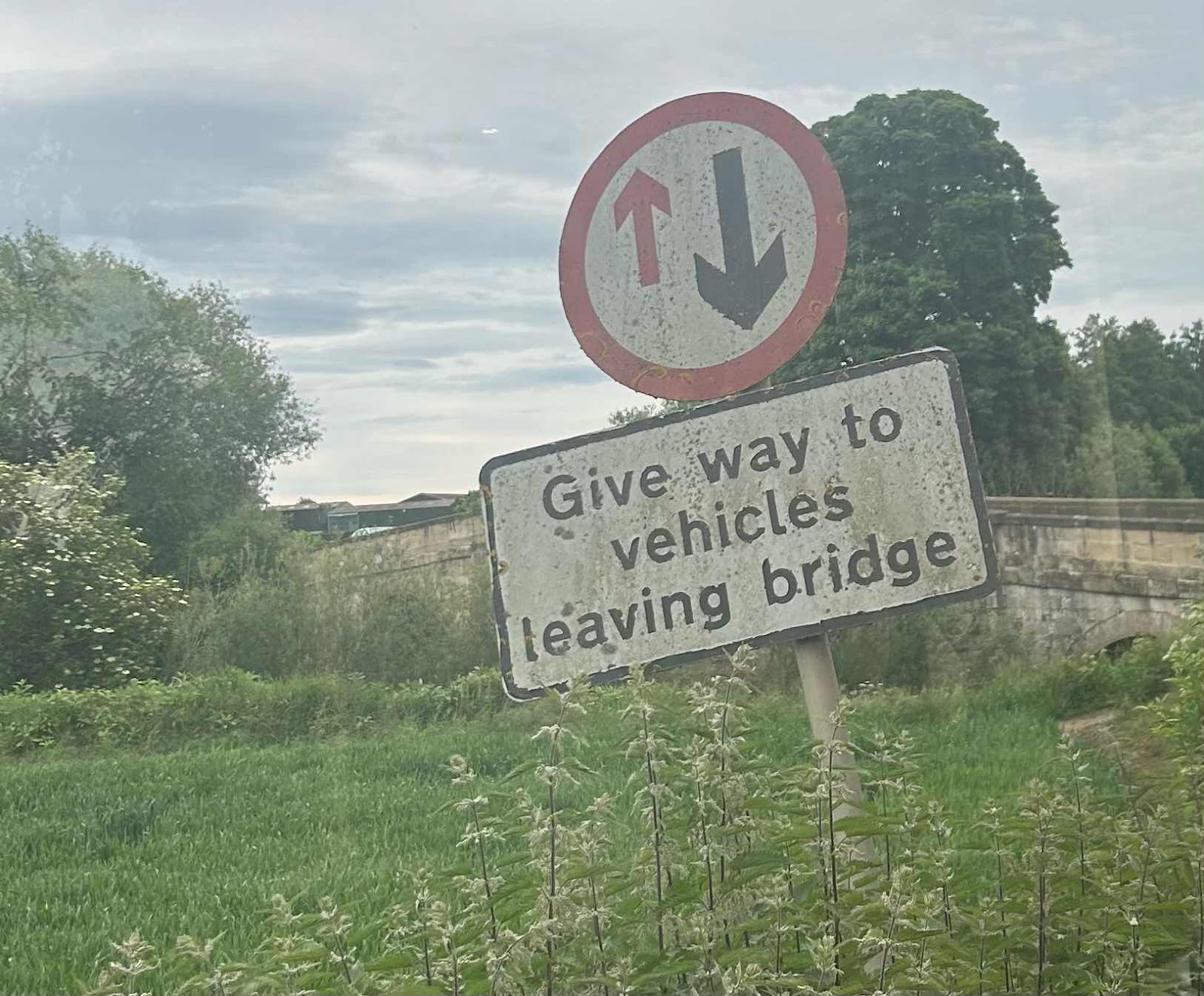
The bridge over the river by the racecourse in Ripon on the Boroughbridge Road is very narrow. The sign says “give way to vehicles leaving the bridge.” What happens? People push, ignore the sign, want to do other than the guidelines suggest. 

There are, of course, two accounts of creation in Genesis. In Genesis 1 God creates a perfect world in six periods of time and on the seventh day he rests. Behold, it was very good. In Genesis 2 God puts a man and a woman into the world, into the paradise of a garden we can only begin to imagine how wonderful it all was. But here begins the problem… he gives us freedom, he gives us responsibility (look after the world) and he gives us boundaries (you can have all of this but not that fruit on that tree over there…)


What do we do? Because we have free will we will push God’s boundaries… it will be fine if we have what we are told we cannot have. We will get away with it. There will be forces, serpents in the world who will persuade us go on it will be fine. Then when we are caught we blame the woman! I could write about Donald Trump here but I won’t! 

I see three points in the first eleven chapters of Genesis where God could easily give up on us. Adam and Eve are banished to the land of Nod, away from the place God abides, and they are made to work, but they are not destroyed. Note. That’s point one.


Point two comes in chapter six I think. We have Cain and Abel and then all sorts with the sons and daughters of men and there are these verses:  God saw that the wickedness of man was great in the earth, and that every imagination of the thoughts of his heart was only evil continually. And it repented the Lord that he had made man on the earth, and it grieved him at his heart. And the Lord said, I will destroy man whom I have created from the face of the earth; both man, and beast, and the creeping thing, and the fowls of the air; for it repenteth me that I have made them.” 

End of the story? Six chapters only? Humanity a bad idea? Memories of that perfect world grieving God’s heart? No. We have this verse:  Noah found grace in the eyes of the Lord. The world is corrupt but again God cannot quite let go. Noah and his family and two of every kind of animals sail in the ark to escape a flood and at the end of the voyage God makes a covenant with a remnant that never again will he destroy the earth. 


 Sadly the story doesn’t end there and despite a past that isn’t pretty God’s people don’t learn. After temptation and corruption there comes in chapter eleven a thirst for power. Let us build a tower so that we can become like God. Babel is the result. One of the books I’m reading about Genesis suggests it is not just an ancient text but our story. Think about the news today. Law breaking, corrupt business (Trump Tower!) and an obsession to lord it over others and be God over them. So as God confused the world by mixing up languages there is confusion today, isn’t there? One race has become fragmented and we are threatened by difference. 

There was a chilling Doctor Who episode at the weekend. A future society where everyone looked the same and thought the same. A situation where they were being eaten by some creature alphabetically. The doctor at the end tries to save the main character by taking her away in his tardis. It’s then you are hit by the fact society is all white and the doctor is black. And he’s told “we cannot go with you sir, you are not one of us.”

Creation, rebellion, divine regret he made any human, a rainbow, a quest for power, confusion. A doof doof at the end of chapter eleven… like Eastenders… From there the Lord scattered them over the face of the whole earth. 

But we remember after eleven long chapters the grace of God and we are set up for a new beginning. This is the account of Terah’s family line. Terah became the father of Abram, Nahor and Haran. And Haran became the father of Lot. While his father Terah was still alive, Haran died in Ur of the Chaldeans, in the land of his birth. Abram and Nahor both married. The name of Abram’s wife was Sarai, and the name of Nahor’s wife was Milkah; she was the daughter of Haran, the father of both Milkah and Iskah. Now Sarai was childless because she was not able to conceive.

Terah took his son Abram, his grandson Lot and his daughter-in-law Sarai, the wife of his son Abram, and together they set out from Ur of the Chaldeans to go to Canaan. But when they came to Haran, they settled there. Terah lived 205 years, and he died in Haran.” The family literally “sat down there.” 

What will happen next? Well let’s watch Terah’s son, shall we? And let’s listen for the guiding hand of God. Next week! 


Saturday, 1 June 2024

Keeping Sabbath Rest


Mark 2:23-3:6

“Then he said to them, ‘The sabbath was made for humankind, and not humankind for the sabbath; so the Son of Man is lord even of the sabbath.”

Let me first today tell you about my Grandad Pruden. He was a stickler for Sunday Sabbath observance. So he’d go to church twice a Sunday coming to us on Sunday lunchtime for his lunch. If I dared go out with my friends on Sunday afternoon, he’d have a right go at me and if my poor Dad dared to read a Sunday paper to read about the day before’s football he’d be lectured at too. You did nothing but church on Sunday. I didn’t get very far telling him he shouldn’t read Monday’s paper because that was put together on a Sunday and people were working on a Sunday to bring him the snooker he was enjoying watching on a Sunday afternoon on the television!

Let me secondly tell you about every hairdresser I’ve had since I’ve been a minister. They say “doing anything nice at the weekend?” ! It’s the norm not to work for most people on a Sunday, it’s a day for relaxing, doing and family. And we’ve come here!

The Sabbath has been an important point in the religious life since our beginning. God rested on the seventh day of creation. He told Adam and Eve to only work six days. In the Old Testament, land rests in order to make it more profitable for planting on. The Jews saw observing the Sabbath as a requirement of God. Orthodox Jews say there are 39 categories of things you mustn’t do on the Sabbath. The Orthodox union website is great fun! Here’s two – you can’t finish anything. Well I procrastinate most days don’t you? This includes completing any useful article, even where no other category of work is involved. It includes all forms of repairs and adjustments.

You can’t cut or tear paper in any way. To take a very mundane example, one may not tear toilet paper on the Sabbath. Religious Jews therefore only use pre-cut paper. Oh dear, I started reading long articles last night on line called “toilet paper and Shabbat.” I’ll not go further!  Putting the finishing touch on any article is also in this category.

Thus, for example, one may not put new laces into shoes. Any form of adjustment comes under this heading. Thus, one may not wind a clock or set a watch. Blowing up a balloon or water wings also comes under this category.

The same is true of setting the sails on a boat. For this reason, the Sanhedrin forbade the riding of small boats on the Sabbath.

 (One may, however, ride a large ship piloted by non-Jews, as long as they do not embark or disembark on the Sabbath.) There is a special rabbinic enactment that swimming is not permitted on the Sabbath. 

Then one that my wife would just struggle with! No sewing. This includes all forms of sewing and needlework. Pasting, taping and stapling paper are also included. Thus, one may not seal an envelope nor attach a postage stamp on the Sabbath. Fastening something with a safety pin, however, is permitted, since this is only a temporary fastening. So that’s okay then!

Go and look up the 37 others!


The Pharisees who enforced this stuff weren’t horrible. They simply didn’t want God’s people to stray. How dreadful must it have been for Jesus’ followers to rest on the Sabbath after the crucifixion. What were those women thinking waiting to be able to go to the tomb on the Sunday morning? Can you understand why some of the Jews found Jesus to be a rebel and even a heretic? For the disciples of Jesus to pick ears of corn on the Sabbath as they walked along was a form of reaping and, therefore, forbidden on the Sabbath. And it had to be challenged. But Jesus challenges piety over pity here.

So, we have our text: Then he said to them, ‘The sabbath was made for humankind, and not humankind for the sabbath; 28so the Son of Man is lord even of the sabbath.” Why go to church on our Sabbath? For ritual or to uphold religiosity or to find genuine Sabbath rest?

Of course, Victorians were strict about Sabbath observance, my Grandad being the tail end of them. In A Century of the Scottish People 1830 – 1950 it says ''To natives and foreigners alike, the Scottish Victorian sabbath was the outward and visible sign of the Church's inward and spiritual sway.

''A universal stillness fell over Glasgow and Edinburgh (except in the unredeemed slums) at the time of divine service, and pervaded small towns and villages from dawn to dusk.

 The Church complained of sabbath breakers: a Glasgow minister, for example, informed the Board of the Edinburgh and Glasgow Railway when they first proposed Sunday trains in 1842 that they were 'infidels, scoffers, men of unholy lives, the enemies of all righteousness, moral suicides, sinners against light, traitors to their country, robbers and murderers.'

What is Jesus saying in this passage early in Mark’s Gospel?

He encourages Sabbath rest. We all need that. We need time to find God and be with him. We need a day (and today for many that isn’t Sunday) to be human beings rather than human doers. The gift of rest and recuperation is a holy thing given by God from the beginning of time, such is its importance, with Sabbath rest having the further blessing of consciously resting in God and turning aside from whatever our normal routine might be. I like what one preacher's website says “notice that in our hyper-productive, always-on culture, we often conceive of rest and recovery days only in service of further productivity. Take some time to rest so you can work harder, our society says. Rise and grind, and only rest so you can rise earlier and grind harder.

But in scripture, if we take a moment to examine God’s priorities, sabbath is an art and a science and a pleasure for its own sake. God does not rest on the seventh day for the purpose of getting right back to work on the eighth day. God rests on the seventh day and commands us to follow God’s example because sabbath has inherent value completely apart from work. Sabbath has a kind of beautiful purposelessness that makes it holy.” We do the Sabbath in order to remember we are God’s people and we are cherished by him, even if we only remember it once a week! But it isn’t about being holier than thou or super pious. Which brings us again to our text: The sabbath was made for humankind, and not humankind for the sabbath; so the Son of Man is lord even of the sabbath.” Remember some of the loveliest hymn verses ever written:

O Sabbath rest by Galilee!
O calm of hills above,
Where Jesus knelt to share with Thee
The silence of eternity
Interpreted by love!

With that deep hush subduing all
Our words and works that drown
The tender whisper of Thy call,
As noiseless let Thy blessing fall
As fell Thy manna down.


For the disciples of Jesus to pick ears of corn on the Sabbath as they walked along was a form of reaping and, therefore, forbidden on the Sabbath. Jesus, however, gave priority to the disciples’ hunger over a strict interpretation of the Sabbath Law. Jesus was always person centred, not law centred.

The needs and well-being of the human person carried much greater weight with him than strict observance of a particular law, even a law as sacred as the Sabbath law. For Jesus, all law, including religious law, is at the service of the total well-being of people and when it works against their well-being he says well, it deserves to be ignored. Jesus’ understanding of the religious law of his time was always shaped by his compassion for those in greatest need.

He embodied God’s gracious presence, which made him master of the Sabbath and of all religious law. To walk in the way of Jesus is always to give greater priority to the total well being of people than to the laws of the institution! Have we silly Sabbath observance laws in church today stopping us from being alive and relevant and available to those in need around us? Discuss! There’s another sermon to preach one day about Jesus getting angry and the man with the withered hand who would have been ignored by the so-called religious people because he just happened to have need on the wrong day!

So how dear friends of this benefice and of the Methodist church here do we became truly Sabbath resters? Encounter must change us. We don’t tut at the world because we are better than those out there, we pause to be renewed to meet need even on a Sunday afternoon. We celebrate Eucharist, communion at the end of this service, so I’d like to challenge you on this Sabbath sharing together with some words from a really powerful book by Walter Bruggemann called “Sabbath as Resistance.”

“I have come to think that the moment of giving the bread of Eucharist as gift is the quintessential centre of the notion of Sabbath rest in Christian tradition. It is gift! We receive in gratitude. Imagine having a sacrament named “thanks”! We are on the receiving end, without accomplishment, achievement, or qualification. It is a gift, and we are grateful! That moment of gift is a peaceable alternative that many who are “weary and heavy-laden, cumbered with a load of care” receive gladly.

The offer of free gift, might let us learn enough to halt the dramatic anti-neighbourliness to which our society is madly and uncritically committed.”

Friends, having found Sabbath rest, having the gift of renewal in you in the sacrament what will you do next? Does observing Sabbath make a difference? I hope so. The sabbath was made for humankind, and not humankind for the sabbath; so, the Son of Man is lord even of the sabbath.”