Sunday, 24 November 2024

Returning to school nearly 40 years on…


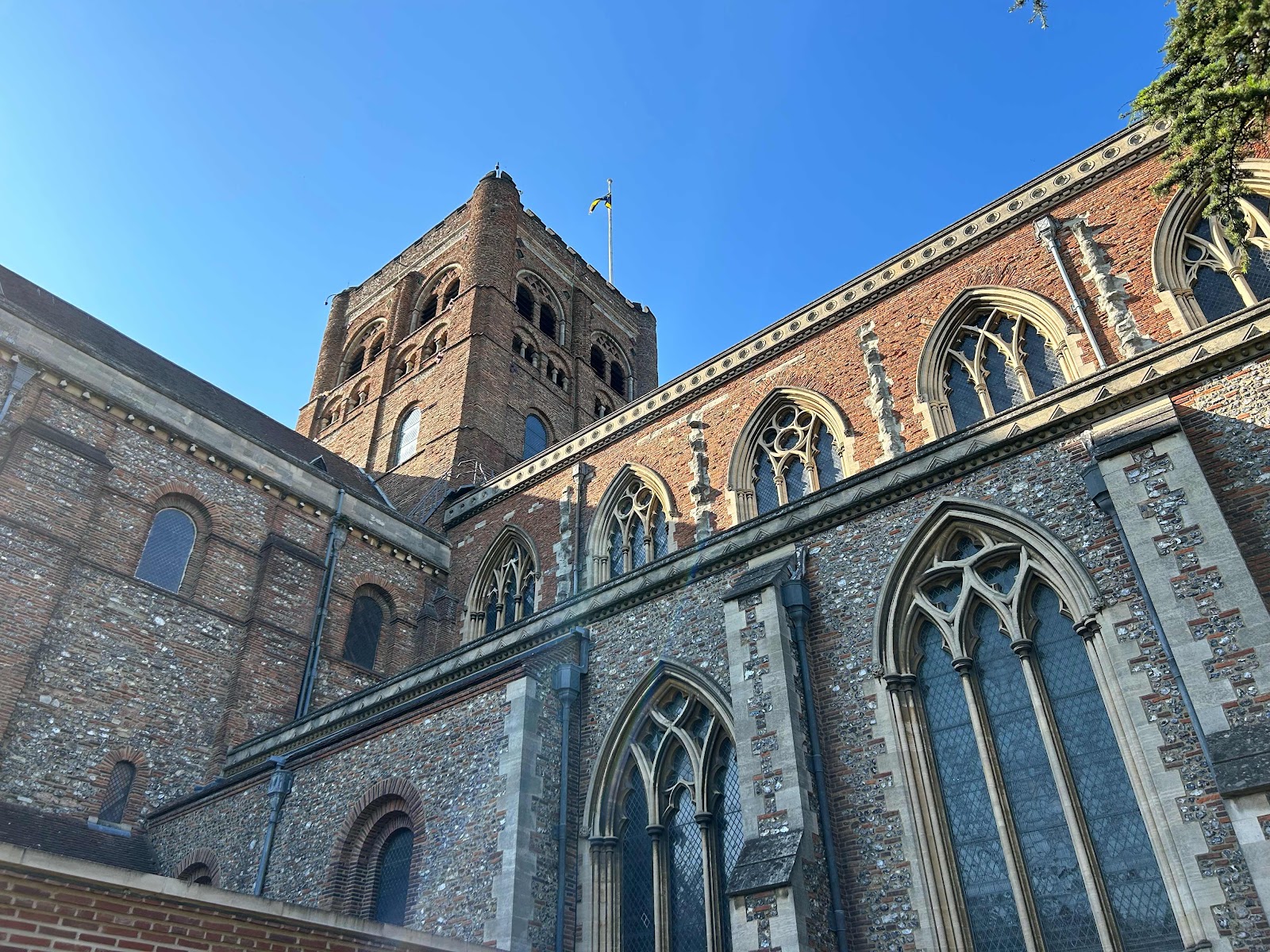
For the last year or so there’s been a WhatsApp group reconnecting some of our school year group who started at school in 1978 and left in 1985. Yesterday some of us met up in St Albans and had a tour of the school, lunch together and some time in the pub. It was an amazing day.


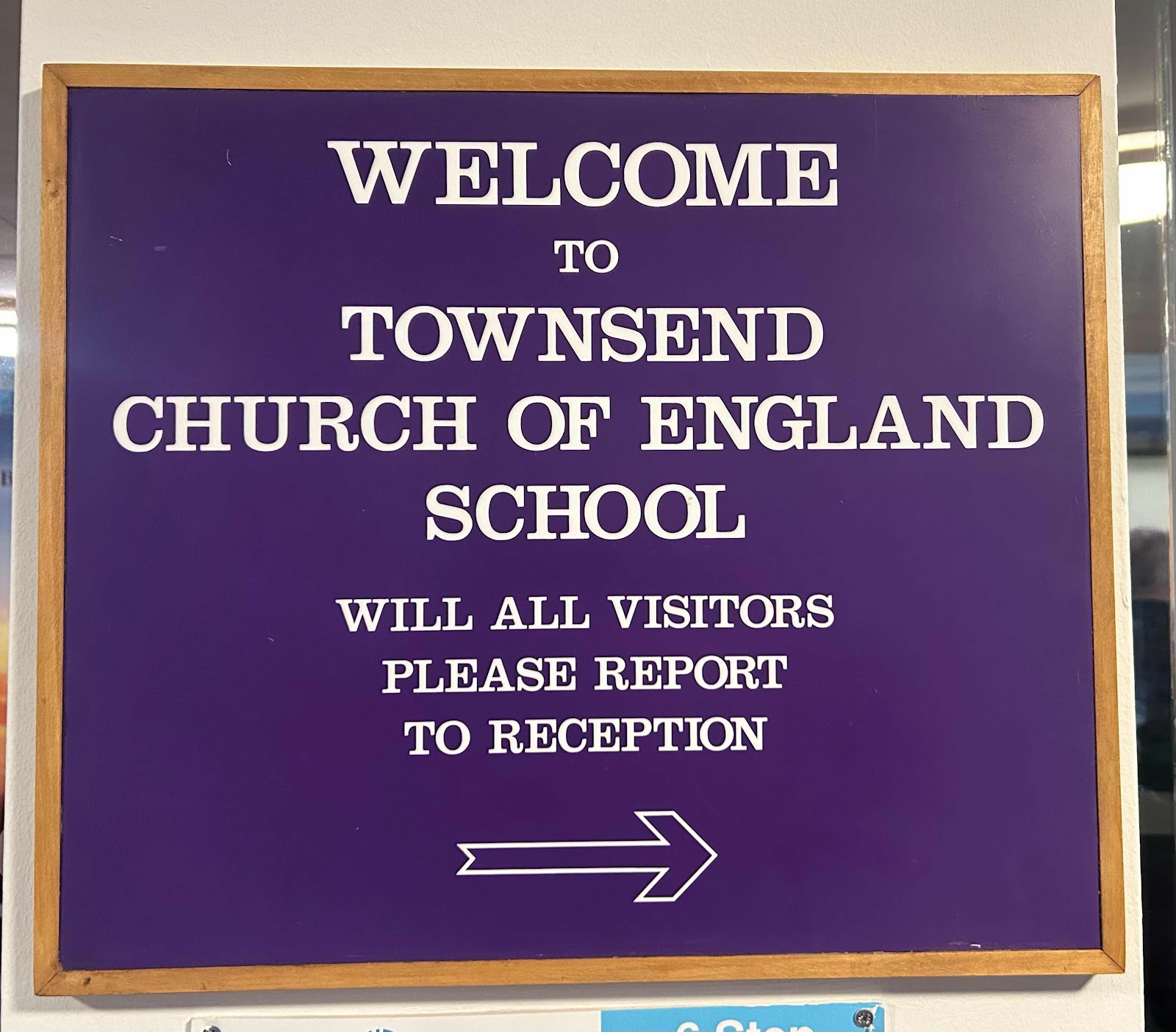
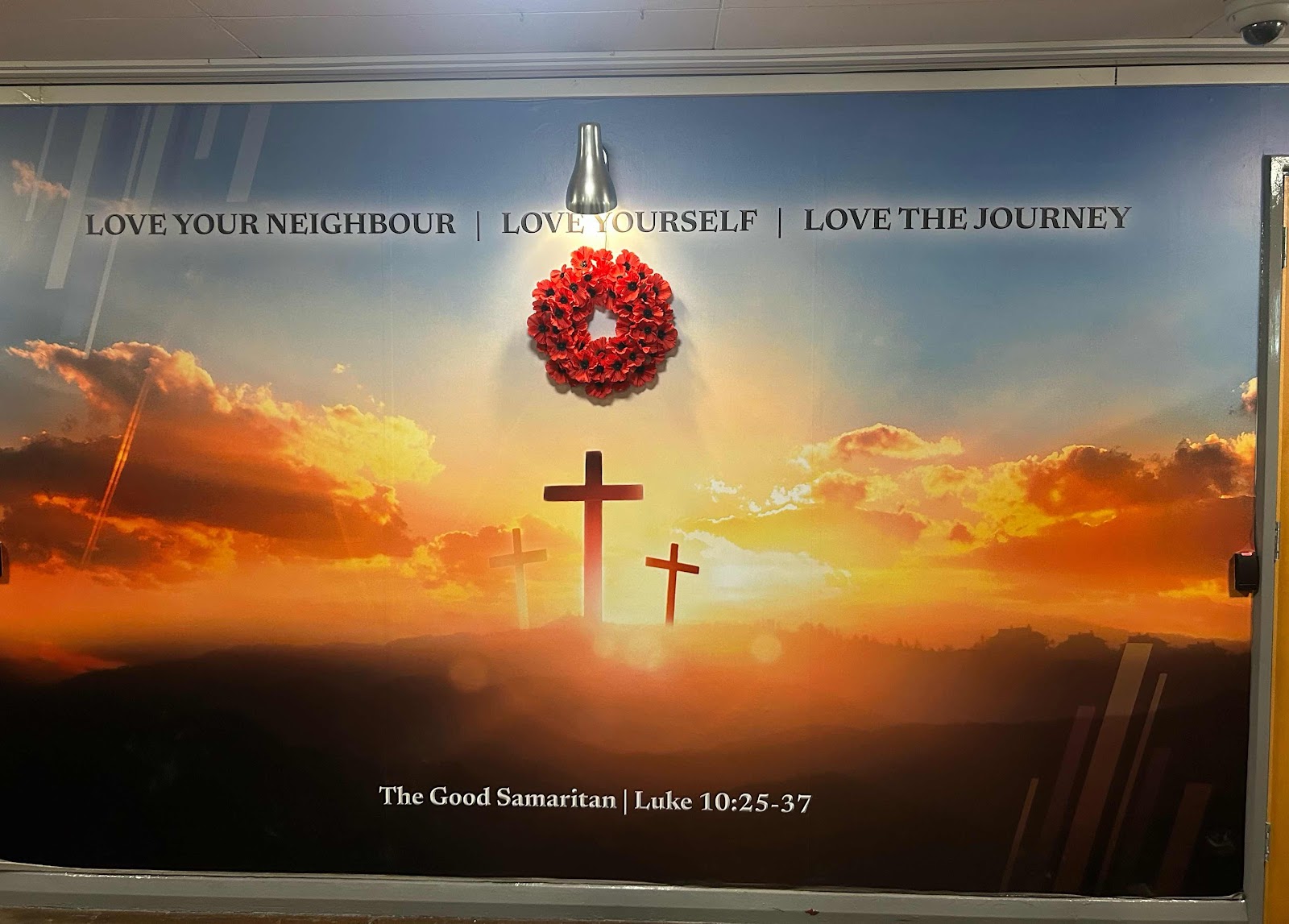
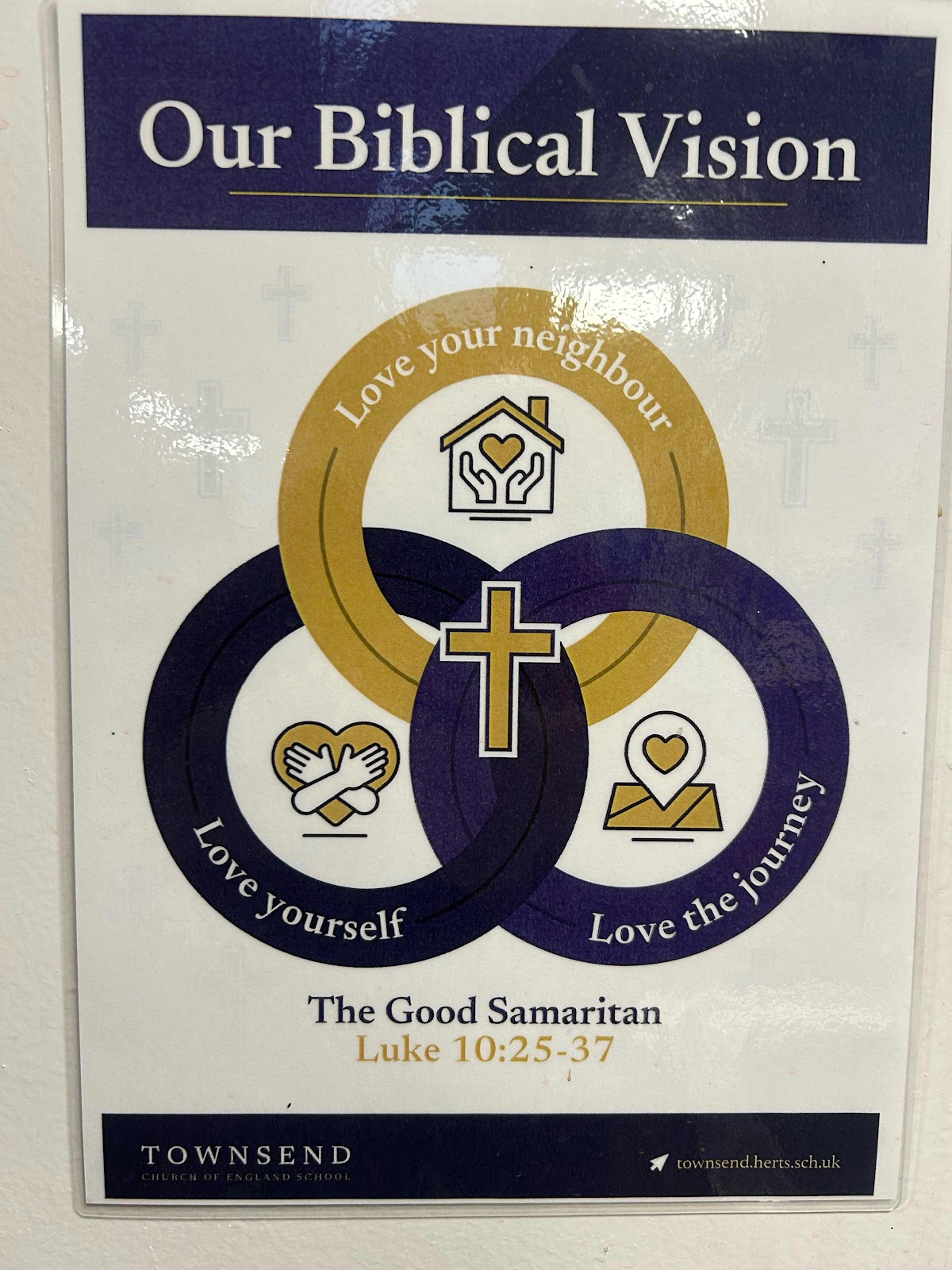
We were met at the school by the current head who was very impressive. Townsend is a Church of England School and he’s clearly upped the spiritual side of the curriculum and daily routine. He began our reunion by leading us in a reflection time and he went on to share stuff which gave me a load of ideas when I’m helping schools with inspections! I took a lot of pictures of notice boards…


About 30 of us had a tour of the school which brought back some happy and some painful memories. Those of us in Winchester class found our old classroom we lived in for our fourth and fifth year. We went and sat where our desks would have been which was a bit of a moment. We remembered dear Mr Laurens who we drove to distraction. He failed to keep control of us and would often lose it. He’d then apologise and say he didn’t mean to shout at us, he only wanted us to pass our exams. We’d say “that’s alright sir” as though he was the one who’d done something wrong! We were always last into assembly as the room was in chaos with several of the class lobbing paper at him. Poor man! 


There were parts of the school I’d rather not have seen again like the PE masters office. I got slippered on day one for being last out of the changing rooms as someone had nicked my pants! At least the swimming pool is no more. The classrooms felt smaller and the field of blessed memory felt a lot bigger. The lecture theatre was as it was - the place we got class detention for being disgraceful more than anywhere!! 


I was glad to get a word with the Head and told him while school wasn’t always easy for me, the spiritual life there and the regular visits to the cathedral began a call to what I do now. We laughed when he spoke with us about a respect for all policy which he was sure was in place in our day. A cry went up from near me “not on your life, mate!” Some of us were pushed into the deep end of the swimming pool, some of us had our ears twisted getting maths sums wrong, some of us were called names for being different or failing exams, bits of school were very cruel in the late 1970s and 1980s but somehow yesterday all that was healed. It was an important day for many of us.


We ended our tour in the hall, the place of assemblies and exams and our beloved Miss Legerton Headteacher trying to hold it together over the noise! The school motto was still there at the front and it still has no s on the end of alway!!


Why was yesterday so special? Well it was quite amazing that after forty years apart we seemed to be a very happy and supportive and connected group. Some of us had travelled a long way to be there. There was a depth there and a feeling of finding friends who might now share the future with me. It was a privilege to be there, worth a four hour drive and landing in a Travelodge at 1.40am and having to spend last night up to 2am writing today’s services. I hope we will meet again soon - I think there’s a commitment to have another big reunion in two years time when we are sixty. 


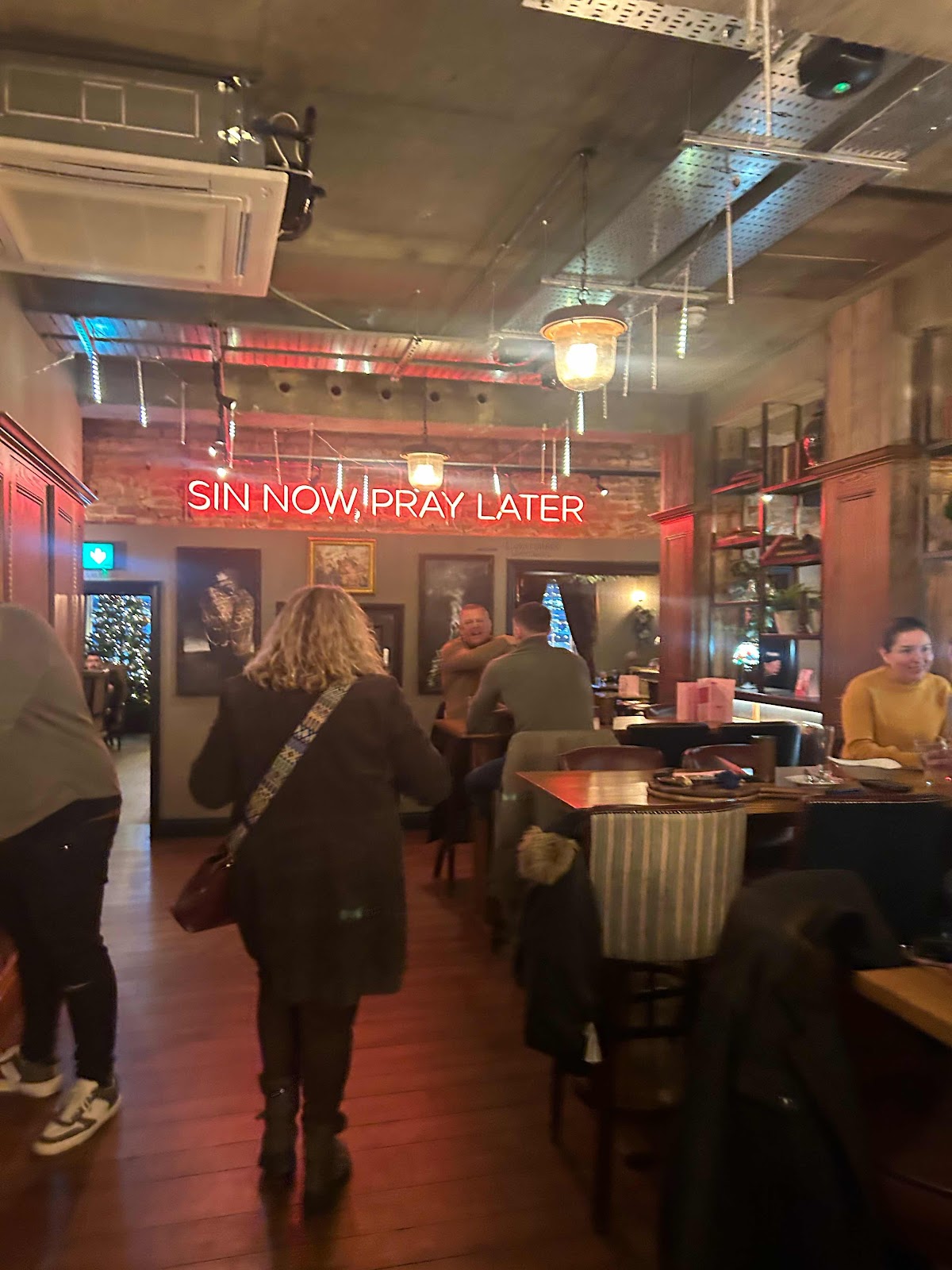
The group camped after a nice fish and chip lunch to a St Albans City Centre pub called Saints and Sinners. I rather liked the signage!


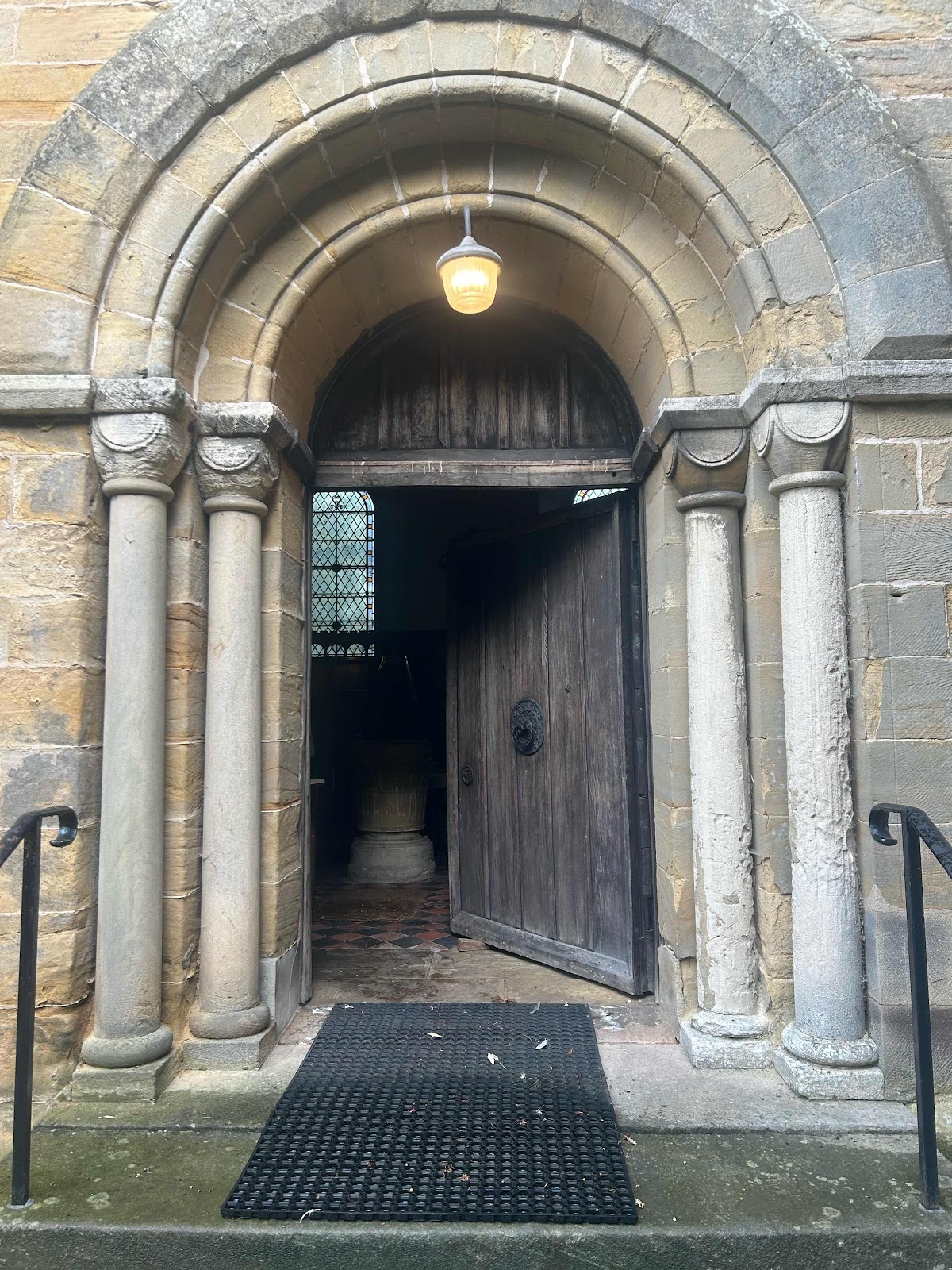
Some of them may still be there!! I did have to keep telling people I work on a Sunday. So to remind them still partying or nursing hangovers this morning I sent a work picture from the vestry in Masham! Thank you fellow travellers yesterday. It was a day I’ll remember for a long time and I’m glad to be part of a group who may now be important. 

It was lovely to be told how glad people were I was there. It was also lovely to be told I haven’t changed a bit and it was fascinating to be told some knew I’d always end up in the Church. I was asked if I do block bookings for funerals!!!!!! 


And to end this - find me on this picture! Clue - my hair used to be a mop out of control!! 


Monday, 18 November 2024

A recommitment to Christian unity.?


Sixty years ago, in 1964, under the auspices of the British Council of Churches, a conference on faith and order was held in Nottingham and put out this statement:

“United in our urgent desire for one church renewed for mission, this Conference invites the member churches to covenant together to work and pray for the inauguration of union by a date agreed between them. We dare to hope that this date be not later then Easter Day 1980. We believe we should offer obedience to God in a commitment as decisive as this.”

Sixty years later, we meet as churches and fellow pilgrims in this city to celebrate while not union, a new commitment to work together in discipleship and in mission as one holy, catholic and apostolic Church, united in our commitment to Jesus and living out our calling to be churches who seek to serve our community. But why haven’t we sorted it? Why are we still not one? Let’s hear that light bulb joke:

How many church people does it take to change a light bulb?

Charismatics: Only one. Hand's already in the air.

Roman Catholics: None. They use candles.

Anglicans: Eight. One to call the electrician, and seven to say how much they liked the old one better.

Lutherans: None. Lutherans don't believe in change.

Methodists: 10-  One to change the bulb. Nine to attack the minister, because someone's grandmother gave that bulb to the church!!


I want to encourage us tonight by using four words, tapestry, sheep, coin, hands… stick with me!

First, consider a tapestry.  Beginning with one thread, one colour, one row followed successively by more threads of different colours and locations.

With every additional thread the pattern becomes more full, more vibrant, more depicting of what the grand weaver desired. The more threads added, the more beautiful it becomes until it is pronounced finished. From above it is the masterpiece of the creator, yet from the back it is quite another story.

Have you ever looked at the backside of a seemingly flawless tapestry? It is an absolute quagmire of loose threads, rogue knots and indistinguishable patterns resembling nothing of the other side.  Scripture refers to the Church as living stones, the human body, a royal priesthood, and the bride of Christ, but I think the tapestry is a particularly telling demonstration of the process of the people of God.

We are to be one including people of such diverse backgrounds and qualities, and Jesus is weaving us into a fantastic one-of-a-kind work that is beautiful.

“But wait!” you may say, “from where I’m standing the Church looks like a messed up train-wreck of individuals.” That’s what makes this metaphor so fitting. Most of us are looking at the tapestry from the backside, and the truth is, it is not all that beautiful. Threads, are all over the place, doing their own things, abruptly cut…and knots galore. But the key is that God is not finished yet, and more importantly, God looks at the tapestry from the other side.

We are to be a messy church together. We might not agree on everything but we agree on one thing - to proclaim Jesus as Lord and Saviour and to share him in worship and witness. Christian unity is a lot of threads coming together. We won’t always agree, we will worship differently, we may have different priorities, what some of us do others may feel uncomfortable with, but tonight there is a new commitment to work at it, respecting each other and learning from each other. So we thank God we are part of his tapestry, offering what we can and respecting each other.

Secondly consider sheep and a coin. What is it all of us are called to do? To seek and save the lost. You’d expect after inviting a Methodist preacher to preach he might mention Wesley - and I’m going to quote him twice! Here’s the first quote. He said “you have nothing to do but to save souls, so spend and be spent.”

The three parables that make up chapter fifteen of Luke’s Gospel all focus on the central theme of the lost getting found, and the joy that is shared in the finding. Many scholars believe they were told as a single unit from the beginning of the Christian era, passed along through the oral tradition that Luke used to compile his gospel account. Tonight’s gospel reading focuses on the first two of these parables. In order for the lost to be found, it had to belong to someone first. The lost sheep was not a wild sheep that the shepherd came upon and added to his flock.

That sheep had belonged to the shepherd from the beginning, and had strayed away. The coin that the woman lost had been part of her life savings. It belonged to her. When she found it, she rejoiced with her neighbours that something of her very own had been restored to her. When Jesus told these stories, he was describing things that had once been where they belonged, but had somehow gone missing.

Jesus is saying that sinners and tax collectors, the misfits of society, all belong to God, just as much as anyone, and God is eager to restore all of us to himself. Once we accept that we belong to God and choose to serve him, we can’t slam the door in other people’s faces. It’s our job to hold the door open for everyone, even those we might consider outcasts. Especially those we might consider to be outcasts. We are to rejoice with God whenever one of these outcasts ‘gets found’ because all are precious to God. And we are also to join with God in the work of finding lost ones, and pointing them toward Christ.

The parables were given to religious insiders – Pharisees and scribes. Whether or not we want to admit it, we fall into that category, too. We are the religious insiders in our society.

And if we read these parables closely, we may realise that the ones who need to repent are the ones hearing the story. A coin or a sheep cannot repent. Perhaps Jesus is asking us to repent, as members of the “already found” group of insiders. Perhaps Jesus is asking us to repent of our smugness, our complacency, our failure to include sinners and tax collectors as part of “us.” We commit ourselves tonight in many diverse ways to commend the Saviour, be it through a cathedral being open, projects like Renew Ripon at Holy Trinity, Methodist coffee mornings, conversation with a Salvation Army officer in the market square, free church worship, shared witness at festivals through the year. Why are we here? To share Jesus. Together. In different ways but together. And all are welcome. Woe betide our churches become insular little clubs where we vet those who want to engage with us. Or we avoid encounter with some who aren’t easy to talk to or help. The shepherd and the woman don’t rest until the lost sheep and the lost coin are found.

The church as a tapestry, the church as a seeker and offerer of salvation, and finally the church as friends. This is where hands come in. John Wesley described religious liberty as the “liberty to choose one’s own religion, to worship God according to one’s own conscience.” He insisted that every person living had a right to do this. Wesley’s essay, The Character of a Methodist, says this “from real Christians of whatsoever denomination they be, we earnestly desire not to be distinguished at all.  Dost thou love and serve God? It is enough. I give the right hand of fellowship.” In his sermon on the Catholic spirit he wrote “if your heart is right with my heart, give me your hand.”

Tonight we recommit ourselves to friendship and a journey together. We recommit ourselves to seeking the lost. We recommit ourselves to learn from each other, to celebrate each other’s unique part in the team, to not be strangers but friends supporting each other. We all have our strengths and we need to offer what we can. Let’s not dis those we don’t get how they do things, let’s be glad we are different and reach out our hands to each other.

And let’s not spend too much time focussing on what divides us but what binds us together.

Tapestry, sheep, coins, hands.

“Nothing offends God more than for the church to be in a disunited state, because it bears to the world a very bad testimony and example."  Tonight, we recommit ourselves to work together. Then tomorrow we face outwards to our city. When we do the work of Christ there will be rejoicing as we find people and offer them his grace and freedom. God has given us this chance to sort ourselves out, to be one United church with all our different bits.

Through us he will build his Kingdom, and his name will be glorified. Be encouraged tonight in our unity and our diversity, this recommitment, this internal reboot, then go and be his church. Amen.



Sunday, 17 November 2024

Signs of the end?


Next Saturday I’m going back to the city I went to school in, St Albans in Hertfordshire for a reunion of some of my year group who were at school from 1978 to 1985. I’ve not seen most of them for nearly 40 years. We are having a tour of the school and we are meeting some of our former teachers but I hope there isn’t a tour of the swimming pool. I hated swimming. The PE teacher used to hold a pole over my head and he’d shout when I started to struggle in the depths – hold on if you’re in trouble. Just hold on.

This Sunday is the second to last Sunday of our liturgical year. As we approach the end of the Church year, our Gospel invites us to consider Jesus’ predictions and teaching about the end of the world. And how we might hold on in trouble.

I went into the craft and chat Saturday workshop when I arrived at Allhallowgate yesterday afternoon. I was told as there was spare fabric to join in making a Christmas pudding. I told them I’d make one if they’d write me a sermon on the apocalypse! I was turned down.

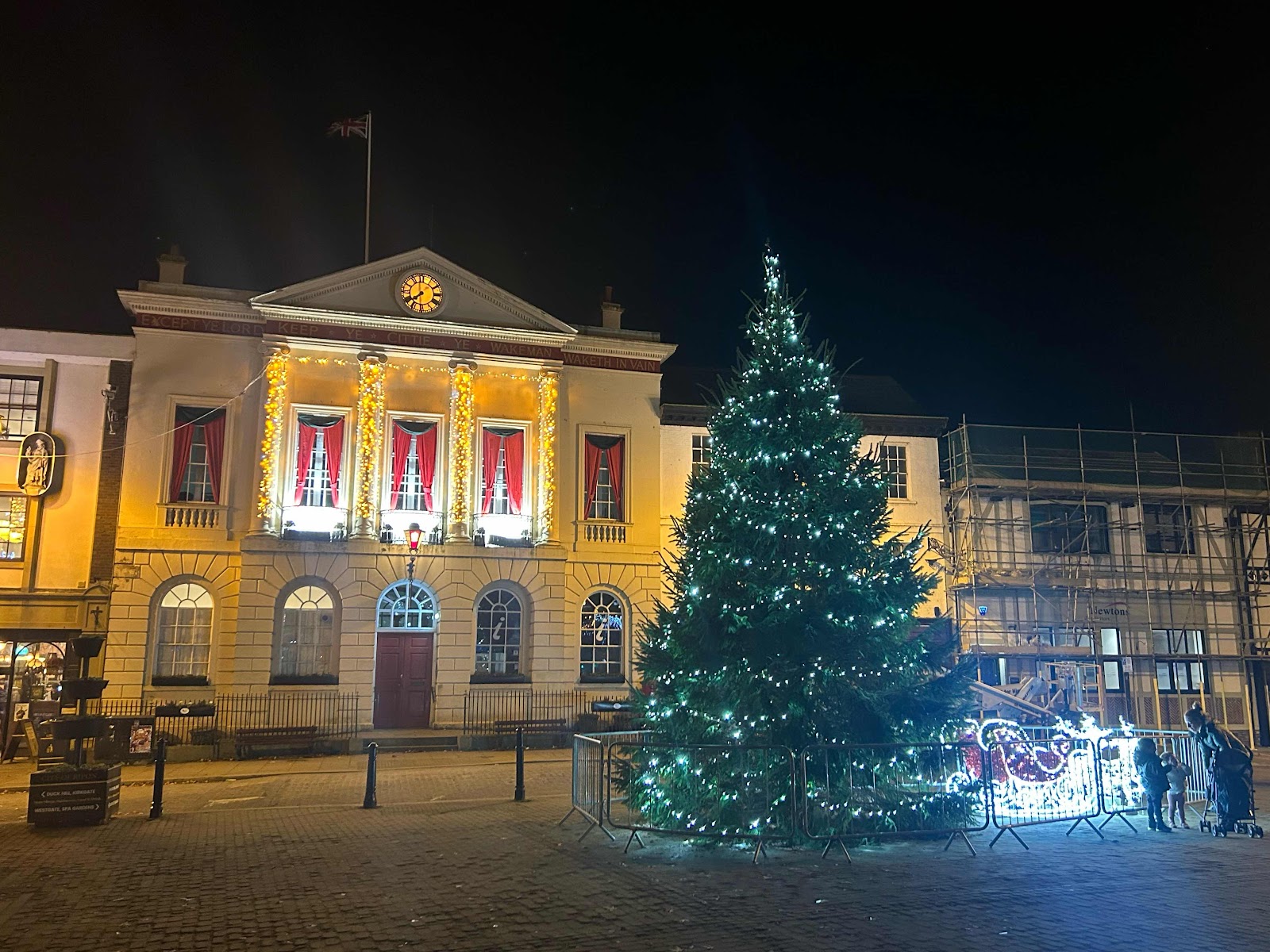
There are people who are just holding on at the moment. The world feels too much. That’s why we are switching on Christmas lights so early. We need light. They were switched on last night, 16 November in Ripon. A truck was blasting out Christmas music so much so for several hours I had One more sleep by Leona Lewis going round and round my head. Santa was there and reindeer. On November 16!


We hold on by not thinking about the hard stuff, the swimming pool, the wars, the politics but you know one of the craft group said you’d better throw Thump into it…

I think I’ve told you that I’ve traced through social media some cousins in different parts of the United States. One says in a message “it’s scary and he isn’t even in the White House yet.” Are there signs of the end? Throw in too destruction of the planet, a lack of respect for the different and isolationism, who knows? People have worked out when the world will end and have been wrong. I remember once preaching in a very conservative evangelical Anglican Church the day after an expected rapture. I began my sermon by joking “ well we are all still here then” and none of them laughed!

Let’s be very brave and look at our Bible passages because they are both about just hold on when you are in trouble or it’s all too much.

The book of Daniel is familiar to many for the stories of the faithful being thrown into the furnace, and of surviving the lion's den. We were told those stories as children.

The story of Daniel is set just after Babylon's first attack on Jerusalem. The Babylonians had taken the city, plundered the Temple, and were taking swathes of their population into exile. Amongst the prisoners were Daniela and his three friends, whose Babylonian names were Shadrach, Meshach and Abednego. The book of Daniel can be split into two parts. The first part (chapters 1, 3, 6) is their story and how they kept hope alive while living in the land of their conquerors. The other chapters (2, 4, 5, 7) include visions and stories that instruct the reader in not rebelling against God, encouraging patience while waiting for God's rule to return. In chapter 11, the author writes about a vision of the future where kings will rise and fall, including the final ‘king of the north', who will invade Jerusalem and desecrate the Temple. But even he will finally fail and be defeated.

There are many debates about the identity of this king, with some arguing it is the Syrian King Antiochus who lived in the mid second century BC. Others think it is a description of the Roman Empire. No single historical figure or empire fits the description entirely.

In the reading today, there is a vision of the end times to come, the final resolution of God's world.

The fate of the righteous and the wicked is decided. St Michael the Archangel comes as a sign of divine intervention in the natural order, but there is a strong hint of predestination in this text with only some being saved, a theme that is attractive to the author.

In verses 2-3, the text suggests resurrection of the dead, the only time in the Hebrew bible where this is explicitly affirmed, though belief in it was more widespread than the texts might suggest. The dead here are revived so that justice might be done – both on those who sinned in life, and those who suffered even though they did no wrong.

The apocalyptic imagery is picked up by Jesus and is written about in parts of Mark's gospel and in Revelation, where John applied them to the Roman Emperor.

Hold on.


Then Mark 13.

Before we consider Jesus’ words, it is important to note the political backdrop against which many think Mark’s Gospel was written. Most scholars concur that Mark wrote his Gospel for Christians living in or near Rome about 30 to 40 years after the death of Jesus. This was a time of political turmoil in Rome. Some Christians experienced persecution by the Romans during the reign of the emperor Nero (about 64 A.D.). Jewish revolutionaries rebelled against the Romans, which led the Romans to destroy the Temple in Jerusalem in 70 A.D. In this time of political turmoil and persecution, many in Mark’s community might have wondered if the end times predicted by Jesus were in fact quite near.

The reading from Mark chapter 13 is part of the Bible which we call apocalyptic. About the end. Jehovah’s Witnesses will get you about the end. Christianity has beliefs about the end but we rarely share them. Christian faith believes there will be an end – the end of the present age, the return of Christ and a new age inaugurated.  We believe that those who trust in Christ receive now. here, a foretaste of the new life in which they will share in Christ's triumph over death and rise, transformed like him, to perfect life in the presence of God. And that that perfect life will come. The end of this story and the beginning of a new one. Jesus stands with his disciples outside the awesome Temple which the disciples marvel and Jesus says you know, one day this will be gone, there will be destruction…


A first look at his words isn’t very comforting. Nation will rise against nation, kingdom against kingdom, there will be earthquakes in various places,  and famines but then he says something else. 


The new age is coming says Jesus, but it might be hard for a bit. Believe, stay firm, hold on, be the church. You will be rewarded in the end.   Only light drives out dark. Only love drives out dark. In that we trust even when we have no answers even when we do not know what to do – for God is God.

The Temple was the focal point for worship for Israel. The First Temple, built by King Solomon, was destroyed by the Babylonians. Some seventy years later, Jews returning from the Babylonian exile rebuilt the Second Temple and 500 years later King Herod remodelled some of it, beginning around 19 BC and finishing in 63 AD.

This means that the work was still continuing in Jesus’ day but even partly done, it dominated the skyline as well as the religious practices of the Jews. To stand outside and look up would have been awe-inspiring.

Some of the structures were vast. One of the foundation-stones, measured in recent times, proved to be nearly twenty-four feet in length, by four feet in depth.

The disciples would not just have seen the physical structure but would have absorbed the cultural enormity of what the Temple meant for their people; what it said of their history; what is called from them in worship. This was the sacrificial centre of their faith. This was where they were expected to make pilgrimage. This was where, in the Holy of Holies, they were taught that God was most present.

Is it any wonder they gasped and said out loud: ‘Look, Teacher! What massive stones! What magnificent buildings!’

What they didn’t know, of course, was that the Temple was destined for destruction. In the year 70 the Romans laid siege to the city and after five months destroyed both Jerusalem and the Second Temple, as it was known. 


Yet existence as God’s people did not depend on the Temple; as they had learned in a previous era, so long as they gathered to pray and hear the stories of God’s mighty saving acts recounted in the Torah, so long as they allowed themselves to hear and heed the words of their prophets, so long as they continued to love God and neighbour and even their captors, they could continue even in dire circumstances to serve as agents of and witnesses to God’s faithful, redemptive work in the world. 


Just hold on…


Let me end like this. When I’ve no words, I always go to Nadia Bolz-Weber, an amazingly honest pastor in the States. She shared this prayer this week.


Dear God,

There’s so much to fear right now that I’m sort of losing track of what to worry about most. So I’m gonna need some help focusing. Show me what is MINE to do. Then grant me the strength to do it, and the humility to rest knowing it is enough.

Help me remember that even if there is more to worry about in life right now, it does not mean that there is less to love in life right now.   So protect every inch of our joy, Lord. And if you could help me stop reading shit on the internet, that might really help too. Amen.

And note how the Gospel ends today:

We read with hope that the "wise will shine like the brightness of the heavens, and those who lead many to righteousness, like the stars for ever and ever."

The texts suggest a kind of ‘power behind the madness' that will break through for those who maintain hope. Reading this we might find comfort in the story of redemption that underlies all space and time: God's promise and power over, through and despite human actions. There is a pattern here that comforts. Whether it is apocalyptic beasts, humans glorifying in their own power, or anyone who doesn't acknowledge God, God will one way or another bring about God's kingdom. So, the message is simple – keep the faith.

 Things may well be difficult and confusing. Things may be changing, there are rumours and birth pangs… but you know what -  - maybe until the end we are simply to hold on and God will be faithful…      


Sunday, 3 November 2024

From death to life - a reflection for All Saints and All Souls


One of my friends was in a pub on Thursday evening for a meal with her family. Of course, Thursday was Halloween. As soon as the last guests had finished eating, the landlord started to take all the Halloween decorations down and then he started to put Christmas decorations up. Please let’s let Christmas come when it should – about December 24 if I had my way!

Before Advent begins on December 1, we have some special Sundays in November. The lectionary in a few weeks will remind us of the end of the Christian story, the reign of Christ as King in glory. Next Sunday we will gather to remember the fallen of two world wars and conflicts since, and here today we are marking two Christian festivals Methodist people often don’t do – All Saints and All Souls. I know some people have stayed away from this service because it’s too hard for them but I want this to be a service of hope – we will talk of death and loss but we won’t stay there because our faith doesn’t stay there. We are an Easter people and alleluia is our song, but after four and a bit years of having me as a preacher, you know it is my conviction we have to do Good Friday and pain before Easter, we have to die in order to live.


First then, we need to remember. Canon Michael in the cathedral notice sheet for today shared a song from Iona he turns to at this time. The words encourage us to remember those who helped us come to faith, by singing songs and telling stories, by inviting us when we felt distant, by praying for us without being asked. We need time, intentional time, to pause and thank God for those who have shown us Jesus, those who have helped us come to faith, those who have sung songs and told stories, those who have invited us into Jesus presence when we’ve felt distant and those who have prayed for us without being asked. All of you come here with those people without who you wouldn’t be the people you are today: the ones who have shown you Jesus in word and in action. Parents, grandparents, husbands, wives, children, friends, Sunday school teachers, maybe even the odd minister. In a sad and horrible dark world, these people brought you light.

I am doing a school assembly in the morning in Grewelthorpe. We will talk about three famous saints – St Alban, the first Christian martyr in this country, St Wilfrid, our local saint, Mother Theresa who helped the poor in Calcutta made a saint fairly recently and then I will ask a child to look in a mirror because we all have the potential to be saints. I was at the welcome service for the new Anglican bishop of Whitby the other week.

At the end of the service, he thanked the saints “here in Northallerton.” He meant those who had made the coffee and baked cakes and made us welcome. The letters in the New Testament begin “to the saints” – we are to be distinctive, and those we remember, we remember good qualities and faith that stay with us forever.

I find taking funerals a huge privilege because you hear stories of people who did things you never thought they would do because you only met them in later life. We heard of Moses last days earlier. I feel a bit sorry for Moses as after years of journeying and people moaning and being horrible to him and giving up on God, he never saw the Promised Land but his life’s work was well done and his story is still told today. We remember those who have gone before us with gratitude.


Then we need to talk of death this morning. However hard that is! Here’s my second piece of writing by the late American writer, Mary Oliver. “To live in this world, you must be able to do three things: to love what is mortal, to hold it against your bones that your whole life depends on it, and when the time comes to let it go, let it go.” But that’s hard isn’t it. We don’t want to think about death and partings. That poem Death is nothing at all is often read at funerals, it ends in triumph but death isn’t nothing at all! But it is but a journey to something better and we will get to that. But most people don’t want to talk about it. Thomas in the Gospel didn’t get it. “We don’t know where you are going! How can we know the way?” Despite Jesus’ promises, the disciples couldn’t face death and a cross and it was all about a defeat and an end.

I meet regularly with Rob, the Methodist army chaplain at Dishforth. He told me this week over coffee that part of his role is to talk about death with the soldiers. He talks with them on operations, a bunker in Iraq or in Afghanistan. Imagine that.

Jesus goes to prepare a place for us. That’s amazing good news! And for some there is a peace that calms those awaiting the end of earthly pilgrimage. Last Sunday, the radio DJ Johnnie Walker presented his last programme after 58 years. He’s got idiopathic pulmonary fibrosis which makes breathing very difficult. I found a tear jerker of a programme on BBC Sounds where he talks about the future with his wife Tiggy. He only has a couple of months to live and in the programme they talk about his funeral and then how his spirit will be living on and being there for her. The programme is called Walker and Walker and I really recommend you find an hour to listen to it – with plenty of tissues!

Jesus does not save us from the reality and the sorrow of death. Even Jesus, confronted by the death of his dear friend Lazarus and the immense grief of his sisters, broke down and wept.

Today, as we remember those we have loved and lost and all the saints, we are allowed to weep and to be sad.

 This kind of grief is a sign that we are human and that human connections matter. They mattered greatly to Jesus of Nazareth.

But we are also urged toward hope and not despair. “Did I not tell you,” Jesus reminds the grieving Martha in the Lazarus story, “Did I not tell you that if you believed, you would see the glory of God?” Death is real but it is not the end.


Finally here’s my third piece of writing. The theologian and author Jan Richardson writes this:

God of the generations, when we set our hands to labour, thinking we work alone, remind us that we carry on our lips the words of prophets, in our veins the blood of martyrs, in our eyes the mystics’ visions, in our hands the strength of thousands.

From all we read in the New Testament, the grave is not the absolute finale of the great act of life. “The trumpet shall sound and the dead shall be raised incorruptible.” But we are not given any details as to what happens after death. Lazarus is nowhere quoted, even though his sisters and friends must have asked him what it was that he saw. But we believe heaven, eternity is a party of eternal delight with God, free from pain and suffering and yes our loved ones, your loved ones, look down on you cheering you on, a great crowd of witnesses. Peace I leave with you says Jesus.

So today, we give thanks, we remember the journey from death to life and we anticipate the joy of heaven. And as we remember stories and our faith and a faithful God, we work to make our world better like our forebears and Jesus did.

Adrian Roberts is one of the lay readers in the Fountains Benefice and he’s written a weighty tome on the hope for an afterlife. He quotes C S Lewis:

 “There have been times when I think we do not desire heaven, but more often I find myself wondering whether, in our heart of hearts, we have ever desired anything else.”

And Adrian reflects helpfully: “All our yearnings for something more than life can offer may be an indication that it was never intended that our existence and significance should be confined to this life alone. It may well be we were always meant to end up in a realm of ever increasing joys and wonders, a realm of the new where we and all those we have loved will be transformed in ways we can barely imagine but which will also be a realm in which we realise that we have finally come home to that distant shore.”

I know this isn’t the easiest service to come to, and I know this hasn’t been the easiest sermon to write but I hope remembering and revisiting the heart of what faith is about, you can take away some hope today. For our loved ones are safe and the triumph of heaven is mighty and onr day we will be there too. Until then, may we keep praising God who in a Jesus has said death cannot hurt us and eternity is our gift.

Following God’s saints in the ways of holiness and truth, we keep going in the peace of Christ.

 Thanks be to God.