Friday, 6 December 2024

Advent giving rather than getting


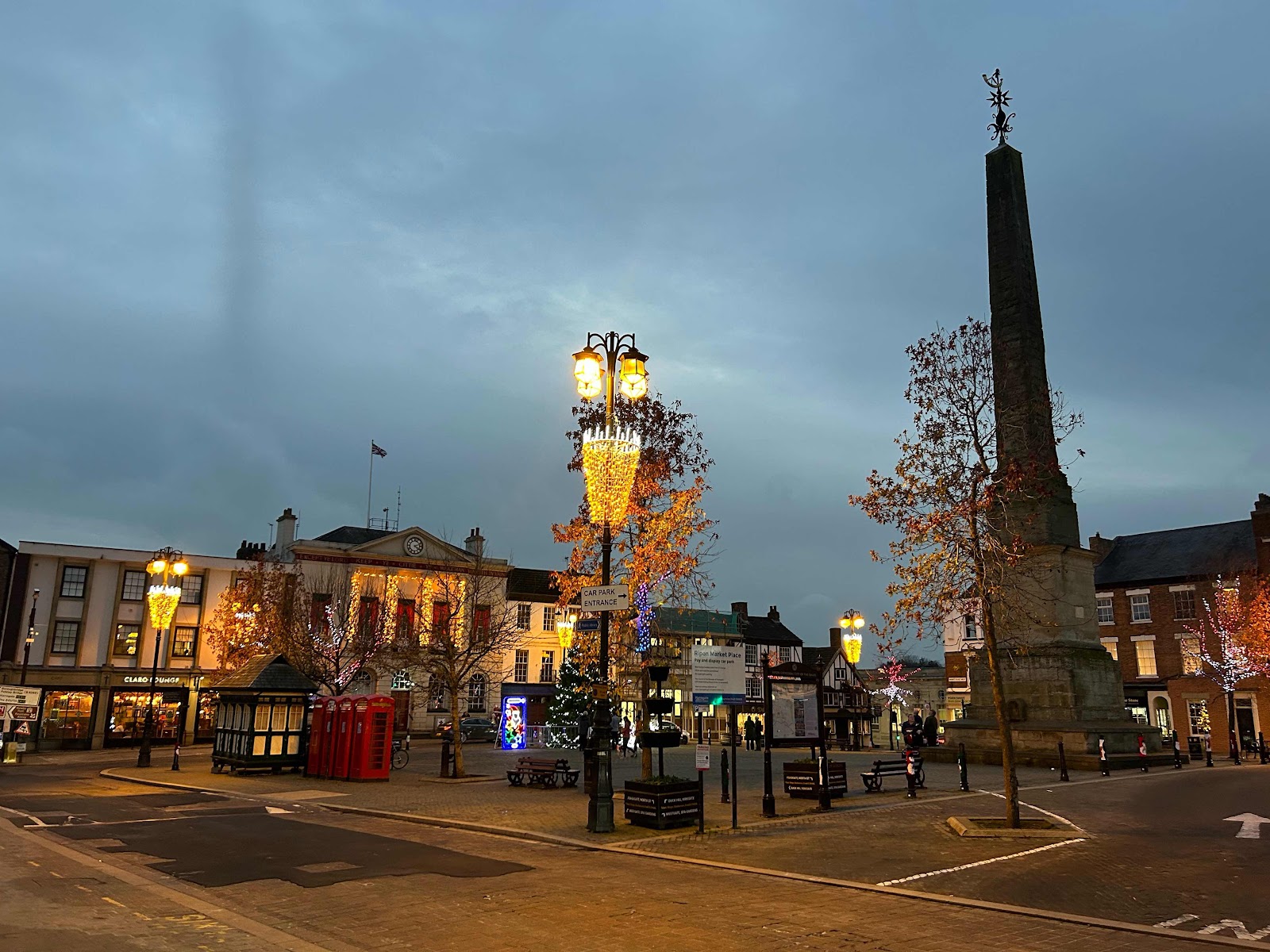
Ripon is looking very Christmasy tonight. The shops are full of people getting stuff. In Aldi there are things you never know you needed - but I did leave pigs in blankets in mac and cheese on the shelves! Trollies were being loaded with more than enough to have a good Christmas. Getting more than enough maybe over giving. 

Today is the feast day of St Nicholas. We know he was a bishop of Myra in modern day Turkey, who cared for the poor and vulnerable in his diocese. There are many early accounts of how he did this. The most famous is his provision of three bags of coins to ensure that three young women were not sold into slavery. From this the tradition of giving presents has developed. 

This ensuring the safety of the young was developed in another account of him rescuing some boys who were being boiled alive. There are other accounts to do with his assisting of sailors in peril of their boat sinking. For these reasons Nicholas is the patron saint of children, of seafarers, of pawnbrokers and those who use them, and of various cities and countries. 

It is salutary that it was the original St Nicholas’s care for young women and men at risk that has led to the various modern celebrations that stem from him. His active ensuring of the safeguarding of the young and vulnerable being  at the heart of everything a church is stems from our response to Jesus. As it did his. The tradition of the giving of gifts partially coming from his intervention to ensure the welfare of children. (The other origin being the Magi giving gifts to Jesus.) 

One of the old Christian traditions surrounding St. Nicholas's feast day is for children to leave their shoes out overnight in front of the fireplace, on the windowsill, or outside their bedroom door so that St. Nicholas can fill them with special fruits, sweets, and other small gifts and treats.

Some would leave carrots or hay in their shoes overnight for St. Nicholas's donkey to eat. St. Nicholas takes the hay and carrots for his donkey, and replaces them with small gifts and treats for the children in the morning.


St. Thérèse of Lisieux describes this tradition in her home in France as a small child and recounts how much she loved it. However, for her family this happened not on St. Nicholas's Day but on Christmas Eve.

"I knew that when we reached home after Midnight Mass I should find my shoes in the chimney-corner, filled with presents, just as when I was a little child...Papa, too, liked to watch my enjoyment and hear my cries of delight at each fresh surprise that came from the magic shoes, and his pleasure added to mine."  


In Advent we need to stop and ask whether we give or we grab. Is this a season to ask how grateful we are? In the middle of our troubles we are still blessed. The good things we enjoy in this season are to be savoured gratefully. I love this poem by Mary Oliver. 


We need to be grateful that the gift has been given. God sends us himself. An indescribable gift. Never take the grace of God for granted. May I suggest we get as excited over being gifted it as Alice, below seeing an empty box?!?! 


Here’s a Roman Catholic prayer for today. Enjoy!


Thursday, 5 December 2024

Advent peace


I read this blog post from Red Letter Christians today and want to share it as today’s Advent reflection. 

“The promise of ‘Peace’ is ever present in the Advent story. Peace is coming. Jesus is heralded as ‘The Prince of Peace’. The shepherds are told ‘Don’t be afraid’ - which is about experiencing ‘peace’.
 
Peace is often understood to be an external thing. It is the reality of the absence of this peace that tends to dominate news headlines. It may be peace between two divided elements – divided people, communities, tribes, countries.
 
The good news is that we can create and build peace, but we only consider peace to be something existing outside of us.
 
However, the promise of peace heralded in this Advent journey and the Christmas story is not just being about external peace. It is about inner peace too, our inner peace. There is an invitation to all of us to know the kind of peace that dwells deeply in us and it is from this place that we can truly be peace-makers in the world around us. It becomes our inner story shaping who we are and who we are becoming.
 
Father Richard Rohr sums this up by saying, ‘Transformed people transform people.’ Peace-filled people bring peace, in and through all that they do.
 
Today, may we discover a greater inner peace – one founded in the Source of all life and all peace. May our ‘peace-fullness’ overflow into our words, our actions, and our behaviours and so bring peace to others. And may this peace light up homes and communities wherever we are found.”

Amen to that! 


Wednesday, 4 December 2024

Advent mixed messages…


It’s easy to get confused in these weeks. Is it Advent or is it Christmas? At school today after my collective worship the children were told very firmly “it’s not Christmas yet so you needn’t be silly. There are two weeks and two days of school to go.” I probably didn’t help the outbreak of silliness as I did a collective worship on waiting and got the children to form a queue and I asked them what they might be queuing for. We were doing alright until one of said “the toilet” and of course the word “toilet” for some reason provokes snorting!! 

The same children were tonight doing Christmas even though it isn’t Christmas. They were singing carols at Boroughbridge light switch on and late night shopping. 

It’s as easy for us preachers to get confused. Do we preach Christmas coming and baby stories? But hasn’t he already come so shouldn’t we be anticipating the kingdom and judgement and his return? Isn’t it Christmas every day really? Discuss! 

It was whatever good today on the fourth day of Advent to see a town anticipate Christmas. We all need some comfort and joy. And we were doing fine until it started raining very hard and the Methodist biscuits and leaflets started to get very wet… so we baled early. 

And what was also good was how many people knew me as I mingled tonight. I told the children at school to come and find me tonight. One little boy introduced me to his Mum:

“This is Rev Ian. He’s the new Rev Karen. (Rev Karen is the former vicar who has moved on. I’m covering the school while there’s an interregnum even though I’m a different flavour.)  “But he has a different name!” Isn’t that great? 


Tuesday, 3 December 2024

Advent promise of good things


I’m writing this trying to keep awake before a zoom meeting about church toilets! We’ve just had a lovely church Christmas meal together. The food was superb and the conversation good. There was a positive and happy spirit about.

Part of the Advent narrative is about a positive encounter with things that might do us good. Christmas pudding isn’t that good  for us but it does us good! A bit of comfort and joy! If you read the Advent Bible readings they are about God coming to us with good things. We have to look forward to them as much as we looked forward to our Christmas dinner together today. We need to travel these Advent days with expectation and enthusiasm.

This morning I did collective worship at Fountains School. The worship ended with them singing We Three Kings. A bit early! Very early! I was standing by the reception children and one of them belted out Star of Wonder in a broad Yorkshire accent, louder than anyone around her. Harriet was responding appropriately to the news of a star. I told her she’d made my morning! Are we as happy about what is coming? God is preparing good things for those who love him. That’s the Advent promise. 

There are always good things ahead. Things of wonder. I rang back one of my folk who left a message earlier and she told me she was in the middle of making stained glass biscuits for tomorrow. How fab! (We have a stall at late night shopping tomorrow night :))


Monday, 2 December 2024

Advent waiting


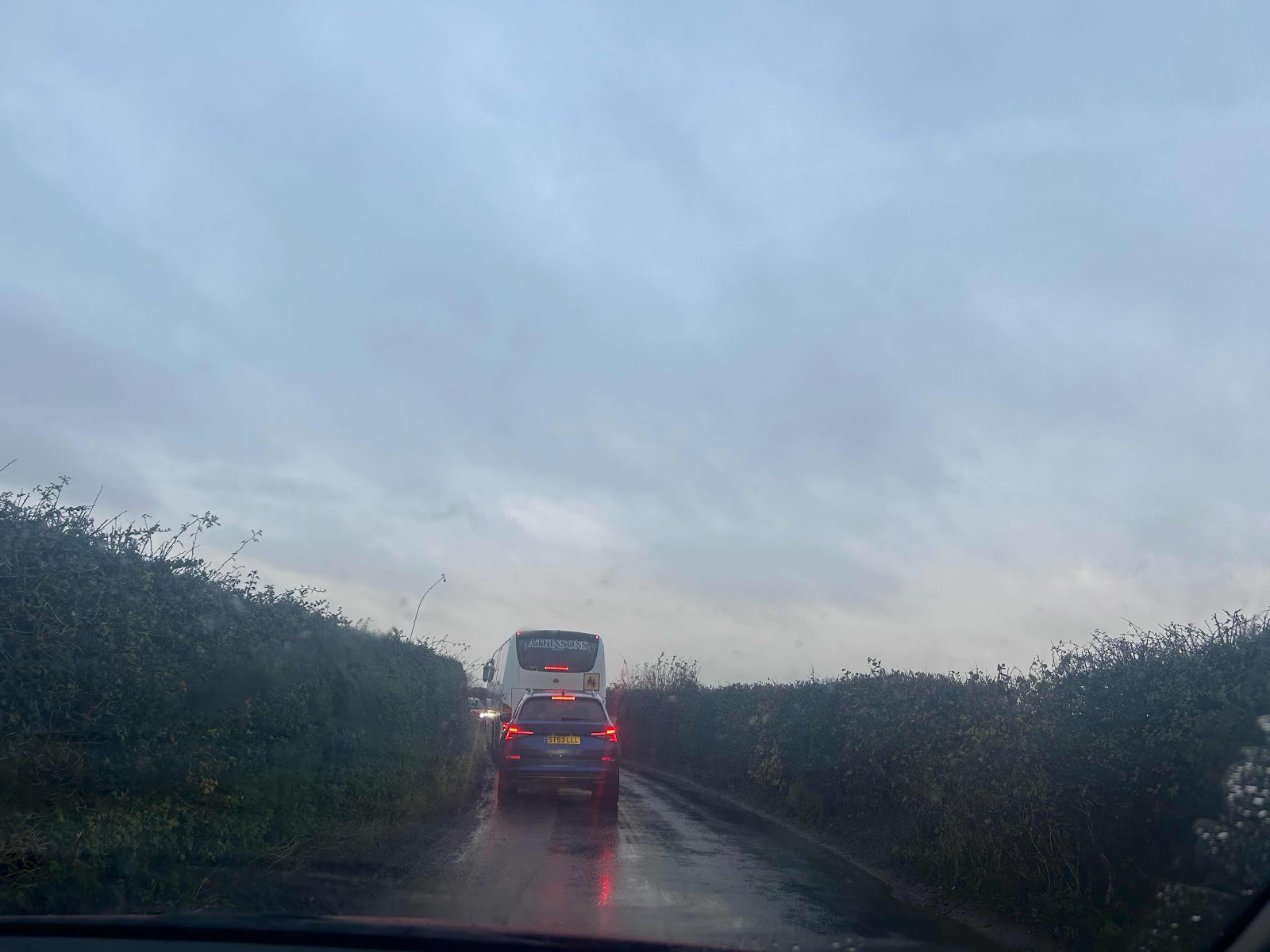
Waiting can be frustrating. I’ve never been good at sitting in traffic jams. Here’s one from this morning just outside Grewelthorpe. Several cars and a coach wanted to go one way and a Tesco delivery van and several other cars wanted to go the other way. In the middle of us all was an elderly lady in a red car getting more and more stressed. I think she was in the other queue of traffic but she ended up in mine! 

All I could do was be patient and wait even if it meant I was late for a 9am school assembly. Sometimes our time isn’t how we’d like it to be.

Maybe we need to learn in a frantic world waiting might need to be enforced on us. 

However, I still don’t like being stuck in traffic! 

Sunday, 1 December 2024

Advent - longing for light


One of the places where people’s pent-up anger spills out is a self service checkout in a supermarket when it won’t scan the bar code of your shopping. The other day there came a message on the screen after my bread wouldn’t scan: “please wait, someone is coming to help you.”


We enter today into the season of Advent. A time of preparation, of longing, of repentance, of watching and waiting for God, who is the someone coming to help us.


And this Advent, we need help! With war and threat and violence and uncertainty, with discrimination and a lack of community and a yearning for peace, we pray, come, Lord Jesus. Please come and help us.


I think this need for comfort and help is why Christmas lights go up so early. The Advent of God long ago in human form began in the dark. The darkness at creation was flooded with light. The Psalmist sang that the Lord is our light and our salvation. Isaiah said with confidence about a new ruler to come that the people who walked in darkness have seen a great light. Jesus came to a dark world to be the light of the world.


Isaiah foresaw it. Isaiah records the arrival of a leader, the formation of a government, that makes a definite difference to the fate of a nation. Comparing before and after this transformational event is like comparing night with day. Literally the difference between dark and light. This darkness depicted at the end of Isaiah 8 does not appear suddenly.


As you walk through the first eight chapters, you can sense the light is starting to fade. There is deepening darkness that overcoming and overwhelming the people of God to that point where Isaiah informs us of the ‘distress and darkness, the gloom of anguish’ telling of those who ‘will be thrust into thick darkness’ and then into this darkness, comes light. A divine intervention, a transformation, at the start of Isaiah 9 that makes all the difference. ‘The people who walked in darkness have seen a great light; those who dwelt in a land of thick darkness, on them has light shone.’  Before there is distress and darkness. Gloom and anguish. And then comes a light. Gloom turned to glory. Grief turned to gladness.


Please allow for a few moments of nostalgia. Every year at this time of year the Blue Peter team on children’s television would make their own version of an Advent Crown. John Noakes, Peter Purves and Valerie Singleton are among the names I recall from my childhood..

Two wire coat hangers, silver tinsel, four candles and four Christmas baubles, transformed into their Advent wreath.

 This activity always forewarned us that Christmas was approaching, and we should be getting ready.


We need a time when we remember God listens to our deepest desires and assures us, he won’t leave us. We need a time when we stop our busyness and look for where God comes around us. We need a time when all we do is wait on God and expect his incarnation in our experience. We need a time when we look up and see the Kingdom coming again and await not a rerun of the first Christmas but an expectation that Jesus will return in glory – soon – and that his Kingdom will never end. We need to know despite ourselves and our world, there is a different story about.


And we need to enter the darkness. The Advent darkness points to the light of Christ. We need to accept darkness is real. We had a circuit gathering at Snape the other week. I parked in their car park. When we came out the car park was pitch black, there were steps to deal with. It was dangerous. I then couldn’t see my car. Thank God for a torch on my phone! We need to have conversations in the dark, the darkness of uncertainty, of pain, of confusion.


We have to admit that dark times are real. Last week I was at a school reunion. My year group had not seen each other for forty years. We acknowledged that for some of us school was dark and damaging and we shared a solidarity that we got through the darkness together and there was an enormous sense of healing as we found each other again and shared honest stories of how it wasn’t easy.


The prologue to John’s Gospel is read on Christmas morning but I’m drawn to it on Advent Sunday this year. We feel overcome and overwhelmed, I think. The help needed is urgent. Here’s the good news – God works in the dark and floods it with light. I’m travelling backwards and forwards from Leeds each night this week. People are very slow to dip their headlights on country lanes. All I can see for a while is a dazzling brightness which I cannot cope with.  


Yet maybe that’s what God’s light is in us. It’s so radically different from the darkness it takes a time to get used to it. The light, the help is coming. Please wait. God works in the dark. We need the darkness in order to see the light. And God works from there. Here’s an extract from  Barbara Brown Taylor’s book Learning to walk in the dark…


“As many years as I have been listening to Easter sermons, I have never heard anyone talk about that part. Resurrection is always announced with Easter lilies, the sound of trumpets, bright streaming light. But it did not happen that way. If it happened in a cave, it happened in complete silence, in absolute darkness, with the smell of damp stone and dug earth in the air. Sitting deep in the heart of Organ Cave, I let this sink in: new life starts in the dark. Whether it is a seed in the ground, a baby in the womb, or Jesus in the tomb, it starts in the dark.”


I love the story told recently in a service by a Bishop, of a man who had fallen down a very large hole and he screamed for help.  Most people ignored his cries but then a man looked down at him in the hole and suddenly jumped in it landing next to him. “What on earth are you doing?” asked the man who’d cried for help. The man said “I’ve been in holes like this before and I know how to get out of them.” Help is at hand! Please wait, someone is coming to help you.


I saw another message in another shop several months ago. It said “we’re getting ready for Christmas. We apologise for any disruption while we make these changes.”


 It won’t happen, but I reckon we should stop all meetings in Advent and just have bible studies and prayer meetings and silence and just tell the story to people. We need to disrupt our routine to meet him who wishes to disrupt our lives again. This Sunday some people are holding Christingle services, and some will light one candle on an Advent ring. This is all about hopeful anticipation.


Emmanuel, God with us, 
our world waits in darkness, 
longing for your light. 

May the light of peace 
dispel the darkness of conflict, 
so war and wounding cease, 
and all people can live in safety. 

May the light of hope 
illuminate the journey  
of refugees seeking sanctuary, 
as the Holy Family was forced to do. 

May the light of healing 
kindle in us a new vision 
of all creation made new, 
leading us to courageous action. 

May the light of love 
warm our hearts as we wait 
for the coming of Christ, 
the Light of the World.

He is coming to help us. We watch and we wait.


Sunday, 24 November 2024

Coming on the clouds


Look - he is coming on the clouds and every eye will see him…

On Wednesday this week, I did collective worship at Roecliffe School on excitement and anticipation. I asked the children what they were waiting for. A little girl said “my competition.” I got some other answers then asked another little girl near the first one and she said “my competition!” I then got some other answers then another little girl near the other two wanted to answer. She also said she was waiting for “my competition!” Apparently there’s a dancing competition this weekend. I later asked what is hard to wait for. It was “my competition.”

On Thursday this week I had a meeting with others at Boroughbridge with a builder about getting our grotty toilets sorted. He can start on 6 January. We are excited and waiting in anticipation to use a loo that flushes without almost breaking the handle off.

Yesterday I went down to St Albans in Hertfordshire for a reunion of my school year group 1978 to 1985 and a tour of the school. We’ve been in touch over the last year in a whats app group but we wondered how yesterday would end up meeting people we hadn’t seen for 40 years.

Then there’s an everlasting Christmas. Children waiting with excitement and anticipation. Christmas in the world has already begun and Father Christmas came to Ripon on 16 November when the lights were switched on. We never went to see Father Christmas in November, did we? Mind you, I never went to see Father Christmas. You weren’t getting me sitting on a strangers knee in a cupboard on my own thank you very much.

Is excitement and anticipation the heart of our Christian faith? How does it all end? Today as I said is the last Sunday of our liturgical year. Next Sunday is frighteningly Advent Sunday. Today we are invited to rejoice in the eternal reign of Christ the King ruling over all things in glory. And we anticipate his return. When we say the creed we say of him: “we believe he will come again in glory to judge the living and the dead and his Kingdom will have no end.” That’s exciting isn’t it? Do we wait expectantly as a church for him? Do we even believe he’s coming back?


Daniel hints at it. His vision centres around the Ancient One passing an ‘everlasting dominion' to ‘one like a human being coming from the clouds of heaven.' Within a Christian thought-world it is easy to reach quickly for an understanding of this vision through the lens of Jesus: that this is a vision depicting ‘Christ the king' ruling in heavenly glory: certainly centuries of art have taken that mantle and aspects of the visual language of this passage are found in depictions of Christ, reigning in heavenly glory. Daniel's vision reminds us that God's kingdom, God's rule, is here to stay, it will not pass away and can never be destroyed. It speaks of the books being opened, the book of life where every believer's name is written and the book of judgment. This is about hope, it is about opportunity, it is about eternity.

If we take a moment to look beyond the striking images, we notice that at the heart of There is one who holds ultimate rulership and authority (dominion) – and that this one rules from heaven. That is, in the ultimate and eternal sense, God reigns – over and above whatever struggles and travails we could ever know. We need to keep looking up even when it’s tough. I love this prayer from pastor Nadia Bolz-Weber:

Dear God,

You remember that whole “who by worrying can add a single hour to their life” thing? I could use a reminder of that right now.

I’m just rehearsing dread and practicing fear right now. 

So when I start doom-casting about what might happen in days to come, remind me that this day has worries of its own.

Guide my hand to turn off the radio, my feet to walk away from my laptop, and my eyes to turn away from my phone, because none of that is healthy for me right now. 

With your grace, may we all recoil from hot takes as from a hot flame.

And then give me the strength to do the next right thing in this life I have been given, among these people you love, in this place you created.

I guess what I’m saying is, please help me not miss the good stuff because I’m worrying about the bad stuff.

And if it’s not too much of a bother, could you, in your infinite mercy, also help everyone be on their best behaviour this year at all our Thanksgiving tables? That’d be great, because more drama we do not need.

Amen.


Look – he is coming on the clouds and every eye will see him.

Today’s Gospel finds Pontius Pilate in a state of utter mystification. A seemingly harmless rabbi, Jesus of Nazareth, has been hauled before him as a crucial threat to the existence of the Roman Empire — a rival king — and to Pilate, this makes no sense whatsoever.

Ancient monarchs were very different from those in our own day: Modern queens and kings serve as hereditary symbols of national unity. The king is the country personified, he speaks for the nation and represents the nation, but his power is purely symbolic. This kind of kingship would have sounded ridiculously bizarre to a first-century Roman.

For the Romans, to be king really meant one thing: you have the power to force others to submit to your will. You command armies, wage wars. So, when Pilate asks Jesus if he is a king, Pilate is not asking if Jesus wields symbolic power or will someday inherit a kingship. Instead, Pilate is asking: Do you really have legions of troops at your command? Are you really planning to overthrow the power of Rome?

And Jesus understands the logic of Pilate’s question perfectly: He says, “My Kingdom is not of this world.”

On this Sunday we have a both and king. Jesus is our servant king, washing feet and stooping down to us, emptying himself of all but love. Jesus after doing that and going to a cross for us, reigns in glory and one day will return.

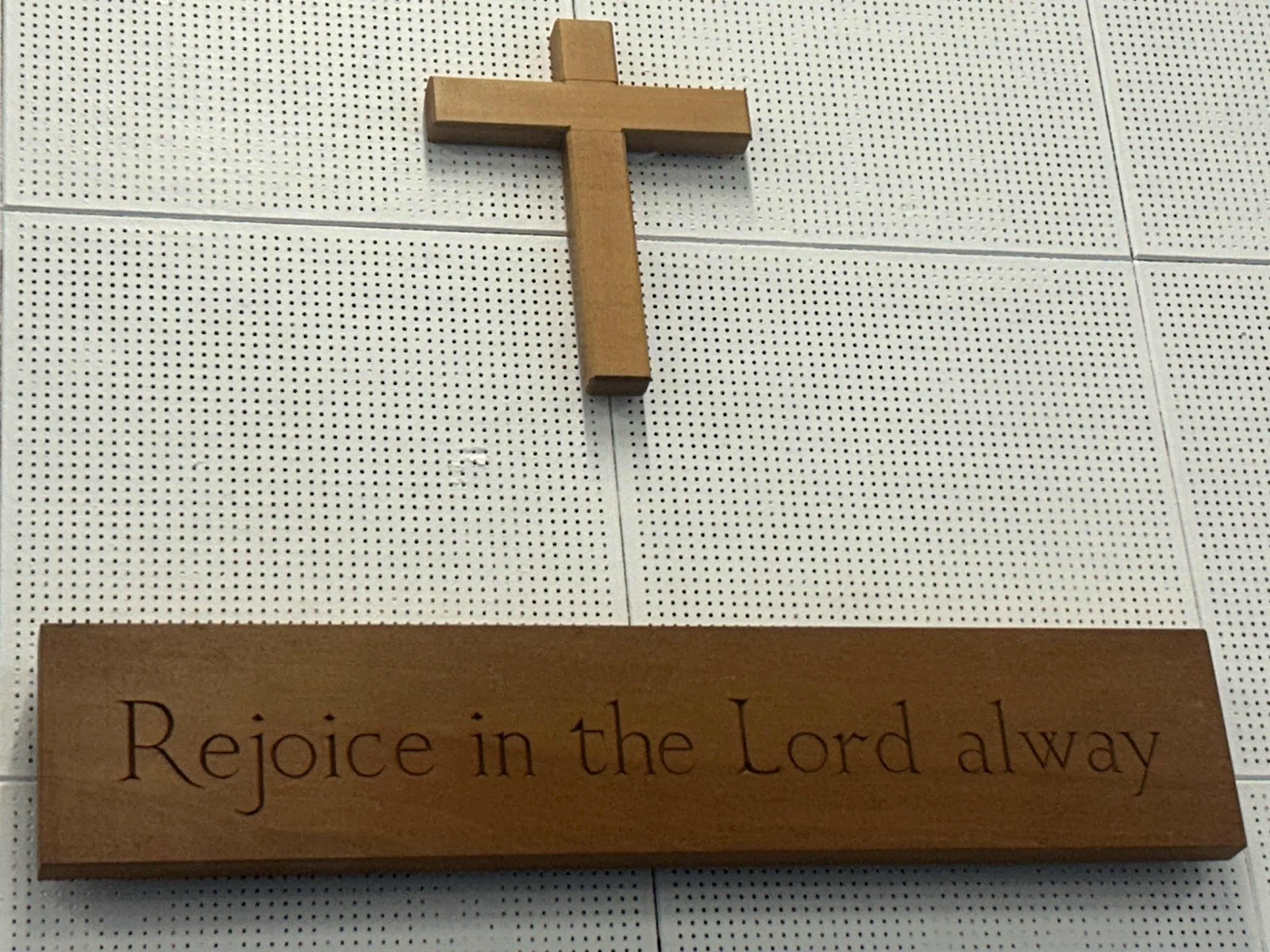
This has implications for the church I think. Are we a church who anticipates his return and looks for his coming again? On our school tour yesterday we ended up in the hall and I said excitedly “it’s still there, it’s still there!” The school motto hung at the front of the hall still “Rejoice in the Lord alway.”

We used to do our exams facing it, we used to be told off in assembly facing it. We saw it every time we went in the hall. Despite today being rubbish rejoice in the Lord, for he is bigger than fractions, trauma, wars, new American Presidents, unsolvable problems in our church and unexplained human suffering.    


What sort of king is Jesus?

Soren Kierkegaard told a story: Once upon a time, there lived a great king. The whole country was his and he held all the power. He could elevate any commoner to a life of wealth and ease or condemn whole cities to destruction with a snap of his fingers. It was the custom of the country that, once every few years, the king would travel through all the land, inspecting every city, town, and village.

It was a great and terrible day when his vast armada of coaches would roar through a village. All the houses would be newly painted, the village hung with garlands of flowers, and all the villagers, decked in their most beautiful garments, would kneel by the sides of the roads all day, awaiting his approach.

While traveling through one village, the king spied a peasant woman out the window of his coach. He bid his driver stop, and the king stood stock still, just staring. Despite her he knew that he had found his queen.

The king began to leave the coach to kneel down in the street before her and ask her to be his wife, but he suddenly realised that he was in a pickle; no matter how she felt about him, she was certain to say yes to his proposal – not because she loved him – but because he could satisfy her every material desire, or destroy her whole village with a word. The king realised that this woman could fear him or seek to gain from him, but that she could never love him, for love is not the product of a bribe or a threat, but is a gift that must be given freely. So, the king shut the carriage door and said, “Drive on!” with the new knowledge that no one would ever love him.

That night, the king had a “eureka” moment! Upon returning to the castle, he went up to his chamber, he took off his heavy golden crown, laid aside his finely made sword, removed his ermine robes, and put on the old potato sack of a beggar.

Taking neither money nor dagger, the king crept out of the castle by night to walk all the way back to the village. His plan was to arrive at the woman’s cottage door helpless, destitute, and hungry. He would beg for shelter, beg for a crust of bread, and eventually open his heart to her, for only in his weakness and poverty could she genuinely fall in love with him.

And so it is with Christ the King. His infinite power and might could make us fear him. Christ could force us to obey him, but the thing is… God doesn’t want our fear, God doesn’t want our obedience, God only wants our love. Therefore, God the Son sets aside his glory, he sets aside his infinity and eternity, he sets aside all that he is and all that he has, and he comes to us in humility, in poverty: as a helpless baby, as a kind rabbi, as a beaten and humiliated prisoner, so that we can truly fall in love with him. “This is,” said Kierkegaard, “the God as he stands upon the earth, like unto the humblest by the power of his omnipotent love.”


And until he returns we are to be the church of the king who came not to be served but to serve. That means different priorities. A Jesuit priest teaching in a seminary had a reputation for asking awkward questions. One day he asked his class of about 15 students, “When we pray the Lord’s Prayer, and we say,’“Let thy kingdom come’—what does that really mean?” Many of the students offered answers, and he said “no” to them all.

When no one in the class was able to answer it correctly, he said, “I will tell you what it means when we pray, ‘Let thy kingdom come.’” What we really mean is, ‘let my kingdom go.’ Let my kingdom go.”

We spend so much time building our own kingdom, pursuing power and status without recognising God’s call in our lives. We need to surrender our self-made kingdoms to be part of God’s kingdom, one rooted in love, justice, and community.

Once we understand that Jesus is King, we learn to “let our kingdoms go.” Let thy kingdom come means we let our kingdoms go and begin to build and belong to the kingdom that is of God. 

What can we do about being more excited about what’s ahead? By keeping on keeping on. Doing the Wednesday welcome, opening to share food with who need it, having  coffee on a Saturday, exploring God’s word in Advent with the parish church and by being far more positive about church and being church.

You might remember that Oscar Romero was gunned down by government backed militiamen whilst celebrating mass in his cathedral in El Salvador in 1980.

He was killed for criticising the government for its brutal suppression and arguing that the historically created inequalities in the country were part of the problem. He took no political line and supported no political party, but he did speak up for those who were most vulnerable and asserted the primacy of love.

He said: Let us not tire of preaching love; it is the force that will overcome the world. Let us not tire of preaching love. Though we see that waves of violence succeed in drowning the fire of Christian love, love must win out; it is the only thing that can.

That’s the Kingdom of God in a nutshell. That’s the reason we are the church.

Look, he is coming on the clouds and every eye shall see him. He will come in glory to judge the living and the dead and his Kingdom will have no end. That’s worth getting excited about and anticipating with hope isn’t it?