Sunday, 24 March 2024

My tenth Lent blog - Palm Sunday


I went out looking for a children’s book telling the Easter story on Friday afternoon as I was doing the all age  thing with Lego at Bedale this afternoon. I went into the bookshop. They know me in there. I said,“you’ve got books on chickens and bunnies and spring, you’ve not got one on the Easter story.” To which they said “um, that was rather an oversight on our part.” It’s so easy to pretend this Holy Week is just light and fluffy. We wave palm branches today, and we see an empty tomb and shout he is risen next Sunday.


We choose to ignore what comes in between and for so many people this week it is a festival of spring. Better weather is coming. We put the clocks forward next Sunday morning. It’s also easy to make Palm Sunday a happy and joyful spectacle but for me it’s about Jesus riding into trouble and danger. Why? Because he confronts the world with a radical new way he meets opposition.


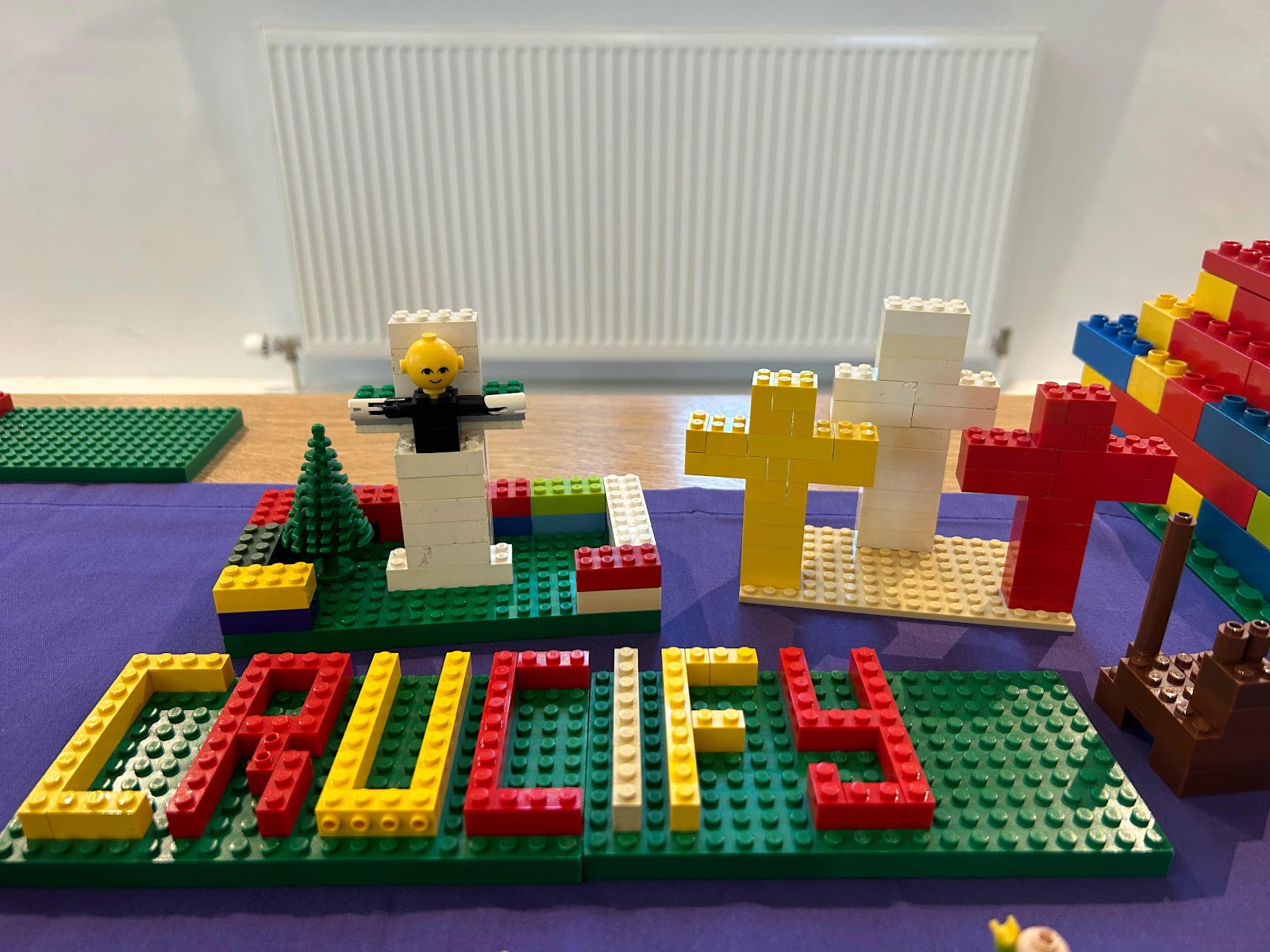
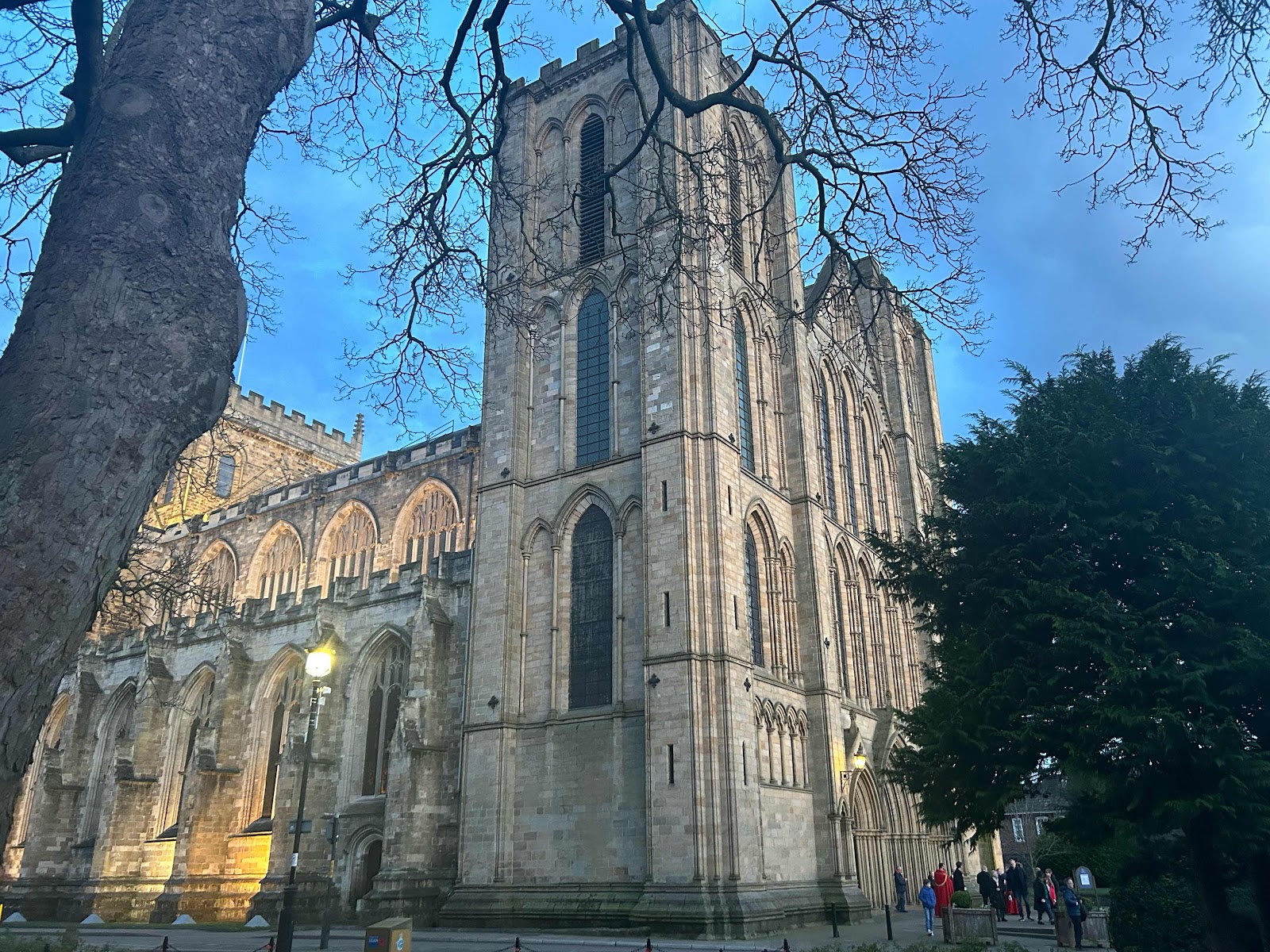
How have you spent Palm Sunday? I began with an open air act of witness in Ripon led by the cathedral but with me reading the Gospel, then my service at Allhallowgate then leading some children in Bedale using Lego to tell the story of Holy Week and then listening to Olivet to Calvary sung by the cathedral choir. I love Olivet to Calvary! Just as I am makes me very emotional.


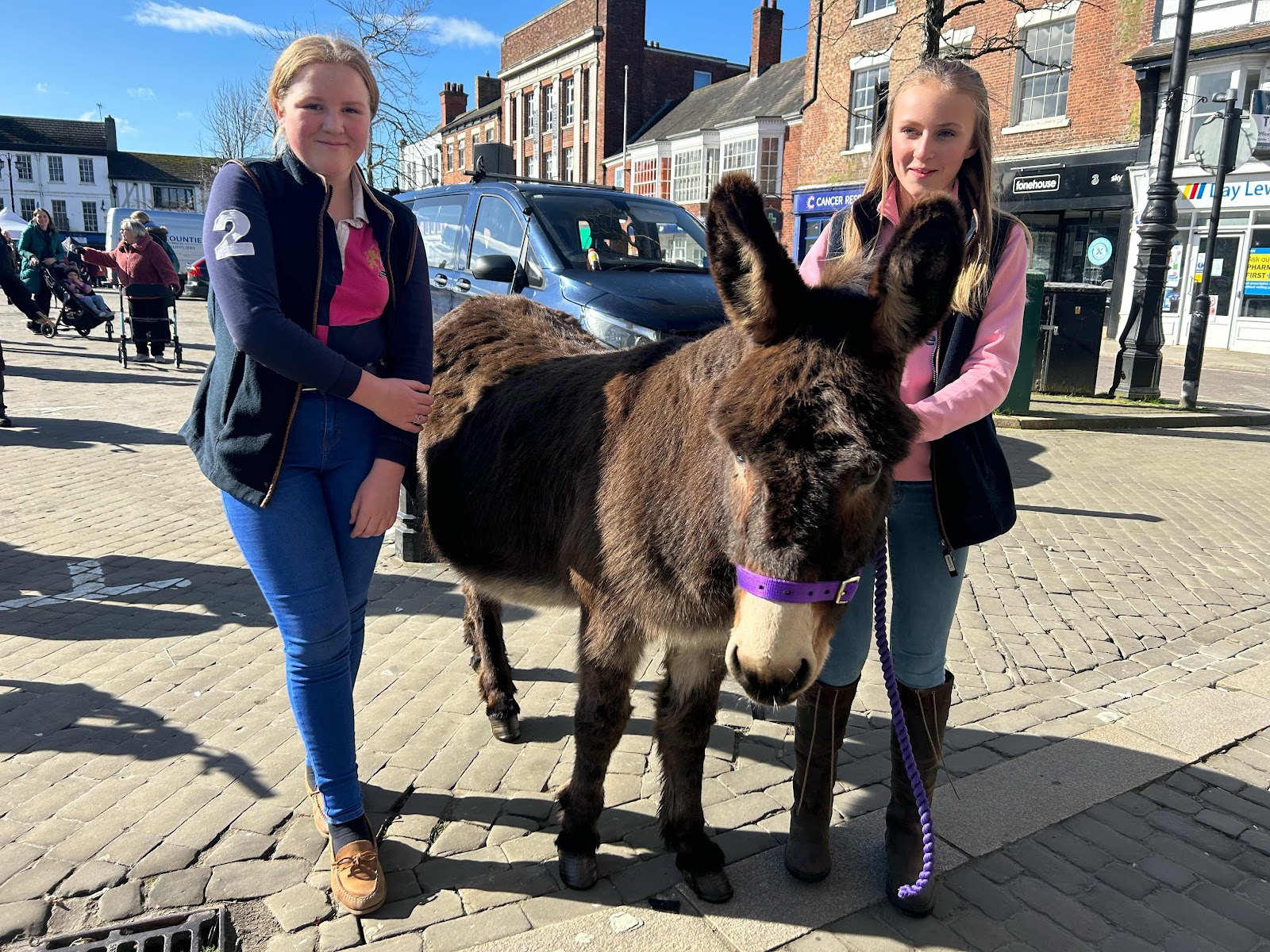
On Palm Sunday we have this procession that has this radical Jesus riding the colt of a donkey displaying the symbols that the prophet Zechariah had said a king would enter into Zion who would banish war from the land! Those that rallied around this procession would have thrilled to the signs that this may be the king who would lead them to reclaim their land and banish the occupying Romans.  But days later their hopes are dashed, and this king is tried for sedition and crucified. All is surely lost. Certainly, even the most faithful followers will cower behind closed doors fearing punishment and grieving their teacher and hoped for Messiah’s death.


No wonder the disciples didn’t want to go to Jerusalem. It was as much a hotbed then as it is today. It seems to me Palm Sunday is all about choosing. It is the choice we are called to make to join the dream of a world not yet fully here. It is the choice to seek the glimpse of the divine in the everyday and to adore, protect, nurture and share. It is the choice to choose life and the ways that make for life for everyone not simply for the few. It is the choice to be grateful to be last and encourage those who have less to go before us.  It is to choose that we are emptied out and ready for God’s way.


Remember the political context:

Some in Israel wanted to rebel against Rome, and they had, and they would do so again in the future. Others preferred to keep their heads down and try to live their lives as peacefully as possible. And most people were somewhere in between the extremes. 

They weren’t satisfied with the way things were going at all, but they also weren’t about to take up arms against the greatest military power in the world at the time.


I like this from a sermon I read this week: 

We still look for the one who will save the people. We put our hopes in all kinds of people, things, and programs. We yearn for the thing that will take us from difficulty to freedom, from sickness to health, and from death to life.

God, save the people. 

Today, let us join the world in running after Jesus. Let us grip the palms in our hands and imagine what it must have been like to be there, to see him, to invest our tired hope in him.

Let us remember that we are not the first to fear, the first to suffer, the first to want better things for ourselves and our families. We are not the first to despair or the first to offer our tired hope up to the one who might save us.

Beloved, the story of Jesus is our story, and here, we get to live through it again together. Let us, just this once, forget that we know the ending. 

Let us invest our tired hope in the one who rides on a donkey. Let us dare to imagine that he might be the one to take us from death into life.


What if Jesus had avoided Jerusalem and a cross? Would we be here today? What if Jesus wanted it easy?


I love this meditation sent to me: 


From today, either individually or together, we will journey to the upper room, where fears will be shared, and feet will be washed,and a meal will be broken and poured for us.

And then, as it always does, on Good Friday the worst will happen.

Hope is crushed. Love is laid quiet.

Friends, forget for a moment that you know the ending. When love is laid quiet in our own lives, we allow ourselves to mourn that the worst has happened.

From the tomb, who knows where love and hope could take us?

God, save the people. 


Love comes to us today riding on a donkey. Let us greet him with palms and songs. And then let us once again journey with him from death into life.


May we encounter the holy this week, and may we find our tired hope refreshed.


Just having bunnies and chickens and spring – an oversight on our part – or a deliberate try to get out of the hard journey we often have to take? 


To choose the Kingdom over the Empire is to choose the Way of the cross and the one who died on a cross. It is a demanding way. It is also the way of enjoying eating, drinking and dancing with those who are on the outskirts of the city. It is also the way of foolish wisdom and deep peace more than security and certainty. It is the way of love over hate, hope over fear, and life over death. Jesus enters the city and asks us what will you choose? Stick with me or turn on me?


Loving God,
you rode a donkey and came in peace,
humbled yourself and gave yourself for us.
We confess our lack of humility.
As you entered Jerusalem,
the crowds shouted, “Hosanna: Save us now!”
On Good Friday they shouted, “Crucify!”
We confess our praise is often empty.
We sing Hosanna but cry Crucify.
As the crowd laid their palms in front of you
you took the way of God: you took no glory for yourself.
We confess that we want to be accepted and take the easy way.
We do not stay true to your will.
Forgive us, Lord, and help us to follow in the way of obedience. Amen.


Sunday, 17 March 2024

My ninth Lent blog - journeying with a church preparing to cease to meet


Today I’ve been privileged to lead worship at West Tanfield church which is preparing to cease to meet in a couple of months time. This was my sermon which I wanted to be gently pastoral. The senior steward told me after the service was “divinely inspired” We also had some tears. Some folk have been worshipping at Tanfield all their lives…

I was reading a sermon last night by the Dean of Winchester Cathedral about setting off on a journey. She writes “When I’m setting off on a walk, I notice that I have a habit of patting my pockets, or going through them, checking I have what I need: keys, tissue, money, phone, glasses, gloves, suncream – whatever I’ll need for the journey.  Perhaps this rings a bell with you.”

Today is the fifth Sunday of Lent.  We have set out together on the journey from Ash Wednesday, to the cross and beyond, in order to grow in faith, in love for God, in compassion for other people, and deeper knowledge of ourselves.  Both the journey and the destination will bring us great blessings, if we travel in God’s way.

Sister Joan Chittister, a Benedictine Nun from America says that for this journey we need two pockets, each will carry a message of truth about our identity. In one pocket there is the message, “I am dust and ashes’ (simply mortal, fallible, sometimes helpless, always human). 

And in the other, ‘For me, the universe was made’ (I am the precious child of God, the creator of planets, stars, moons and galaxies).  With these two truths we journey through Lent knowing both our great worth to God, and our utter need of God.

How is it to journey spiritually? Let’s consider three sorts of journey.

First, a journey into the unknown. 

In Genesis chapter 12, we have a man whose life was going nowhere until God called him. His name was Abraham. Before the call of God, he lived a comfortable life with his family in Haran, getting on with the everyday circle of activities but with no clear goal in life. If things had carried on like this, we would have never heard of Abraham and the course of Jewish and Christian history would have been very different. But God spoke to Abraham, and he obeyed. By faith he set out for the promised land, living in tents as he travelled following God’s directions.

After Abraham left Haran he never went back. He left his property, his comforts, most of his household possessions, and even some members of his family. He didn’t think of the old life he had left behind but reached forward eagerly to his new life and the promised land ahead of him. There was no turning back. Abraham began his journey of faith at 75. Whatever our age it is never too late to begin the journey of faith, to allow God to take us in a new direction. I tell most of my churches in this Circuit those aged 75 are my youngsters! 

 What do we learn from Abraham? Well, I like Wesley’s notes on him. Sarah conceived - Sarah by faith, received strength to conceive.  God, therefore, by promise, gave that strength. Abraham was old, and Sarah old, and both as good as dead, and then the word of God took place. 

He circumcised his son - The covenant being established with him; the seal of the covenant was administered to him. 

And Sarah said, God has made me to laugh - He hath given me both cause to rejoice, and a heart to rejoice. And it adds to the comfort of any mercy to have our friends rejoice with us in it, they that hear will laugh with me - Others will rejoice in this instance of God's power and goodness and be encouraged to trust in him.

So, friends, as children of Abraham whatever circumstance we find we journey in, let’s journey in faith and expectation. Abraham believed God and it counted unto him as righteousness. So may it be for us. I’m going to make three comments to you the good people called Methodist at West Tanfield as you prepare to let go of this building after many faithful years of service. The first is this. God is calling you to leave what you have known and make a journey. That journey isn’t clear for some of you today but like Abraham was told he would be a blessing and the father of many nations, and he thought well that’s not going to happen, my wife is barren, the land you’ve promised me is occupied and there’s a famine there. But you know God makes a way out of no way and we are promised a future and we need to trust in the invitation to travel even if the road ahead is scary and we don’t know what’s ahead on it. 

I do not know what lies ahead,
the way I cannot see;
yet one stands near to be my guide;
he’ll show the way to me.

I know who holds the future,
and he’ll guide me with his hand.
With God things don’t just happen;
everything by him is planned.
So as I face tomorrow
with its problems large and small,
I’ll trust the God of miracles, give to him my all.


Then there’s the journey we take because where we are isn’t working. I have a card somewhere at home which has sheep out in the rain. And it says “lost? I’m not lost. I know exactly where I am. I’m right here!” For many around the world today “here” isn’t a good place to be. I think particularly of those who are caught up in the hell of war zones. To try and preserve life they have no choice but to flee on a journey to somewhere safe. Many though don’t get to that safety. 


Then there are those moments we have in our life where “here” for us is so tough all we want to do is escape from it and go somewhere else and have our problems disappear. Maybe we are stuck in a rut or have problems too great to bear or we’ve made huge mistakes, and we want to be lifted out of guilt into forgiveness. Psalm 51 is a good example of a journey we want to take when “here” isn’t working. King David who wrote the Psalm had been a very naughty boy. He’d sent a man into battle to hopefully kill him so he could have his way with his wife. He was called to account by the prophet Nathan. And we have maybe the most honest prayer of contrition in the whole of Scripture: “create in me a clean heart O God and put a new and right spirit within me.” 


The Psalm speaks of David acknowledging his sin and his guilt, he makes no excuses. He worships God who David knows is the only way to receive full forgiveness, God is the only one who can truly put things right. In an attitude of repentance, David asks God to create in him a pure heart. The Hebrew word for create in this context is bara and is only ever applied to God. It is the same verb as used in Genesis 1 to describe the Creation of the universe and all things. Only God can do this sort of creating. Our God is a gracious and is into new beginnings. Where it isn’t working or the joy has gone or we are exhausted or we’ve made a mess of something it’s okay to say to God we can’t do this anymore, show us a new way. Give us life again. 

For you,  you’ve made the brave decision to cease to meet here. That wasn’t an easy decision but maybe it’s the right one. It doesn’t mean you’ve failed; it means that God might give you the energy to do something new. 


I’ve only had two churches ask to cease to meet in my 27 years of ministry. Ashington in West Sussex was riddled with damp and the two stewards talked so much about what we might do they told me they couldn’t do church there anymore. We ceased to meet and formed a house group on a Thursday evening in the village. It had more come to it then ever came to the chapel and is still going strong today some 14 years later. 


Then there’s Kirkby chapel, also riddled with damp that was beyond us. We left the building behind, are a happy little congregation once a month in the parish church and on other Sundays we’ve dispersed to Grewelthorpe and Harrogate Road and Dallowgill and we meet for fellowship in the mechanics institute every other month. We are a lighter people because our worries have gone. I know it is sad to let this place which has been so special to you and those before you go, but my prayer is you will find after a period of mourning and transition a new spirit. The Psalm has this verse in it: “Restore to me the joy of your salvation and grant me a willing spirit, to sustain me.” That’s my prayer for you over the next few months.


Journeying into the unknown, journeying when it isn’t working, then a journey that is irresistible. Have you ever said to yourself “I have to make that journey because it is so exciting.” You spend ages preparing for the journey and you count down the time until you can go. Then on the journey you shout, “are we nearly there?” 

I think Nicodemus found Jesus irresistible. He was a Jewish leader. He came to see Jesus at night. 

He had lots of questions. Jesus tries to tell him the only way he will find meaning in life was to be born again. That’s the whole point of Christianity. God has created us to be his children, and we are on a journey towards a new creation. There is a constant new beginning available for us. As I said at the beginning, this is the fifth Sunday of Lent, Holy Week begins next Sunday

Everyone thought Jesus’ journey was over at the cross. But the journey ends with new and unexpected new life and joy.  

Every day we can have a fresh start. Without going on an irresistible journey to Jesus we cannot enter the kingdom of heaven. The apostle Paul writes, “if anyone is in Christ, this person is a new creation; the old things passed away; behold, new things have come.” It’s exciting, and God has so much more to show us! Aren’t you excited by that today? Like Nicodemus we need to be brave enough to check out the possibilities. West Tanfield friends my third thing I want to say to you is this - keep the faith, look to God, remember he isn’t finished with you. You are the church wherever you go.

A journey is defined ‘as the act of travelling from one place to another. ’ It is seen as a literal geographical movement from one location to another. The Dean in her sermon had a list of what she needed to take on a journey. Friends, we need a willingness to go. God is working his purpose out. Let’s go with him and see where he leads. 

Remember this verse which I leave you with: And whether you turn to the right or to the left, your ears will hear this command behind you: “This is the way. Walk in it.”


Sunday, 10 March 2024

My eighth Lent blog - how to preach Mothering Sunday


So we have reached mid Lent, the fourth Sunday of it, a Sunday we stop and think about the nature of God on our way to the cross and resurrection. The traditional epistle for the fourth Sunday in lent which we aren’t using today states that the heavenly Jerusalem “is the mother of us all” And of course today is Mothering SundayIt was customary in some places to visit the mother church of one's diocese or chapel on this day. In other places it was customary to visit one's mother on “Mothering Sunday.” Servants were given the day off to go home and they’d take simnel cake with them. Mothering Sunday gives an opportunity to thank God for those have shown us love, given us life and transformed our worlds, usually for the better. These may have been our mothers, our fathers, or other relatives and carers or others who only we know who have nurtured us through the years. Our lives have been enriched and shaped by them, so we thank them and we thank God.


Some services today will be quite twee that everything on earth is wonderful and every relationship is perfect. For the preacher Mothering Sunday is a difficult minefield because it is hard where to pitch it. For some people this day is very painful. We need as well as celebrating where motherly love has been good and life giving, to take time to remember those who haven’t had that in their lives and to also remember those who longed for children but couldn’t have them. So we need to be sensitive today. My thoughts today are on the nurturing love of God. Where did this sermon come into my head? At a bus stop in Pocklington after being with Sarah Caddell at her final probationers committee before ordination. I want to explore nurturing love: the need to be loved, knowing we are loved and celebrating love that conquers all. 


The need to be loved. We all want to be loved and valued. When we aren’t loved or feel we aren’t loved we disintegrate. 

We yearn for it and call out for it. We live in a climate that yearns for love and calls out for it. We live in a climate that has almost given up because it’s so rubbish out there. 

A taxi driver taking me to Pocklington from York station on Thursday – I went by taxi and came back on the bus  well he spent the entire journey telling me the country is broken mate and he gave me a passionate speech on how selfish people are today. We look after ourselves, we don’t love other people. 


We live in a climate where we are overwhelmed. 


Calling out for love isn’t new. It’s in the Bible. We’ve been on Holy Island this week apart from a day back for Sarah’s committee. One of the joys being there is to share in evening prayer in the church. St Aidan founded a monastery on the island in 635 and since then morning and evening prayer have been said every day. Friday evening was cold and windy so there were only four of us in the church for evening prayer but in the cold I was moved by two passages about this yearning for love. The Psalm was Psalm 116. The cords of death entangled me, the anguish of the grave came over me;  I was overcome by distress and sorrow. Then I called on the name of the Lord:  Lord, save me!” The Lord is gracious and righteous;   our God is full of compassion The Lord protects the unwary; when I was brought low, he saved me. Return to your rest, my soul,   for the Lord has been good to you.” Then the Old Testament reading was Jeremiah 15. Jeremiah isn’t a happy bunny for most of his prophecy. He’s suffering because he has the weight of delivering God’s message of judgement on his shoulders.


Jeremiah calls on his mother. Alas, my mother, that you gave me birth, a man with whom the whole land strives and contends! I have neither lent nor borrowed, yet everyone curses me. The Lord said “Surely, I will deliver you for a good purpose; surely I will make your enemies plead with you in times of disaster and times of distress. 


Think about good motherly love. Remember when you hurt yourself falling over mum made it better. We see screaming children in cafés. They want love to make it better. Let’s go to the strange Old Testament passage for today from Numbers. “Pray to the Lord to take away the serpents from us,” the people say to Moses. They’re impatient and wandering in the wilderness. They are thirsty and hungry. Even if they didn’t like the life they once had in Egypt it was their life. It was familiar and they want to go back to what used to be. They’re grumbling and nothing is right. Life is difficult. This is more than just being unhappy or dissatisfied.

This is how bad it is. They complain that they have no food and then say that they detest the miserable food they don’t have! I don’t think that’s really about what going on around them, but about what’s going on within them. Their stomach may be empty but there’s venom in their hearts and in their lives. They are in a snaky place. And we’ve all been there.

“Pray to the Lord to take away the serpents from us.” How many times have we prayed that? “Just fix it God. Make it stop. Take it away. I don’t want this.” 

The poisonous snakes cause the people to pause and reflect. The bronze serpent gives people a physical way to repent and seek healing, a tangible way of putting things right. It has no power of its own, although it is kept as a relic and, sadly, a future generation worships it as if it is a god, and so it has to be destroyed (2 Kings 18). It is simply a focal point for the people to choose to look at it and live; a means of grace, a prompt to turn away from a previous poor choice and live God’s way once again.

The need to be loved.


Then, knowing we are loved.


A 96 year old mother was being interviewed about her long life and how she felt about being a Mother all those years.


‘I feel just wonderful,’ was her reply. ‘For the first time since I became a Mother, I no longer have to worry about my children.’


‘How is that?’


‘They’re both in nursing homes’.”


We have a right to be cared for through all our life. I’d like to urge that today is not just about mothers but everyone who cares. 

I go into nursing homes and see the devotion of the staff caring for those who now need others to help them flourish. Knowing we are loved gives us a security and a wellbeing. Knowing we are loved help us see we are worth something. The Bible tells us more than anything else that God is love. Even when that feels mad! 

Mother Julian of Norwich lived through two waves of plague, and the violence and unrest that followed. She survived a paralysing illness that nearly killed her. And yet even still, her writings are full of confident hope. She doesn’t even mention the chaos of her context; instead, she focuses on her connection to Christ.

Julian is known as a voice of hope — and also as a proclaimer of the Motherhood of God. In Julian’s visions, Christ appears as “the true Mother of life and of all.” From labouring to bring us into the world, to feeding us with his body in the sacrament of communion, Julian notes all the ways in which Christ does the work of motherhood. And how his work makes our work possible: “The kind, loving mother who is aware and knows the need of her child protects the child most tenderly as the nature and state of motherhood wills….This nurturing of the child with all that is fair and good, our Lord does in the mothers by whom it is done.” 

If Jesus is our true Mother, then he truly understands my job. Jesus knows what it is to seek keeping beloved children safe.

As truly as God is our Father, so truly is God our mother, and he revealed this in everything, and especially in these sweet words where he says: I am he; that is to say: I am he, the power and the goodness of fatherhood. I am he, the wisdom and the lovingness of motherhood. I am he, the light and grace which is all blessed love. I am he, the Trinity.

As truly as God is our Father, so truly is God our Mother.


Someone wise wrote this: 

If mothering were only done my mothers, it would be very hard indeed to ensure that everyone received the nurturing, the protection, the love, the sacrifice, the guidance that we need to become the people we are meant to be.  As a church community, we are called into a role of mothering that sometimes might need to be just as desperate, fierce, loyal, grieving etc as the mothers in the Bible.  If we, as a church, truly love the community in which we are situated, just as God loves it, and if we are to be God’s holy people for God’s needy world, then we will feel the pain of the world’s suffering, and we will be willing to sacrifice something of ourselves in order to bring to birth God’s purposes for the world.


We need to know we are loved.

Then this…

Celebrating love conquers all


In our Gospel for today, we break into a night-time conversation, a private and important Q & A for the religious leader Nicodemus, who comes to talk to Jesus "by night". Nicodemus recognises Jesus as a teacher, as coming from God, but he is finding it hard, as we might ourselves, to grasp the magnitude of what Jesus is saying about "heavenly things" and why they are important for an earthly life

The text for today starts at verse 14, with John's account of Jesus referring to the passage in Numbers, and explicitly linking the "lifting up" of the Son of Man to show God's love with the lifting up of the bronze serpent before the Israelites in the wilderness as God's saving response to the people's suffering. As we’ve discussed.

In Numbers the people look at the serpent and live, and in John, the people look up to the Son of Man, believe and have eternal life.

Verse 16, one of the most well-known and most quoted verses in the Bible, tells us that "God so loved the world that he gave his only Son, so that everyone who believes in him may not perish but may have eternal life.". Maybe that verse is the heart of the Gospel. Maybe today we celebrate those who have looked at the world head on and despite its hatred, they’ve offered love to us like there is no one else to love except us. Maybe in your heart today you bring people mothers, fathers, friends, carers, teachers, ministers, people who’ve sacrificed their own well-being to reach out to us who’ve shown us the motherly love of God.

Motherhood is an opportunity to walk in the sandals of Jesus.

Washing the dirty feet of people who don’t recognise the sacrifices you’re making; being unappreciated or disrespected by the very ones you’re serving; trying to teach those who seem uninterested in hearing the amazing truth you’re offering; feeding hungry people who cry for junk food when you have food that will truly satisfy; pouring yourself out for those you love, despite their inability to give anything in return: does this sound familiar? Jesus experienced all of this and far more  to an extent that you and I will never fully experience. 


Then we celebrate that love conquers all. 

The message of Christianity is that there is nothing that shall separate us from the love of God in Christ Jesus our Lord. Nothing. God so loved the world that he gave his only son that whosoever believes in him should not perish but have everlasting life.

It seems to me maybe more so than ever we live in a polarised society. Let me illustrate it from two places I’ve reflected on this week while away. The train I was booked on from Berwick upon Tweed to York on Thursday morning was cancelled. The next one was running but the one after was cancelled too. This meant the one I got on was severely overcrowded. I tried to get off at York and people were pushing to get on before I could get off. Me, me and me. My seat. My right. My temper. I love myself more than I love you. That’s where the world is today my friends.On Tuesday afternoon we were in Glasgow and we visited the purple cat café. What do you do when on holiday? Put your own cats in a cattery and visit other cats! Well there were 34 cats in this place. All different, all with needs and quirks, all important, all cared for. 34 cats! Well, that’s what the motherly love of God is like. It cares for us, inexhaustible, eternal and unbounding. It remembers us like a mother at her best. It never gives up. Isn’t that worth celebrating today? 

Nicodemus found a deeper relationship with Jesus. 

In chapter seven, when others are plotting to arrest Jesus, Nicodemus speaks in his defence, even after several have turned against him. And in chapter 19, Nicodemus even joins Joseph of Arimathea to prepare Jesus’ body for burial after it’s taken down from the cross.

When he helped lay Jesus in the tomb that day, Nicodemus didn’t know what would happen in just two days’ time. We do. We celebrate that love conquers all.

St Anselm, Archbishop of Canterbury in the twelfth century, knew much about love from his mother. He likens God to a mother in his song, and speaks so tenderly of that relationship of love that he can only have learned it at home. Jesus, he says, like a mother you gather your people to you; you are gentle with us as a mother with her children.

Today we celebrate God our Father and our Mother and we pray his love will be seen in the world and it might be shared through us. That way, we will have a very happy and blessed Mother’s Day, renewed and encouraged to be his people, loved for ever.