Saturday, 25 June 2022

A Church Anniversary sermon Covid stopped!


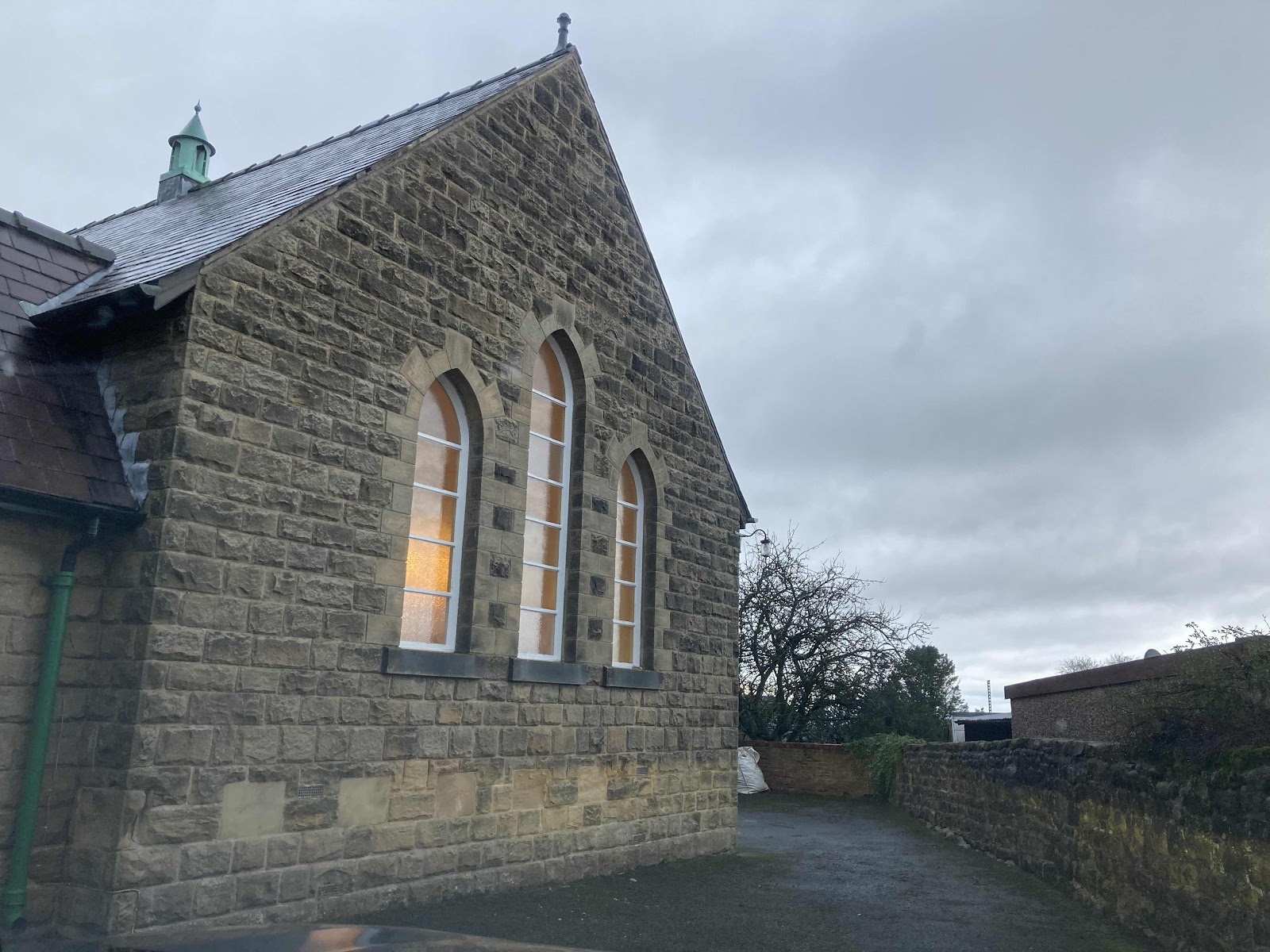
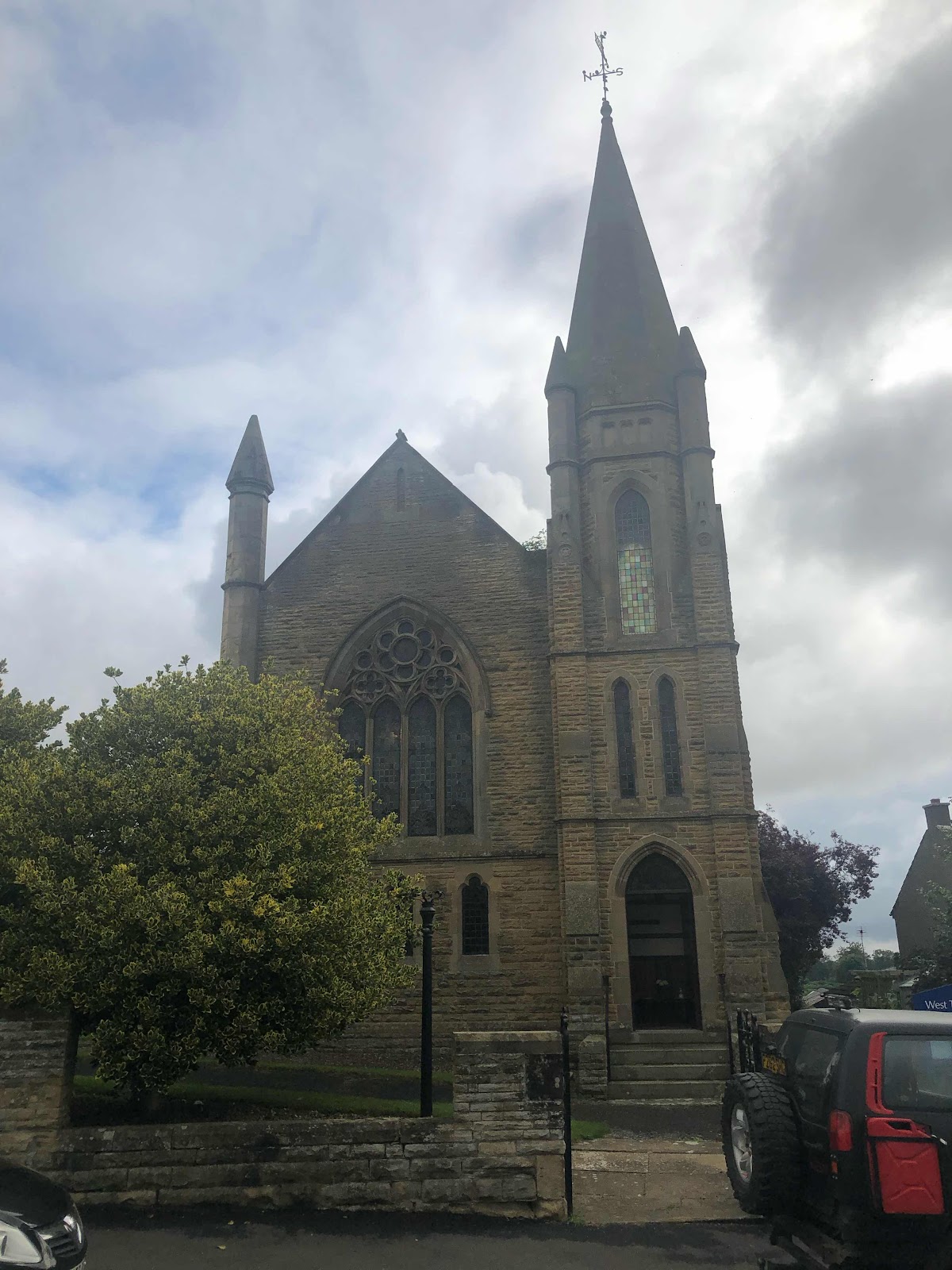
I was due to lead worship this Sunday with the congregation at West Tanfield celebrating their Church Anniversary with them. I’ve been doing some work with them while our Superintendent has been on sabbatical and have got to know them, and so I was looking forward to gently challenging them about what the Church might be and do today.

Alas, beloved Covid has finally got us after two years and two months of being so careful. Lis is still testing positive on day eleven and I tested positive last Tuesday and I am still feeling pretty groggy. We are both just thankful for four vaccines in us else both of us would have been a lot more seriously unwell this past week. 

This weekend the representative session of the 2022 Methodist Conference has opened in Telford. We have a new President, Rev Graham Thompson, and a new Vice President, Anthony Boateng. Graham will be a very pastoral President. Some of us have been cared by him when he was a District Chair. Thinking about the Church, in his address to the Conference, he made this comment:

“The best thing about being part of the church is all the lovely and fabulous people that make up the Body of Christ.  Being part of a loving community is the best thing in the world.  And the worst thing about the Church is being part of a community that has forgotten how to love, forgive, accept difference and live peaceably with one another.  And, sadly, I have been told more stories about churches who are in dispute than stories about churches who love God and love one another and get on with the business of being Gospel-sharers where they are.  This year, can we correct this imbalance?  Let us do all we can - as I commit to do all that I can – let us all do all we can to share positive and good stories of church life.  And, I wonder, if we cannot properly love the neighbours we have within the Body of Christ, how are we going to love our other neighbours, colleagues, friends and all whom we encounter beyond the life of the church?  For love, like charity, begins at home but then it should spread to the whole world but we are really in trouble if there is no locus for our love.”

I really like what our new President is suggesting here. I’m chairing our Circuit Meeting in a couple of weeks and we will be going into groups to help think seriously about what our good news stories are. We need to think again about what makes us distinctive. It is that we have life - even if there are only a few of us. Remember Jesus only had twelve helpers. They weren’t perfect. They often wanted to give up. But mostly they saw a different way in this Jesus which was exciting. We have a choice whether we are Christ’s Church or our Church. 


The letter to the Galatians is all about what behaviour the newly formed church there should show. The fifth chapter declares to us enthusiastically the freedom we have in Christ. Whilst the Galatians were free from the law's requirements, they were encouraged to live out the law's essence: loving your neighbour. We are no longer under the slavery of the law so that we can choose to serve one another. It includes a call to live by the Spirit and not the flesh.

I read this quote from the sermon notes from the Church of Scotland: "Paul is encouraging us to live in this freedom, but in the verses, he has also given us some guidance – to love and to be a servant. Sometimes you think ‘I am free, so I can do whatever I want'. But Paul is saying you have freedom, but there is also a way to live out this freedom: love our God in everything you do. You are not free to walk by your flesh. You are free to walk by the Spirit, according to the word of God."

Can we discover again our distinctiveness and then show that distinctive way to society? Can we show Christian fruits? The Queen in her Christmas broadcast in 2013 said this getting it just right: “faith, reflection, meditation and prayer help us to renew ourselves in God’s love, as we strive daily to become better people. The Christmas message shows us that this love is for everyone. There is no one beyond its reach.” And love is not just for Christmas!


I’ve quoted the new President of the Conference. Let me now quote Nick Baines, the Bishop of Leeds, who addressed his Synod last week like this:

“There’s really not a lot to talk about at the moment, is there? The world is at peace, all is well with the UK economy, politics are predictable and boring, challenges are few, nothing much changes. Well, I know many people who wish it were so. But, you’d have to live each day with your head deep in the sand, if you think that all is well. I only have to mention Ukraine and Russia, Afghanistan, the energy crisis, food banks, poverty, hungry children and families, the rising cost of living, questionable public ethics, and we know all is not well with the world. To add to the burden, the island of Ireland is worried about renewed tensions fuelled by political division and the unilateral breaking of international law; parliamentary sovereignty is being replaced by increasing moves toward executive sovereignty (decision by ministerial fiat); we export refugees to Rwanda, denying them human rights under the rule of law at a very basic level. And the Church – bishops in particular – comes under the cosh of certain political and media interests for daring to have something to say.”

The Church should stay out of the world! Well, some churches do. But we need to be in the world and our call as well as being one and confident in each other is to offer a world that is getting more lost every day a new road. How do we do that? By being rooted in God and knowing that love in Jesus for ourselves. Then being so excited by it we cannot help share it.  Sometimes we need to get involved. We need God’s help.Without the Holy Spirit we can't live a life that pleases God. Doing the work of the flesh, is in our endemic nature. So, we need the Spirit of God. Some people don't want to do bad things but because of our nature we find ourselves doing these things. But by allowing the Holy Spirit help us in our lives, then you will be able to do the opposite. How can we get that? By reading the word of God, meditating on the word of God and trying to live the life that pleases God. That way we will show love, joy, endurance and so on.

How we behave matters! I was interested in what was going on watching Billie Eilish’s set at Glastonbury on Friday night. She gave the crowd some rules: “Don’t be an asshole, no judgment, have fun.” I won’t suggest that becomes our mission statement but I get her point. What was more interesting was a crowd who were unified.  They all knew her songs word perfect, they hung on her every word, she spoke to them like there was no one else there,  the atmosphere was electric, and they would have all gone home talking to others about what they’d seen and heard with excitement and joy. Compare and contrast! 


better not say her word :), no judgment and have fun.” I won’t suggest that be our                            

I should have shared these words with the folk at West Tanfield this Sunday. It’s amazing what you find when you Google! I put West Tanfield Methodists in and found these words: 

“West Tanfield Methodist Church is serving the Ripon community and engaging and encouraging others through a life-changing journey in Ripon, North Yorkshire.

Our mission is to nurture a diverse and welcoming community, committed to following fearlessly wherever God is leading us and make Disciples of Jesus Christ for the transformation of Ripon and the world.”

Not a bad summary of the task of the Church wherever we are. My prayer is that we sort ourselves out again and then bear fruit - we are called to be distinctive. 

I don’t think God has finished with his church yet. We may be smaller, we may be a different shape, we may need to think hard about our priorities but we still have a task. We need to watch how we behave. We need to go out more and make a difference. Wouldn’t it be good to be talked about again? Or even get in trouble for making a stand? Wouldn’t we grow again if we just started living Christianity again so that by our fruits we might be known?


 be an —— (better not say her word :), no judgment and have fun.” I won’t suggest that be our new mission statement but I get her point! What was more interesting was a crowd who were unified. They all knew her songs word perfect, they listened to her every word, she spoke to them like there was no one else there, the mood was electric and they would have all gone home talking to others about what they’d seen and heard with conviction and joy… 

Compare and contrast! 


e an —— (better not say her word :), no judgment and have fun.” I won’t suggest that be our new mission statement but I g her

Sunday, 29 May 2022

Between Ascension and Pentecost


Methodist people are pretty hopeless at marking Ascension Day. We just go from the Easter stories to Whit Sunday. But if we do that we miss out a major bit of christology. It’d be rather like getting a book out of the library and discovering a crucial chapter has been torn out so the next chapter doesn’t make sense. Or it’s like sleeping through an episode of a box set and waking up half way through the next one not having a clue where you are in the story. 

Today we join the disciples on the mountain and we look up with them. We gather for worship and then we are summoned to work. The disciples had an experience of divine power which left them stunned. We will come to that later. They worshipped because there was nothing else first to do.

We went to Newport Cathedral in South Wales on Palm Sunday. We know the new Dean there, Ian Black. I’ve enjoyed receiving worship. In Newport, I was deeply moved by the rood of the crucified Christ above us. I couldn’t stop looking at it through the service. It reminded me that we are never alone. The broken, crucified and risen Jesus is above us and before us every day. On this Sunday, what will worship here do to you? What will you looking up to a power beyond you do because you’ve gathered here together today?    


In his excellent book Disciples Together: Discipleship, formation and small groups  Roger Walton points out that: ‘Worship is a transitive verb. Worship always has an object. We do not worship; rather we worship God.” 

To borrow a phrase from Charles Wesley, the disciples in our story in a bit are ‘lost in wonder, love and praise’. Let’s hope we are today too. It will lead to all sorts of things.

What must it have been like to be at the mountain with Jesus that day? Those poor disciples must have had brain ache. He dies, he rises, he appears, he disappears and now he gathers them for a momentous moment and none of them could really have expected what happened next. Look at the picture on the screen. We went to York Minster and this ceiling boss was pointed out to us. At first look I thought it was a depiction of the last supper but it isn’t. It shows the feet of Jesus disappearing upwards into heaven, surrounded by the apostles  who were witnesses to the event. You’d be left a bit stunned if you’d been there wouldn’t you? Jesus surprises you right to the end. No wonder you stare at the sky for a bit. Maybe good theophanies should do that. We rush from worship to coffee. We rush from worship to fellowship. I had a church once which was obsessed with raising money from hiring out every space including the worship space. My property steward used to take about five seconds before he started moving chairs. Worship was over. Pilates was in there next morning! 

I’ll share with you if you come and hear about sabbatical my times of awe in sacred spaces I found which were hard to leave quickly. One was soon after the Russian invasion of Ukraine when we were at Elvet Methodist Church in Durham. I had sat through the most powerful and radical sermon on the state of the world I’ve heard in years. The preacher was fabulous, every hymn he chose, every prayer he prayed helped that congregation find God in the context of madness that March morning. Another was Good Friday when we gathered in St Mary’s on Holy Island. The vicar, Sarah told us we wouldn’t be getting a sermon but we would watch a film of the stations of the cross for Ukraine. It was half an hour of images of suffering with each station ending with “ help us never to look away.” We were wrung out after the service and no one moved or spoke for ages. 

I think I want to say to you first this morning that worship, a bit of intentional staring should matter more. We are quick to say what we like and dislike about services, and we don’t like it going on too long! Let’s be honest about it. 

But those disciples are challenged not to stand there for ever…
“They were looking intently into the sky as He was going, when suddenly two men dressed in white stood beside them. “Men of Galilee,” they said, “why do you stand here looking into the sky? This same Jesus, who has been taken from you into heaven, will come back in the same way you have seen Him go into heaven.” 

Luke has two versions of this story it’s so important to him. I’m inviting the Circuit tonight to a service at Kirkby Malzeard at 6.30 when I’ll be thinking about the other version of it at the end of his Gospel. I really feel for those disciples. Walking away from the mountain, bemused by angels rocking up as so often happens in the Gospels, they must have asked each other “what do we do now?” And what was this power from on high they were told to wait for?  And how might Jesus return? 

My friends, not only do we not do Ascension, we don’t really think about Jesus’ coming back. Do we!? We say in our creed: “He ascended into heaven and is seated at the right hand of the Father. He will come again in glory to judge the living and the dead. His kingdom will never end.” If you read some of the New Testament letters, the earliest writings after Jesus time on earth, then you will feel a sense of urgency in those infant churches. That judgment stated in the Nicene Creed might be soon and how your life was, mattered. We’ve all got a bit complacent and we don’t expect him to come. Raising money for the boiler matters more than fleeing from the wrath to come! 

John Wesley you know was once asked what he would do if he knew this was his last day on earth. He replied, “At 4 o’clock I would have some tea. At 6 I would visit Mrs. Brown in the hospital. Then at 7:30 I would conduct a mid-week prayer service. At 10 I would go to bed and would wake up in glory.”

In college I remember being taught about the scholar Conzelmann who called where we are now, between Jesus returning to heaven and his second coming, the era of the Church. One day, Jesus will come back but for now we look after his work and help anticipate his Kingdom.  How’s this for a quote I found?

 “Our world is in a terrible condition, some say.  But Jesus is coming, and soon. Sin and death dominate, but Jesus is coming, and sin and death can’t prevent Him from coming.


When I think about the difficulties of life, the suffering I’ve seen in the lives of those I love, of my own struggle and problems and weaknesses, I am ultimately comforted only by one truth: Jesus is coming again, and all of those things will end.”

Those disciples were told not to keep staring at the sky but to start being the church. For ten days they reflected on all they had been caught up in, and they went to worship and at Pentecost, in the buzz and excitement of a party in Jerusalem, they were empowered to start being the Church. I guess we need to get on with it. We are entrusted with Jesus story and values until we don’t need the Church anymore. It’s easier to stand and stare for ever. When you are not the Superintendent of the Circuit, some Methodist news doesn’t get to you. I didn’t realise this last week they held a service in Methodist Church House in London to mark the end of the Church in that vast nine floor building. We are apparently sharing Church House in Westminster with the Anglicans for a bit before our new HQ in Tavistock Place is built. Don’t start me on that when little rural chapels in my care are struggling to pay the bills. 

I worked in that building for five years from 1986 to 1991 when it was the Overseas Division. I was a shy thing when I started there. My boss was the splitting image of Captain Mainwaring. His name was Victor Edgson. When I stood staring, he’d bark at me “stop following me around like a lap dog. Get on with your work!” I needed telling. There is work to do, urgent work, work to tell people the story, to remind them of God, to feed the hungry, shelter the homeless and heal the sick.  

All will be well, the angels almost tell us. Bedale and District folk I’m sure you don’t faff about here. I won’t name the church but I sat in a meeting this week where we again talked about getting new outside notice boards. We’ve been talking about getting new outside notice boards for a year and a half. We’ve had meetings where we’ve been outside and stared at our awful current ones. We cannot make a decision. This week I was tempted to say “just go and buy a new board!” But no, it will be on the agenda in July when we meet again. Sometimes we just need to get on with stuff! 

A time to worship and stare, a reminder this is the era of the Church and a call to be confident that we still have a task and can make a difference.
Sometimes things have to die in order for there to be new life.  Luke’s two accounts of the Ascension underline this. 
The Ascension as the ending of Jesus’ physical presence on earth must have been a bittersweet moment. Goodbyes are hard.

The Ascension as the beginning of the mission of the church anticipates Pentecost which we celebrate next Sunday along with the Jubilee. I hope our worship next Sunday might be a real celebration. Jesus’ ministry of setting the captive free and preaching good news to the poor is about to be released in a very needy, hungry world. And until he comes, we must continue this ministry, the ministry he has begun in us. We should take God to others and share the Gospel, the Good News of Jesus and that God loves us. And we should be ready to be surprised a bit…

Let me end this morning with a story. A minister was seeking a new focus for the church he worked with. The church had a lovely congregation but they needed something that might enable them to try and grow their church. One Sunday evening, while cooking dinner in the manse kitchen, the minister spotted on social media a message from the town Lions Club they were looking for a space to open a community larder. The minister immediately e mailed some of the folk in the church as there was a room that hadn’t been used for years that might work. The Church Council met and unanimously agreed they would donate the room just asking for donations for heat and light. Several planning meetings were held with the Church working with the Lions, a community care group and the local supermarket community champion who had lots of food to give away. The larder opened eight weeks ago, having recruited volunteers and the room transformed with a good paint and old benches removed and a new floor laid and fridges and shelving installed all donated by the community. Every Wednesday a steady queue of folk started to come.

This last week some of the church decided to try and serve refreshments before the larder opened. They weren’t expecting very many people. They were amazed what happened. For an hour and a half, the church hall was full of folk enjoying being together, and a lot of families. The minister was there and made all sorts of contacts and even arranged a baptism, which will be the first in that church for several years. The ladies who served the refreshments kept saying “isn’t this amazing?“ and this all happened because different groups all wanting to make life better for people. That church is now buzzing with excitement. Where’s that church? Boroughbridge! And it’s just really exciting.


I read this sentence in a book Keith Phipps lent me on Friday: 
“ The future is guaranteed by the outlandishness of a God who does impossible things with improbable people.” 

So what do we do now? We’ve worshiped, we’ve looked up to heaven, we’ve seen feet disappear, we’ve been challenged by angels, we’ve been told there is work to do before he comes again. We are not alone. We have enough to be the Church so let’s not be downhearted… and let’s get on with it…

I’ll end with this benediction I love: 
Life is short and we do not have too much time
to gladden the hearts of those who walk with us.
So be ready to love and unhesitating in kindness.


And may the blessing of the deep mystery we name God –
Source of life, love and hope,
Word of life,
and ever-present Spirit of grace
be with us this day and all our days. Amen.

Saturday, 14 May 2022

A Church Anniversary message


The Rev Richard Coles, Anglican Vicar and broadcaster, has just retired from active parish ministry and has moved to the South Downs in East Sussex. He was recently asked what he plans to do in retirement. He said “take time to notice things.” 

When we see something exciting we react positively to it. A sunset, bumping into someone we haven’t seen in ages in the supermarket, a tv programme that draws us into its content and keeps our attention, a point or two for the UK at Eurovision, a pot of lemon meringue pie in the freezer at Minskip Farm Shop which I went ooh at, but it was just like eating a pot of sugar! So never again; a poster in a window that invites us to join something or go to something we hadn’t known about before. When we are out in the countryside or by the sea we notice the beauty of the world around us. My late Auntie Doris used to sit in the passenger seat of a car while out and notice things and say very loudly, “look at that!” To which my late Uncle Bob would begin to respond and be slapped down with a curse “ don’t you look, Bob!” My late aunt and uncle really were like Hyacinth Bucket and her poor husband Richard, if you remember Keeping Up Appearances. 

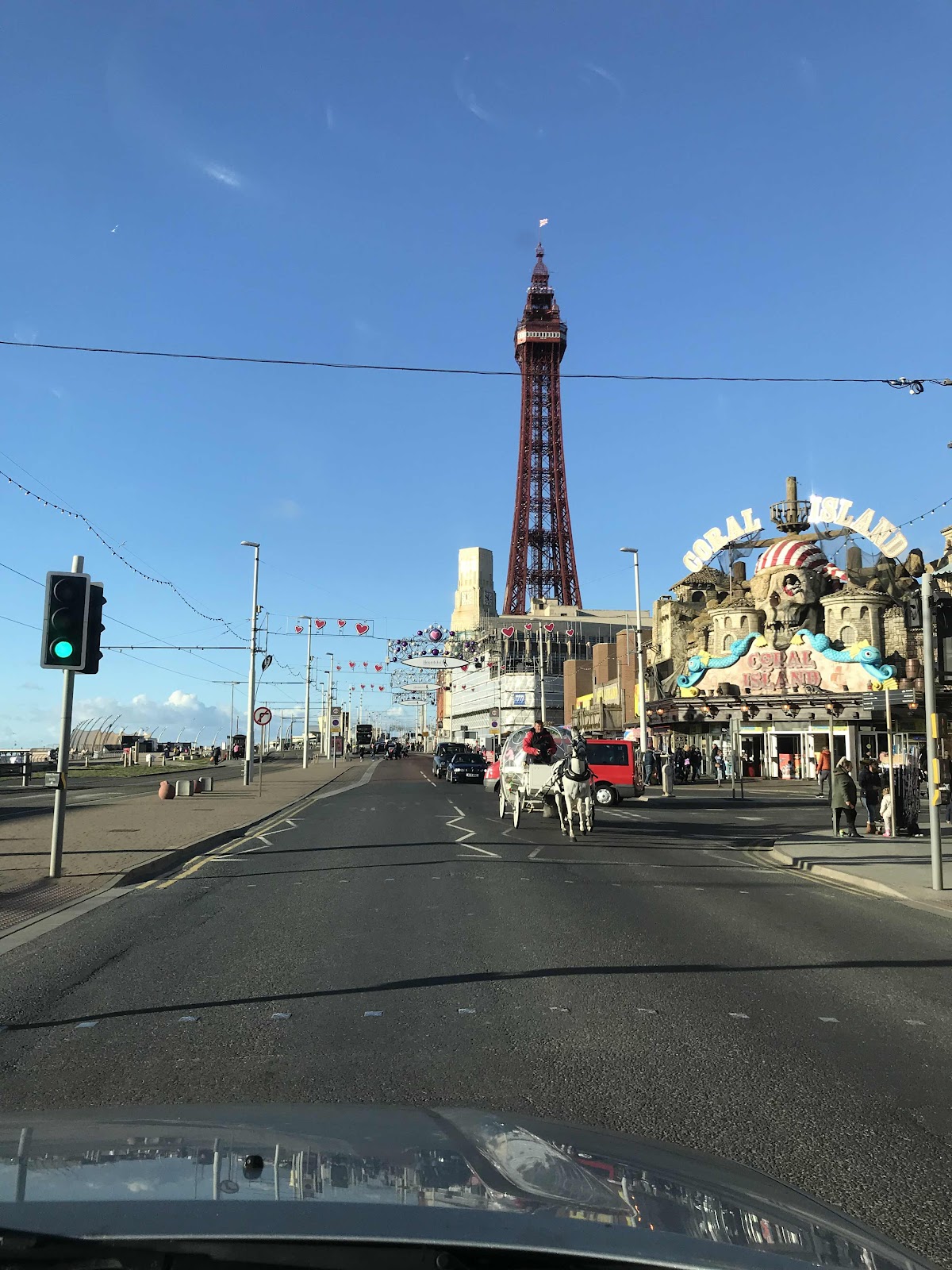
When’s the last time you got really excited about seeing something, noticing something that just makes your heart leap with joy? Families who live apart from each other who have recently met perhaps some travelling from a different country to this one haven’t been able to see each other physically for over two years. How might such a reunion feel? When I was minister in Lancashire we used to have regular coach trips with church to Blackpool. What do you do when you approach Blackpool? You shout “ Tower!” when you see it. The sabbatical before this last one I did some writing about traditions. Remember some of the mill towns went en masse to Blackpool when they had wakes week and all the mills were shut down for a week. 

Here’s a quote from “The Blackpool Tower: A Seaside Icon”: “The Mass-Observation research group in the 1930s recorded that working-class visitors often described the effect of their first view of the tower from the train journey to Blackpool. It created great excitement, confirmed that you were on holiday and was a sign of the ‘other world’ of pleasure about to be entered where the ‘cotton and factory chimney are finished with’. Just like the Eiffel Tower, the distant view of Blackpool’s tower was what transformed an essentially utilitarian structure into a ornament of the town, the oriental iron crown being the most potent symbol of entering another world, one that reversed the normal associations of the factory chimneys of visitors’ home towns.” How exciting to notice something that gives you joy and life.


“Take time to notice things.” I’m taking the Church Anniversary service at Sawley chapel on Sunday evening. The chapel was opened on Wednesday 20 May 1924 at a cost of £1650. Methodist presence began in the village in 1817 in a building on Lowgate Lane but 107 years later it was too small. Now we’ve the problem some of our Methodist buildings are too big and expensive to run! And some Methodist congregations are leaving buildings behind and hiring rooms in village halls and community centres. But Sawley is still here and this weekend we celebrate 205 years of Methodism and 98 years of witness out of our building. What we will do for our centenary in two years time? There would have been much to notice as the new chapel began to be built. Was there excitement in the village? What did that first congregation who gathered in May 1924 look like? What were the big issues of the day? Ramsay MacDonald was the Prime Minister. The first ever Labour government. What was on his agenda? 

The designers of the chapel decided to put a text from Psalm 100 at the front of the chapel that you can’t help but notice as you gather for worship: “Enter into his courts with praise.” It’s the whole point of why we come. And think how many have sat and thought about those words generations before us, in 1924, through world war, at times of uncertainty and times of celebration: “ Know that the Lord is God, it is he who made us and we are his, we are his people and the sheep of his pasture. Enter his gates with thanksgiving and his courts with praise, give thanks to him and bless his name. For the Lord is good, and his loving kindness  endures forever, his faithfulness continues to all generations.”

Psalm 84 is part of what we call the psalms of assent. These psalms would have been sung as people journeyed on foot to the temple and climbed up to it. A sight of it was exciting. How great to be able to come to worship and meet the living God.  “Better is one day in your courts than a thousand elsewhere, I would rather be a doorkeeper in the house of my God then dwell in the tents of the wicked.” So we come to be still and to notice what God is doing in his world and with us every time we meet as church together. 

But what sort of Anniversary will chapels like Sawley celebrate in the future? I’m doing a major church review in another of my churches on Sunday afternoon and asking the folk who gather to ponder what sort of church they will be in 2027, five years time. Or even ten years time in 2032. It is a bit scary that and I suspect I’ll get laughter that I dare to ask the question. But you know what, God is working his purpose out as year succeeds to year. And maybe just maybe we’ve stopped taking time to notice God and we’ve stopped being expectant in our worship and that God might even be noticed out in the world. We dare to put God in a box and bring him out like the best china now and again… we’ve forgotten that God in Jesus is found in mess.

So we need to take notice again. Moses has it right. In Exodus 3, he sees a burning bush by the side of the road and is compelled to step aside and see what’s going on. Like a decent sized poster on a church notice board should do. 

Burning bushes are those circumstances or events that interrupt life and grab our attention. They are not part of our plans. They take us by surprise. They stop us in our tracks and cause us to turn aside. We take a second look. Sometimes we are brought up short, speechless, at a loss for words. We cannot but look at them. 

Regardless of how it comes to us the burning bush shatters the horizon of our expectation. Moses never thought it possible for a bush to be on fire but not be burned up. He never expected or planned on being the one to bring God’s people out of Egypt.

God says to Moses  “I have observed the misery of my people.” “I have heard their cry.” “I know their suffering, and I have come down to deliver them from the Egyptians.” Now it sounds like we’re getting somewhere. God is coming to rescue God’s people. But listen to what God next says to Moses. “So come, I will send you to Pharaoh to bring my people, the Israelites, out of the land of Egypt.”  

“I have come down to deliver them,” God says. “So come, I will send you,” God says to Moses. 

God is going to deliver God’s people by sending Moses. Moses is to give existence to God’s call for deliverance. Moses is to make real and enact God’s desire for the people. What if that’s how God is working in our lives too? I wonder when you and I have not turned aside. When have we failed or refused to respond to the call on our lives? 


The burning bush experience does not happen apart from or in spite of every day life but in the midst of life, in the keeping of our flocks. That’s what Moses was doing when this happened. He was keeping the flock of his father in law. He was doing the ordinary routine things of his life, the same things he did the day before, the week before, and the month before. Burning bushes show up as we keep our flocks of routine and every day life.

How does Moses know if he’ll get it right? He doesn’t. He doesn’t know any more than we do. There will, however, be a sign. The sign, God says, will come after the people have been delivered, not before. It’s as if God is saying you’ll look back on all this and see I was there all along. A Church Anniversary is about two things it seems to me. Thanking God for our life and our story and our being together in fellowship today, but also being prepared again to know we will be challenged by God to notice him on a Monday as much as on a Sunday and that chapel or church is as much even maybe more about what we do in the village and in the world in the week having entered his courts with praise on a Sunday. 

Perhaps most of all we need to remember God is here. We’ve become so worried about the future of the church we’ve stopped being church.  We need to be with God more. We need to enter his courts with praise and remember him rather than keep worrying about whether we can be church as we know it anymore. We need to keep worshipping together however many of us there are and we need to keep looking for burning bushes. The Victorian poet Elizabeth Barrett-Browning put it this way:
“The earth is crammed with heaven. Every bush is ablaze with the glory of God. Those who see take off their shoes. Those who do not pick berries.”

On Wednesday 20 May 1924, the ladies, according to Lilian Chandler’s book on Sawley, provided a “sumptuous tea”! We celebrate with the people called Methodist at Sawley chapel this weekend on their 98 years of worship and witness, friendship and support and Christian presence. To them, and countless little chapels up and down the country who might be struggling a bit, my prayer is keep the faith, enter his courts with praise, know that the Lord is good, and take notice of burning bushes, step aside. You never know how God might surprise us. 

“Take time to notice things.”


Monday, 2 May 2022

Sabbatical blog 15: Sacred space as permanent gift


Where have the last three months gone? As I return to my churches, my head is all over the place! I tried to use the last week of sabbatical to explore what being in sacred space leads us to be after being in them. The encounter with God has to change us. One of the post communion prayers we use thanks God for feeding us, uniting us with Christ and giving us a foretaste of a heavenly banquet for everyone. Then we are sent out in the power of the Spirit to live and work to God’s praise and glory. 


I’ve been sad to see closed or redundant churches on my travels. Some have been taken over by the Churches Conservation Trust for people to visit, others have been left to rot, and others turned into something else. We were in Upleatham, near Marske on Thursday. I wanted to find one of the smallest churches in England. We drove through the village. I found what I thought was the church. It was now a very plush private house. The Methodist chapel had long since shut and when we found the right Anglican one it was not in a good state. You couldn’t get in it and the grass round the graves was very overgrown. It was incredibly sad.


On Friday, I found the old St Stephen’s Church at Fylingdales, near Robin Hood’s Bay. It stands overlooking the sea and has a very large graveyard and inside a three decker pulpit. I found the whole place cold and as if God had long since left… the view from it was nice though.


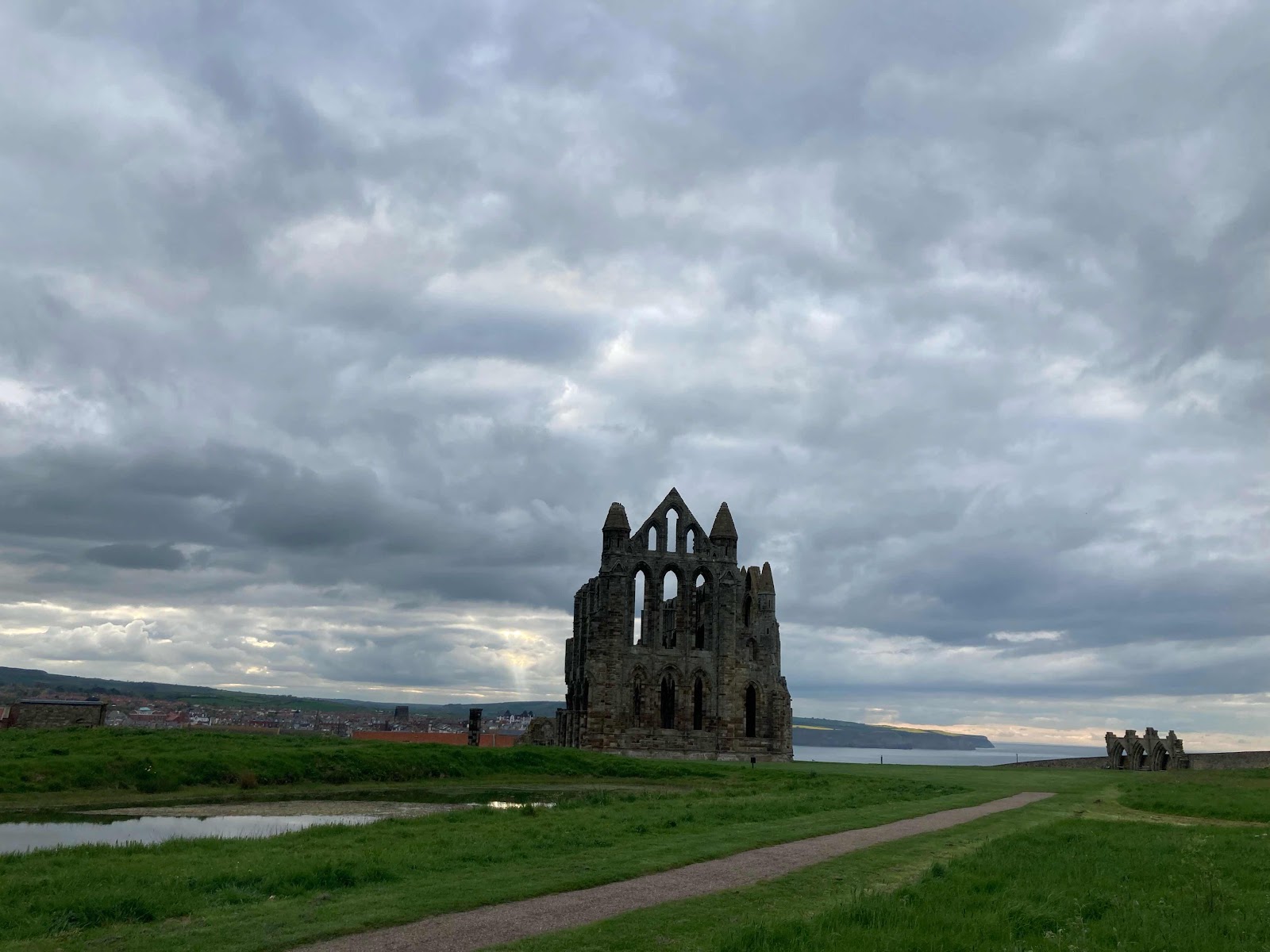
On Friday night, we ate out in Whitby in what was the old Methodist Church hall built in 1901. The church used to be next door to the hall but was disused in the 1950’s and the very large hall converted to be a worship space. It closed in the 1970’s. 

Wesley Hall is now the jet museum and also a rather nice restaurant. Some of the features of the church have been kept. The names on the 1901 foundation stones might well not approve of bottles of wine and cocktails being where I think the pulpit might have been! We will see more churches close over the next few years. I will spend a lot of time I guess trying to keep them open but as numbers dwindle and age and costs rise it will be hard. Maybe we just need to be open to other forms of sacred space if the ones we have been used to just can’t be sustained. 


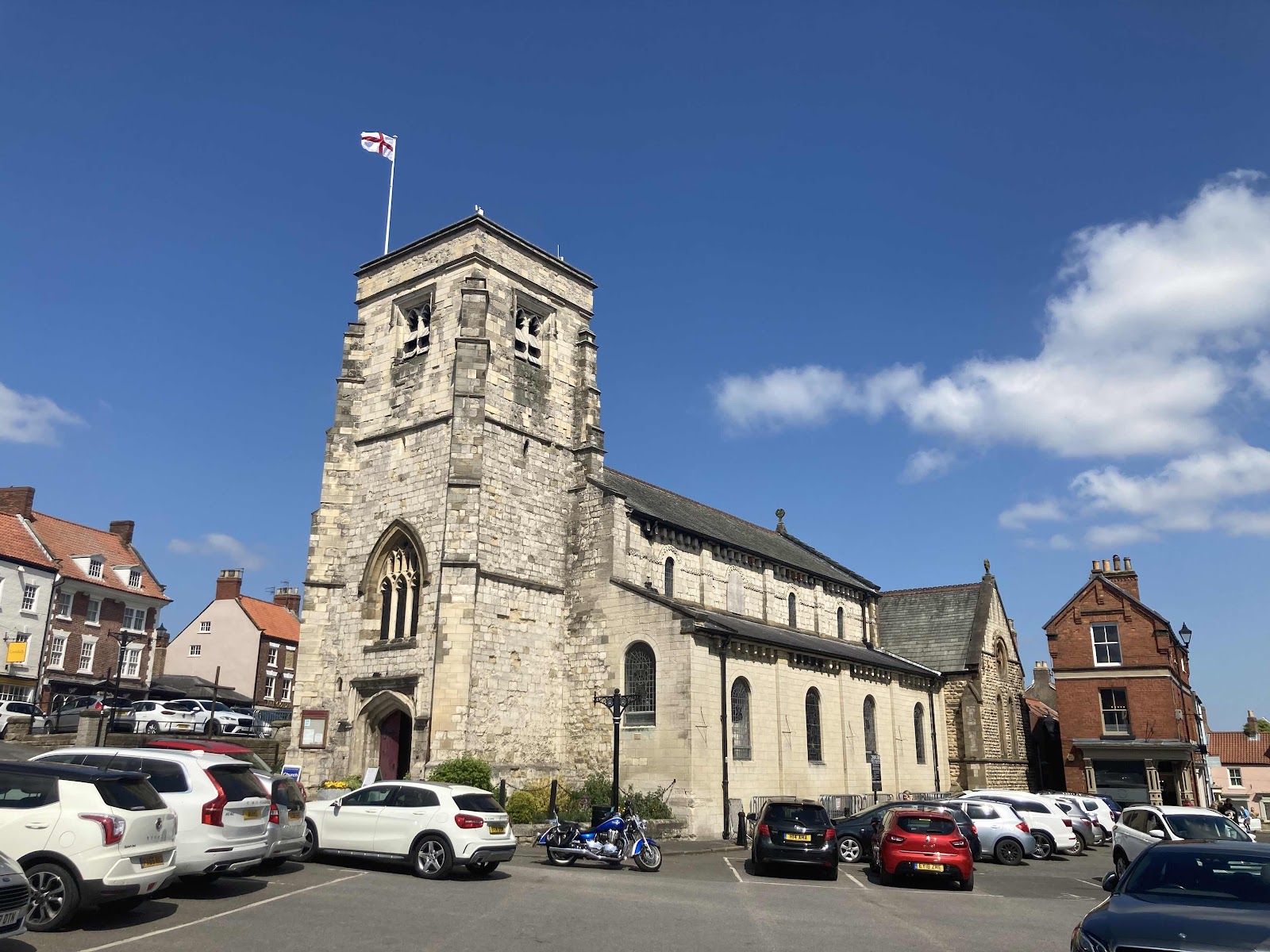
We had two final visits out to mention in our last week. We have discovered Malton. It’s the food capital of Yorkshire. A vegan outlet called the Purple Carrot is quite superb. It was good to call into the church in the middle of the market square. It was interesting to note it has a minister for the twenties to forties. 


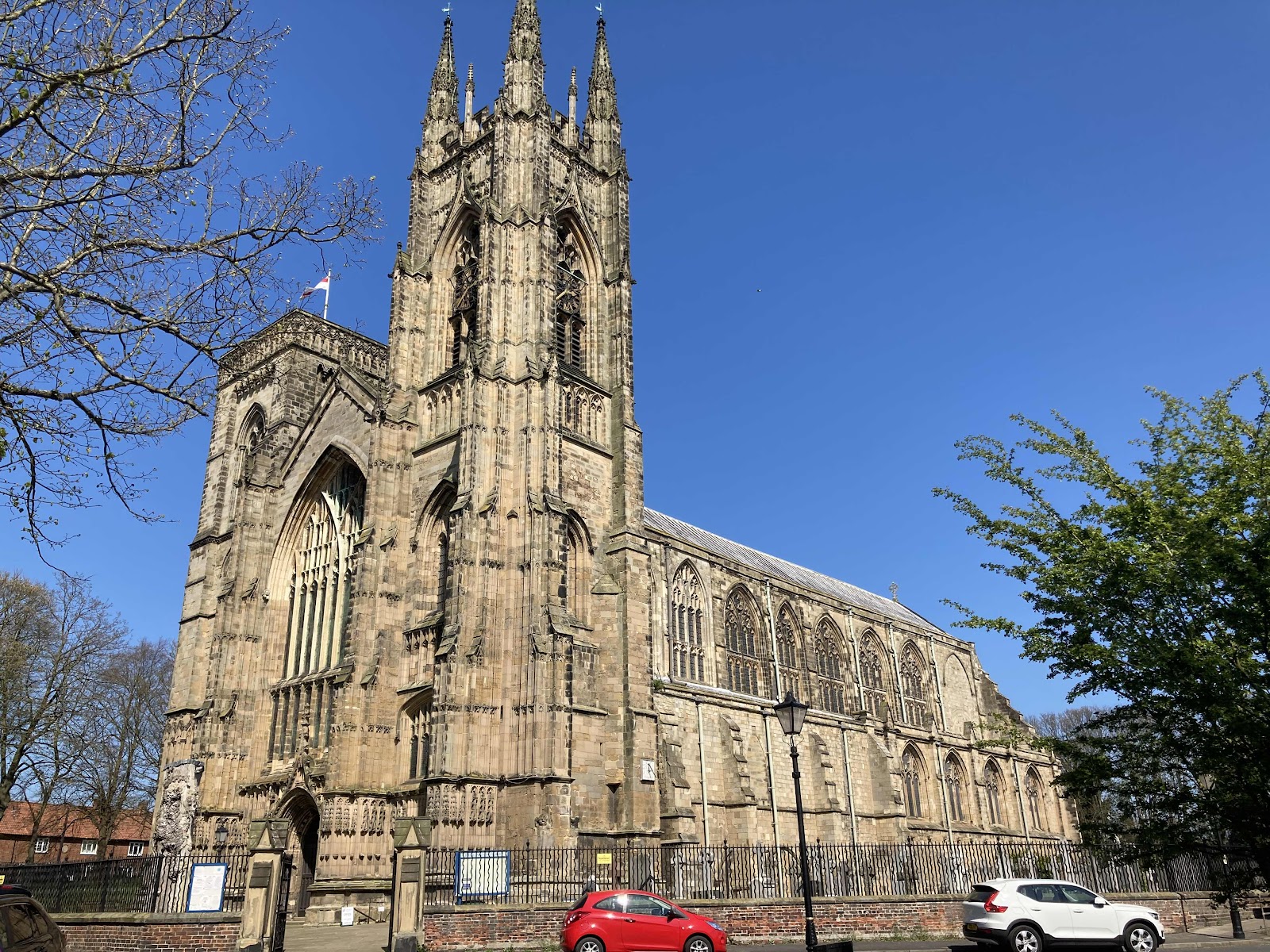
We also went to visit Bridlington Priory. The Priory Church of St Mary, in Bridlington’s Old Town, was founded as an Augustinian monastery in 1113 and was from the start a rich and important religious house. 


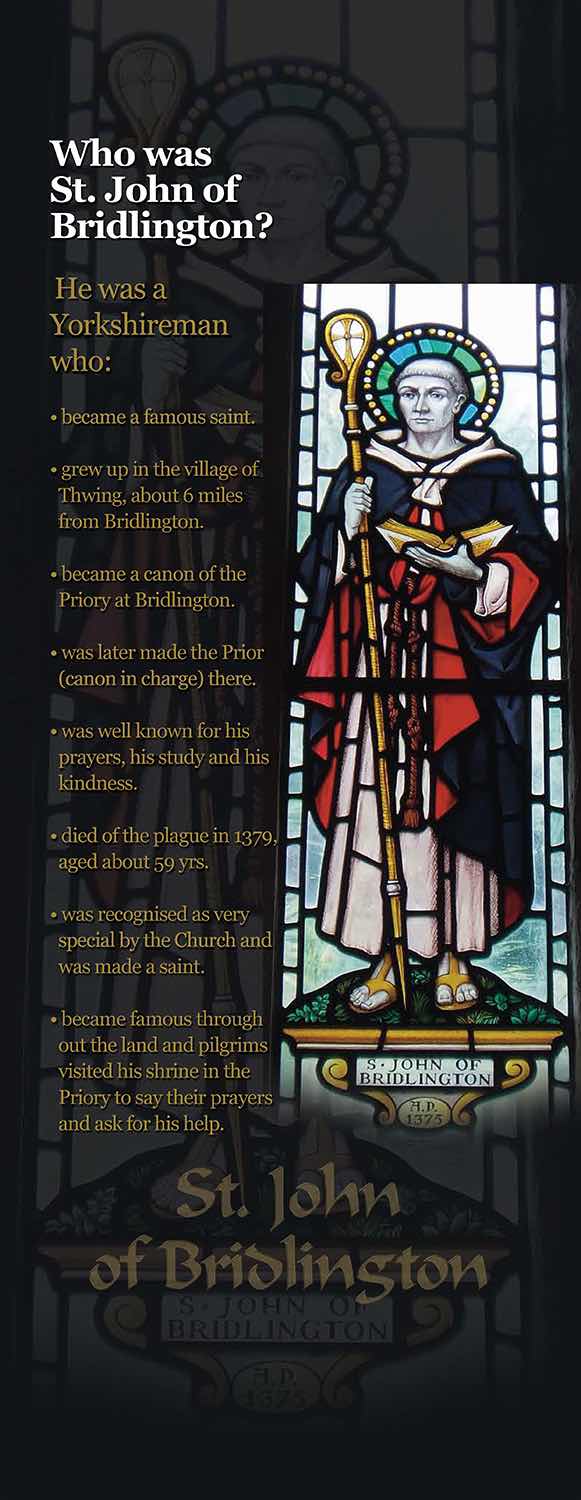
At the Reformation the Priory, along with many other foundations, was ‘dissolved’, most of its buildings destroyed and its property seized. What can be seen now is the original nave. I’d never heard of St. John of Bridlington. 


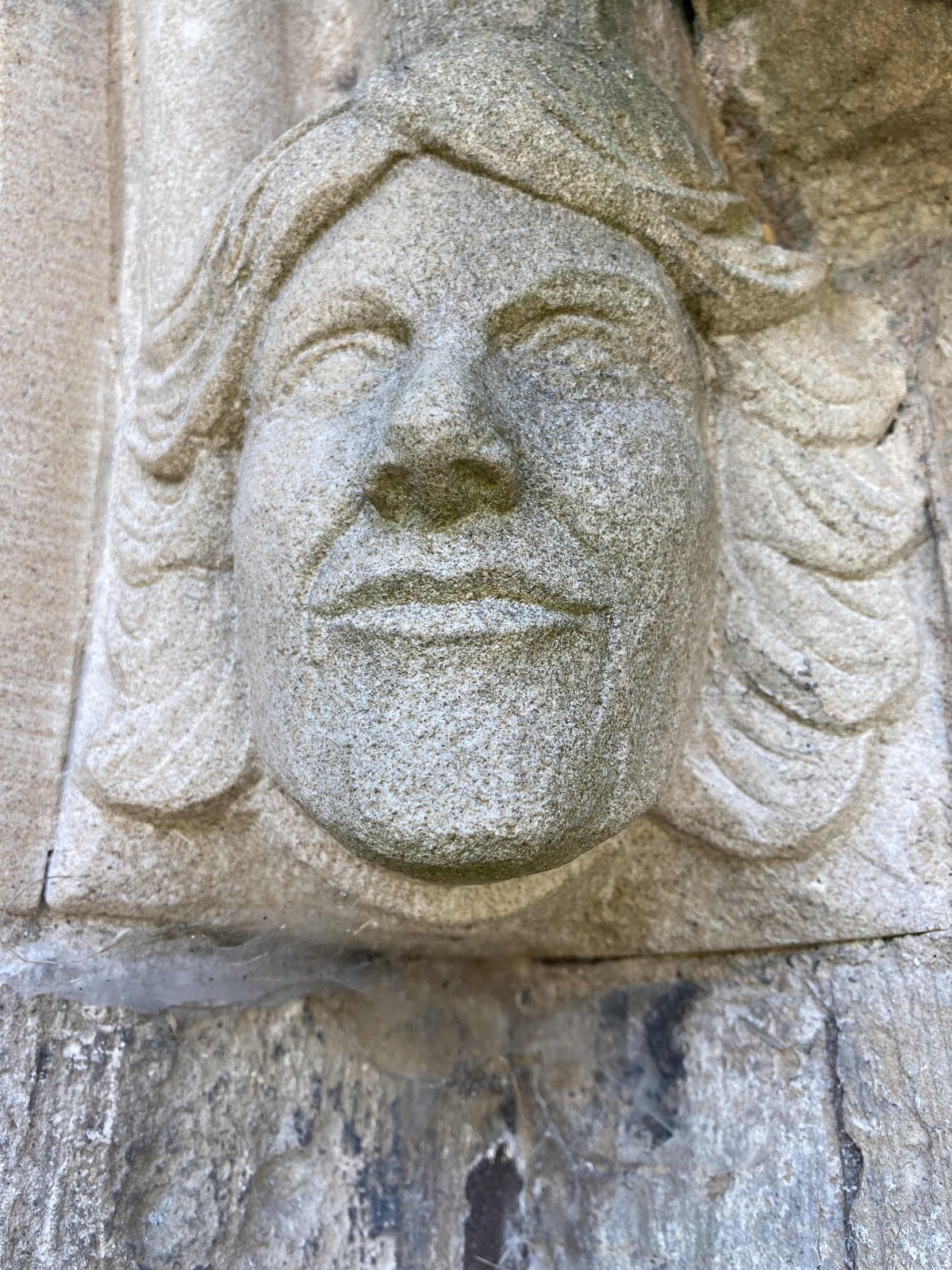
We were greeted by a guide in the nave. Lis told him I’m a Methodist minister. He told me he was a Methodist local preacher. He told me he worshiped at the Priory now but had been brought up in primitive Devon Methodism and “the peace is a definite no no”! He asked me what my theology is (I’m not sure he liked my answer) and then what I was going to preach about on Sunday. I wasn’t expecting a grilling! Bless him. The Priory was interesting, but I’m not sure about corbels of Charles and Camilla outside! 


How do I sum up the last three months? Three encounters in the last week of sabbatical I think have reminded me what being in sacred space means. We need to take far more time to just be in God’s presence. 

We need to be reminded every day that God is here and the encounter with him can lead to life being changed. We are too busy being church I think these days. We need to stop and refocus urgently. 

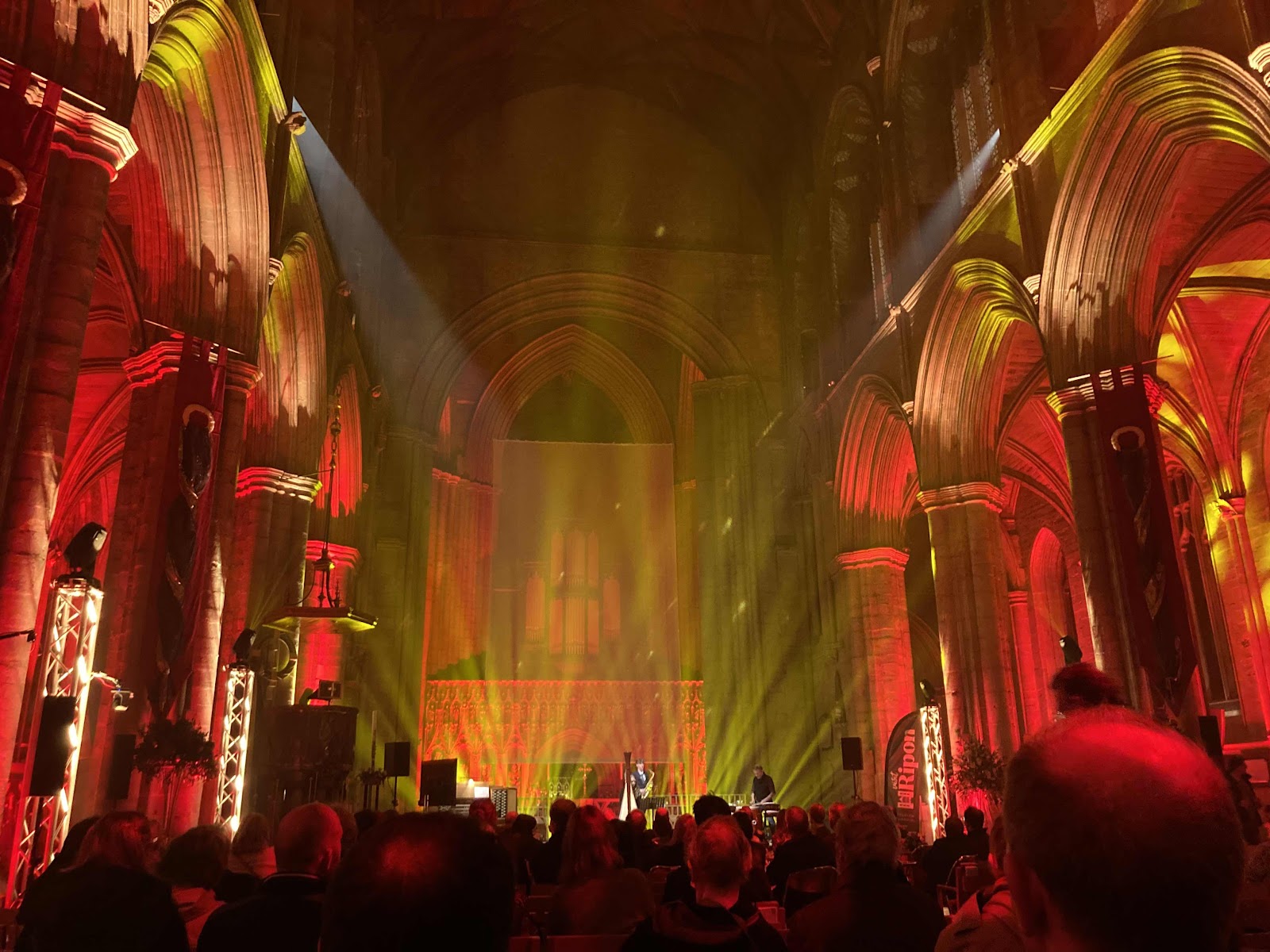
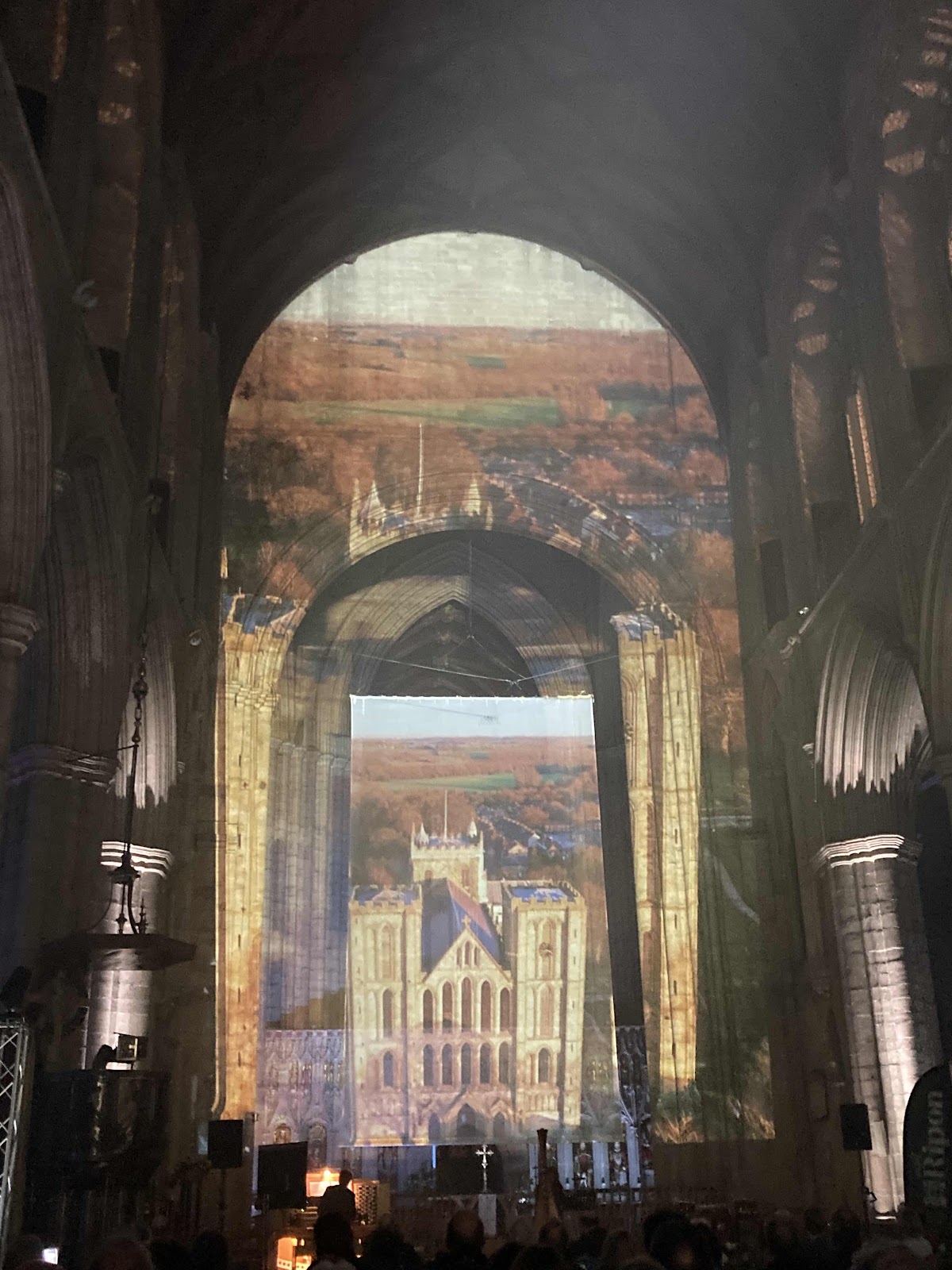
On Saturday evening, we ended sabbatical where we began it the first Sunday in Ripon Cathedral. This last weekend was the launch of the 1350th anniversary of Christianity on the site of the Cathedral. St. Wilfrid established a church on the site of the present Cathedral in 672. It’s astounding Christian worship has been offered there for 1350 years. I’ve really been moved by standing where saints who bought and encouraged Christianity in the North East and Yorkshire stood. To see their sacred spaces has brought their stories alive. Maybe it was right to end this journey with our local saint. 

As I’ve written before, I find sitting in his crypt powerful. I overheard the Dean tell someone on Saturday Wilfrid was a “naughty boy” - he caused havoc at the Synod of Whitby by rejecting Celtic ways, and he isn’t liked by some, but he has a place in the story of the church and I enjoy just popping into his cathedral a lot. 


As part of the telling of the seven miracles of Wilfrid, a Psalm was read. Entering sacred space is an awesome privilege, a comfort and a challenge. We should want more times in it. 

“How lovely is your dwelling place, O Lord of hosts! My soul longs, indeed it faints for the courts of the Lord; my heart and my flesh sing for to to the living God.  

Even the sparrow finds a home, and the swallow a nest for herself, where she may lay her young, at your altars, O Lord of hosts, my King and my God. Happy are those who live in your house, ever singing your praise.”


Then, finally, entering sacred space should equip us to get on with sharing what we have found in it in a world that badly needs the love of God. 

A lady at church yesterday asked me what have been my highlights. 

To have time to discover the beauty of a part of the world we now live in but haven’t had chance to get out and see.

Standing in the shadows of the saints like Aidan and Cuthbert and Hilda and Oswald and Wilfrid, reminding  me I’m part of a very long story.

Some awesome encounters and God moments in especially Ushaw College and Rievaulx Abbey.

Two acts of worship in which the Spirit really moved for me - an honest and relevant preacher at Elvet in Durham on the Ukraine situation, and the beginning of Holy Week under a rood of Christ crucified in Newport Cathedral, moved almost to tears about my call again as the choir sang a beautiful setting of There is a green hill far away. 

And of course doing Holy Week and Easter again on our beloved Holy Island, the most moving part being stations of the cross for Ukraine on Good Friday which just left us stunned in silence that the suffering Christ meets 2022 so powerfully. The words “help us not to look away” will stay with me for a long time. 


I admit to having a major wobble on my last sabbatical Sunday about returning to Ripon and to Circuit ministry. I’ve been in ministry, lay and ordained, for nearly 31 years now. How often in the discipline of just turning up in sacred space and giving what you feel to God, can that just being there point you to see it might all be alright… 

We sat in two services in St Mary’s Church on Holy Island. The sermon in the morning was preached by the amazing Canon Kate Tristram. 

Kate shared the Acts of Thomas with us:

The (first) act of Judas Thomas the Apostle, when He sold him to the merchant Habbān, that he might go down (and) convert India.

And when all the Apostles had been for a time in Jerusalem, — Simon Cephas and Andrew, and Jacob (James) and John, and  Philip and Bartholomew, and Thomas and Matthew the publican, and Jacob (James) the son of Alphæus, and Simon the Kananite, and Judas the son of Jacob (James),—they divided the countries among them, in order that each one of them might preach in the region which fell to him and in the place to which his Lord sent him. And India fell by lot and division to Judas Thomas (or the Twin) the Apostle. 

And he was not willing to go, saying: "I have not strength enough for this, because I am weak. And I am a Hebrew: how can I teach the Indians?" And whilst Judas was reasoning thus, our Lord appeared to him in a vision of the night, and said to him: " Fear not, Thomas, because my grace is with thee." But he would not be persuaded at all, saying:  "Whithersoever Thou wilt, our Lord, send me; only to India I will not go." 

And as Judas was reasoning thus, a certain merchant, an Indian, happened (to come) into the south country from——,whose name was Habbān; and he was sent by the king Gūdnaphar, that he might bring to him a skilful carpenter.   And our Lord saw him walking in the street, and said to him: " Thou wishest to buy a carpenter?" He saith to him, "Yes." Our Lord saith to him: "I have a slave, a carpenter, whom I will sell to thee." And he showed him Thomas at a distance, and bargained with him for twenty (pieces) of silver (as) his price, and wrote a bill of sale thus:  "I, Jesus, the son of Joseph the carpenter, from the village of Bethlehem, which is in Judæa, acknowledge, that I have sold my slave Judas Thomas to Habbān, the merchant of king Gudnaphar." And when they had completed his bill of sale, Jesus took Judas, and went to Habbān the merchant.   And Habbān saw him, and said to him: "Is this thy master?" Judas saith to him: "Yes, he is my master." Habbān the merchant saith to, him: "He has sold thee to me outright." And Judas was silent.

We know Thomas founded a church in India and converted many to Christianity. I needed to hear that when we are reluctant or refuse to go where we are called to, we are equipped and there is no choice when Christ calls other than to go. 

Returning after three months away is hard but if I keep trying to be grounded in God all will be well. It will! 


In the evening at evening prayer, which was just us and Sam Quilty, the curate at the church, we were commissioned to return after a brilliant and timely journey, back to whatever faces us, with the sending prayer used with pilgrims leaving Holy Island, after being there for a while to rest and be renewed:

“To the prayers of our island saints we commend you. May God’s angels watch around you to protect you. May the Holy Spirit guide and strengthen you for all that lies ahead.
May Christ Jesus befriend you with his compassion and peace.” 

“Lord, 
Be a bright flame before us. 
Be a guiding star above us.
Be a smooth path beneath us.
Be a kindly shepherd behind us.

And the blessing of God
Father, Son and Holy Spirit,
Be with you always.”


Entering sacred space is to renew us and then lead us with new energy where we are needed to be. I thank the church and God for the gift of a precious three months. I pray I may keep seeking space in order to find God’s peace, call and word every day. If I don’t, I’ll just collapse in exhaustion. If today’s church doesn’t, it will die. We are created even if we have no faith as human beings not human doings. 


Maybe this quote from Joseph Campbell is why sabbaticals are there for ministers and what sacred space is meant to do: 

“To live in a sacred space is to live in a symbolic environment where spiritual life is possible, where everything around you speaks of the exaltation of the Spirit.

This is a place where you can simply experience and bring forth what you are and what you might be. This is the place of creative incubation. At first you might find that nothing happens there. But if you have a sacred place and use it, something eventually will happen.

Your sacred space is where you find yourself again and again.”


Saturday, 23 April 2022

Sabbatical blog 14: Sacred space in Easter week


So I have had my penultimate week of this sabbatical. I wanted this week to see how sacred space inspires you to keep finding that peace you’ve encountered while away from the daily grind. When I’m back at work I need to find peace amongst the demands on my time and energy. 

Holy Island after Easter Sunday for me became more peaceful. The hoards still come as tourists walking at you like a swarm of locusts, but when the tide goes in the place becomes deeply spiritual and gives you a calm within you it is hard to describe.


Evening Prayer this week with just a few of us, has been a special time. The lectionary has reminded us post Easter of the marvellous works of God and his power. On Monday we had Psalm 135 where Og was smited! “He struck down many nations and killed mighty kings -Sihon  king of the Amorites, Og king of Bashan, and all the kings of Canaan and he gave their land as an inheritance, an inheritance to his people Israel.” Then on Wednesday, we recited Psalm 105: “Give praise to the Lord, proclaim his name; make known among the nations what he has done.”


Holy Island when the tide goes in is the most peaceful and sacred spot we know. We spent a long time one evening this week on the causeway watching the sky post sunset. To walk along the causeway alone in silence was amazing. I’ve always come here to find peace and this visit has given me lots of it again. We both love the beach by St Cuthberts Isle. I proposed to Lis on it on a very cold November day! Cuthbert found peace on it retreating from a busy ministry on the island. The island is connected to Lindisfarne at low tide in the same way Lindisfarne is connected to the mainland, but it is an island at high tide. It was here, within sight of the main island, that Cuthbert first attempted living as a hermit. He soon realized it was still too close to Lindisfarne; monks could still shout over to him. After that he went to Inner Farne, where no one had ever stayed for long.


I wanted this week to see what Inner Farne was like so I booked a Farne Islands boat trip on Wednesday from Seahouses. I wasn’t expecting the sea fret to be so thick you couldn’t see a thing! Allegedly we passed seabirds and seals as we went round the islands! You could see a bit more on Inner Farne. Cuthbert spent over 10 years living as a hermit on Inner Farne and was on the island when, in 684, he was informed he had been elected Bishop of Lindisfarne. Cuthbert had moved to the island in 676 and died there in 687. 


Even just spending an hour on Inner Farne, I got a small glimpse of what being there as a hermit might be like. The island is bleak apart from an unbelievable number of puffins! It’s now run by the National Trust and rangers live five days out of seven a week there. We were told they’ve no running water but they do have 4G! 


This week I’ve spent time trying to walk in the footsteps of some of the Northumbrian saints. How did they find peace and bring the sacred to what was a pagan environment? On Tuesday I wanted to visit the church at Chester le Street. 

On 8 June 793, the Vikings came to Lindisfarne. The monks at the priory were unprepared and some were killed and younger ones sold as slaves. The priory was partly burnt down. In the 9th century, there was a gradual movement of precious things to the mainland. Lindisfarne was abandoned in 875. The body of Cuthbert with other treasures which had survived the Viking attacks were carried by the monks onto the mainland. This amazing piece of modern scripture can be seen under the Cuthbert window in St Mary’s Church on Holy Island.


For over 100 years the travellers settled at Chester le Street. I never realised they stayed that long. It’s also said that in fear of further attack they look Cuthbert inland to Ripon, before finally arriving at Durham, where his remains now rest. 


Attached to the church in Chester le Street is what was an anchorage, one of the few surviving to this day and described as the most complete example of its kind in England. It was created by blocking off one corner of a church in the late 14th century, with an extra room added externally in the 16th century. Originally it was on two levels, but the floor was removed at some point to allow more space and light. From 1383 to 1547 it was occupied by six anchorites, each walled in to the anchorage for life, able to watch services through a squint into the church. Imagine that! 

Alas we haven’t spotted the church and anchorage shut at 12.30pm. We arrived at 12.33 and didn’t see either! 


We visited Finchale Priory, just north of Durham on Tuesday lunchtime. It owes its origin to St. Godric, who was born about 1070. After years of travel as a sailor, merchant and pilgrim, he felt called to the solitary life. He eventually settled at Finchale, where he lived to about 100. About 25 years after his death his hermitage became a priory and by the 14th century it was serving as a holiday retreat for monks from Durham.

I didn’t find Finchale very sacred. The ruined nave was full of screaming children and people sunbathing eating hot dogs bought from a kiosk opposite. I’m all for multi use of sacred space, but…


Tuesday was made better with what will be a highlight of this sabbatical. I wasn’t expecting Ushaw College to be quite so mind blowing! From 1808 to 2011 the college was a major seminary for the training of Roman Catholic priests. It rehoused the Roman Catholic “English College” known as the Douai, founded in 1568, which had been based in France but forced to leave there in 1795 following the French Revolution. The college closed in 2011 when there was just one trainee priest left. 


An article in the Northern Echo tells us that the college is a hidden gem, surrounded by seclusion. It is tucked away in mature countryside about five miles west of Durham city, hidden by physical barriers of trees, walls and gatehouses which are a response to the centuries of persecution endured by Catholics.

In the 1790s, Catholicism might have been tolerated but it was still viewed by the authorities with suspicion, and so the new college was designed to look uncontroversially like a Georgian country house so that it didn’t attract too much unwanted attention. Its chapel, therefore, was undemonstratively tucked away at the back.

The Roman Catholic Relief Act of 1829 formally ended the centuries of discrimination, and Ushaw responded by making a big, in-yer-face statement of the Catholics’ arrival. With student numbers growing, in 1844, the college’s fifth president, Monsignor Charles Newsham, employed Augustus Pugin – the hottest architect in the country after his success with the Houses of Parliament and Big Ben in the fashionable mock Gothic style – to build a proper place of worship on the front of the building. 


Pugin didn’t disappoint, creating a remarkably grand, richly decorated but ultimately peaceful chapel.” 

There are thirteen others, all awesome! The college is now owned by Durham University and is open to visitors. I will be back.  


From Ushaw, we went to find the delightful church at Heavenfield. St Oswald’s Church is on the site believed to be the location where King Oswald raised a large wooden cross and called his troops to pray before the battle of Heavenfield in 633. 


On the battle site there is now a tranquil hilltop  church you have to walk through a field of sheep to get to. It’s been a place of prayer and pilgrimage for centuries. I was glad to find it. 


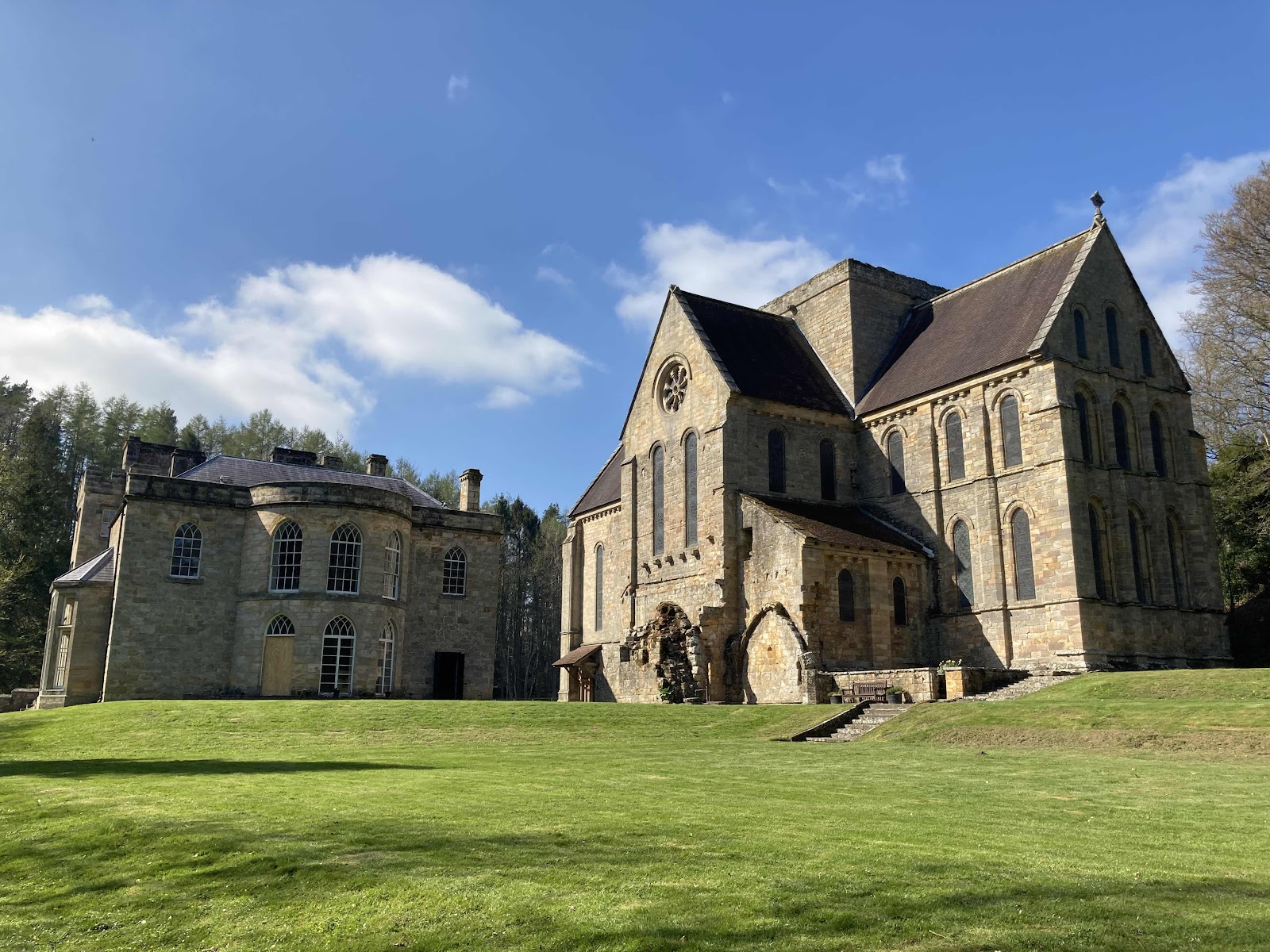
On Thursday, we discovered Brinkburn Priory, a surprise at the bottom of a long, wooded track. The history of Brinkburn Priory dates back to 1135, when William Bertram of Mitford established an Augustinian priory in a loop of the River Coquet, in secluded, deeply wooded countryside. According to surviving documents the new priory was a daughter house of 'St Mary de Insula', which probably referred to the priory at Pentney, Norfolk. We had the priory to ourselves. It was quite damp as was the Manor House next to it riddled with dry rot. The site is now managed by English Heritage. The manager made us very welcome. I’m not sure she gets many visitors and we spent quite a bit in her little shop! 


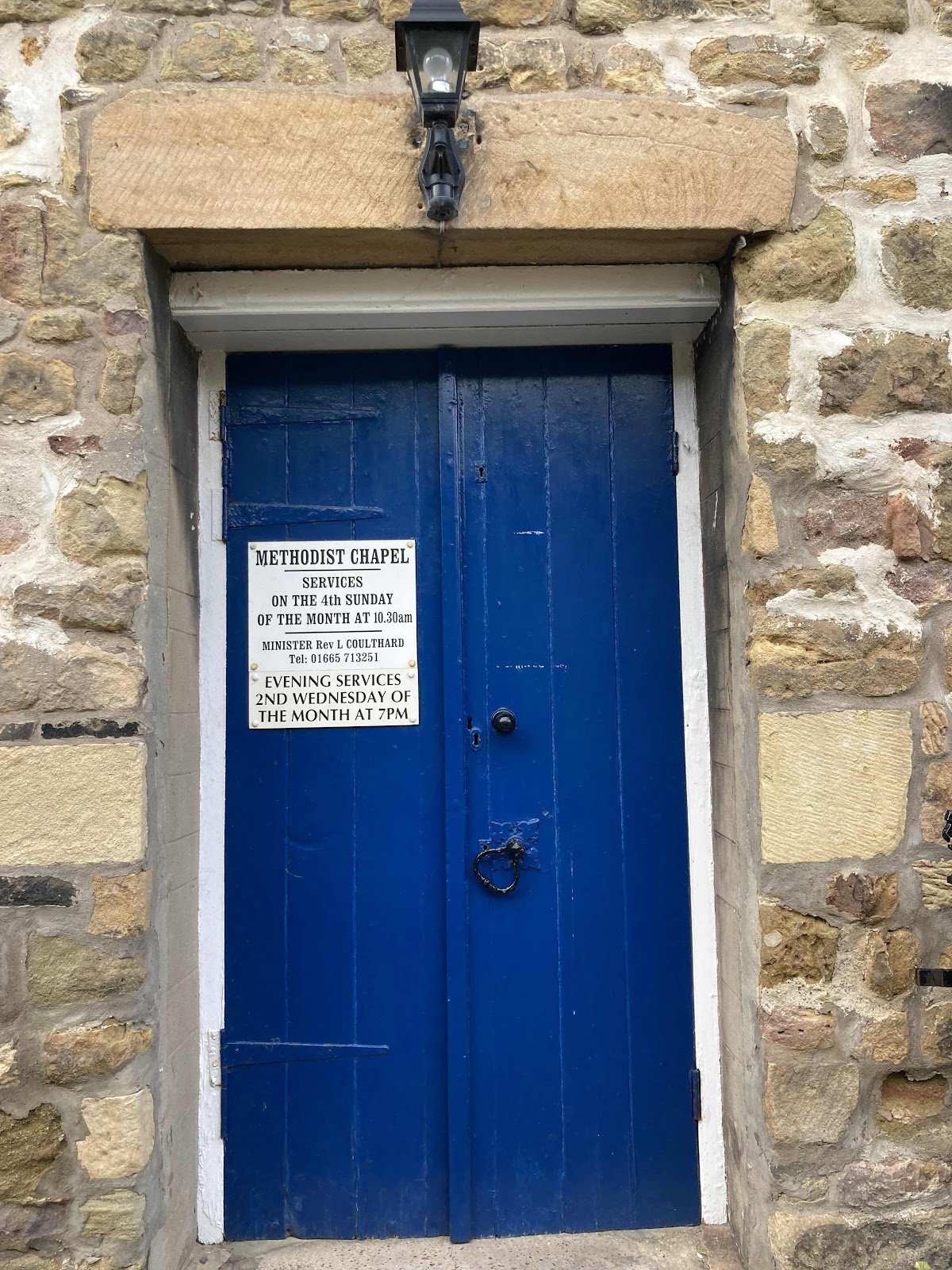
On the way back to Holy Island, it was nice to discover Alnmouth and to find the little Methodist chapel up a tiny lane. One of my friends becomes its minister in September. 


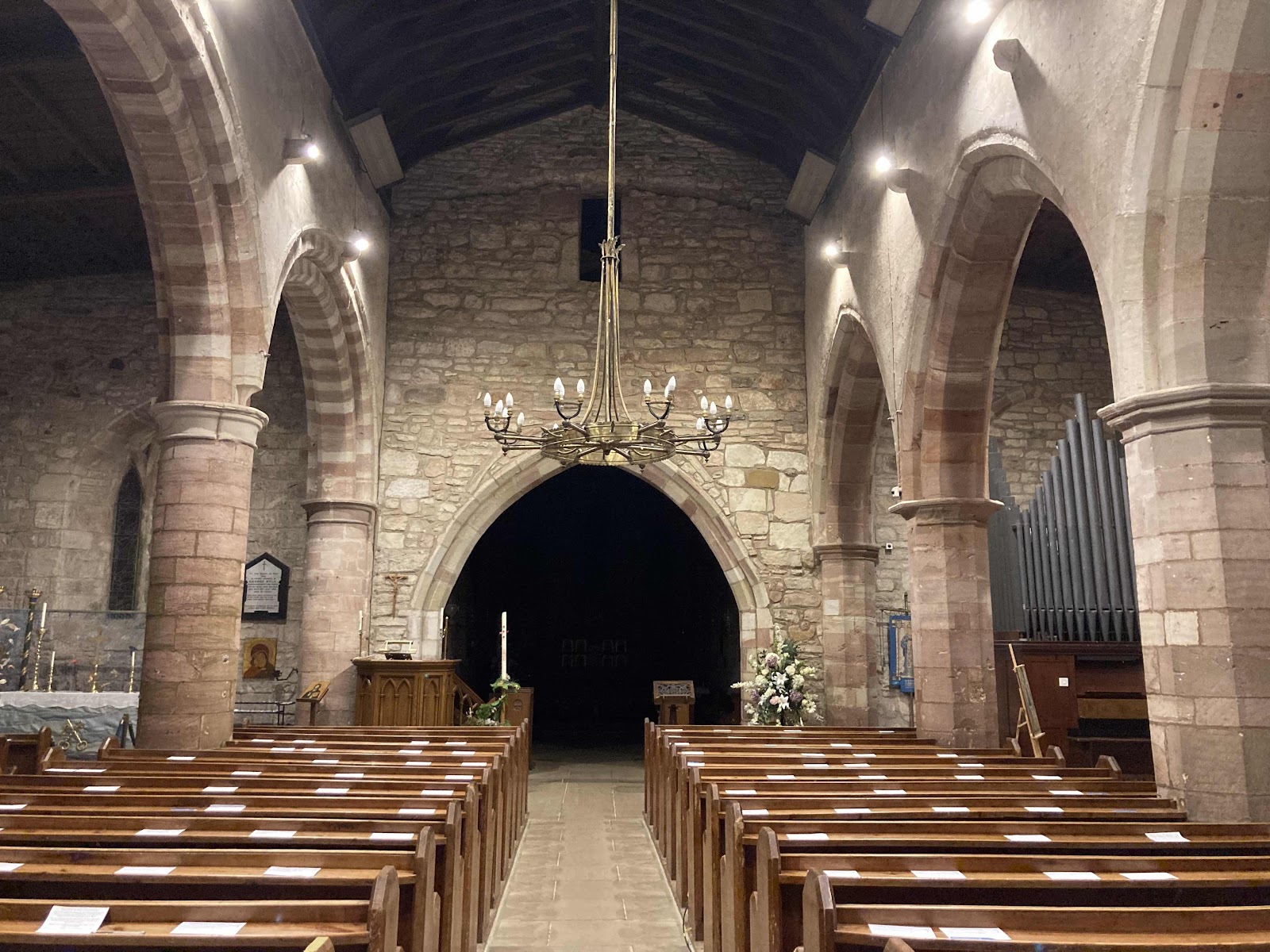
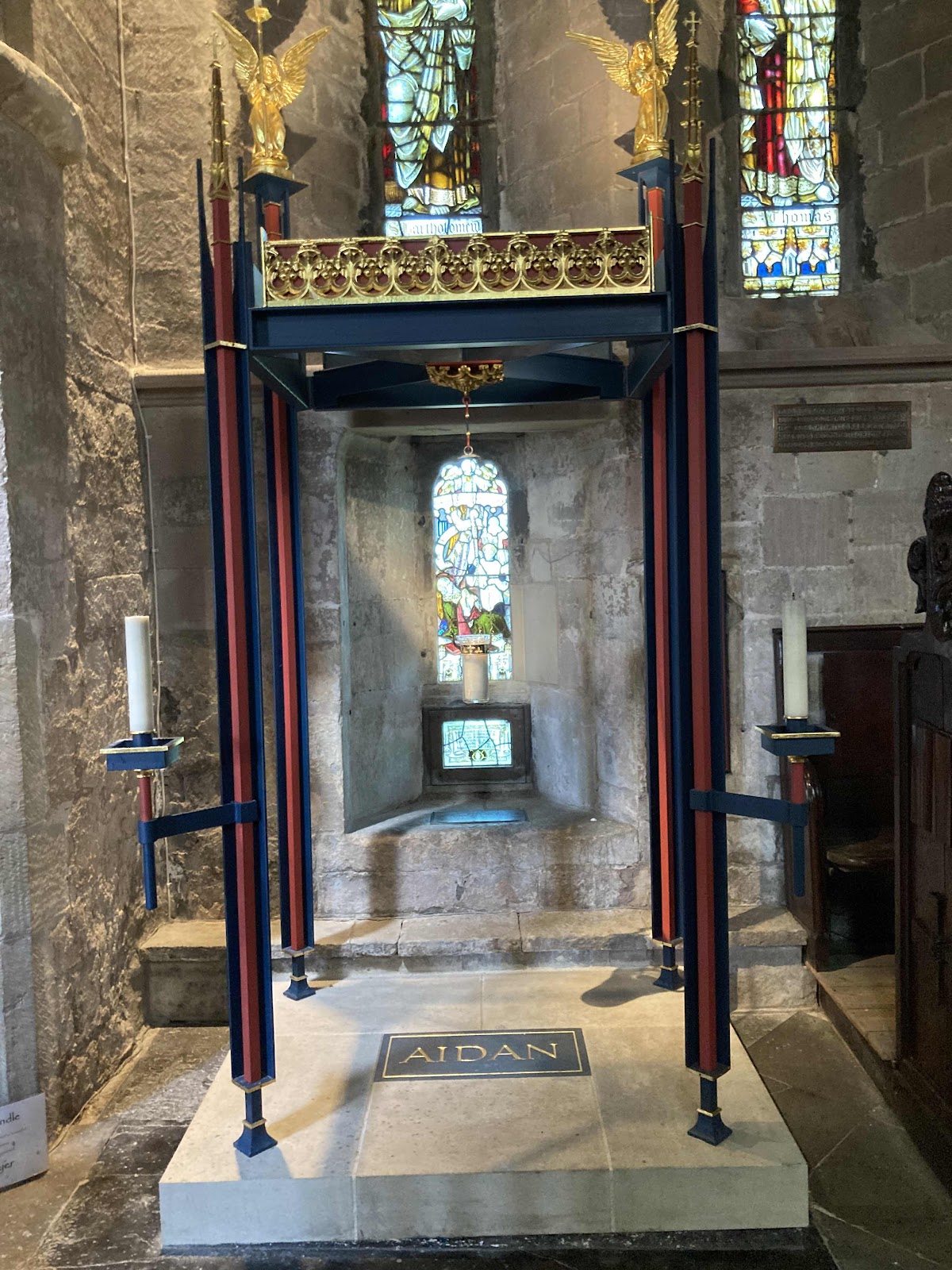
Our final trips this week were on Saturday. We began by visiting St Aidan’s Church in Bamburgh. There has been worship on this site since 635 when St Aidan of Iona was invited by King Oswald of Northumbria to bring Christianity to his kingdom. St Aidan is said to have died here in AD 651 whilst leaning against a forked timber beam that supported the outside wall of his church. That beam now forms part of the tower roof and is the only part of the 7th century church to survive. Since it survived at least two fires the beam became an object of veneration and was said to have miraculous healing properties.


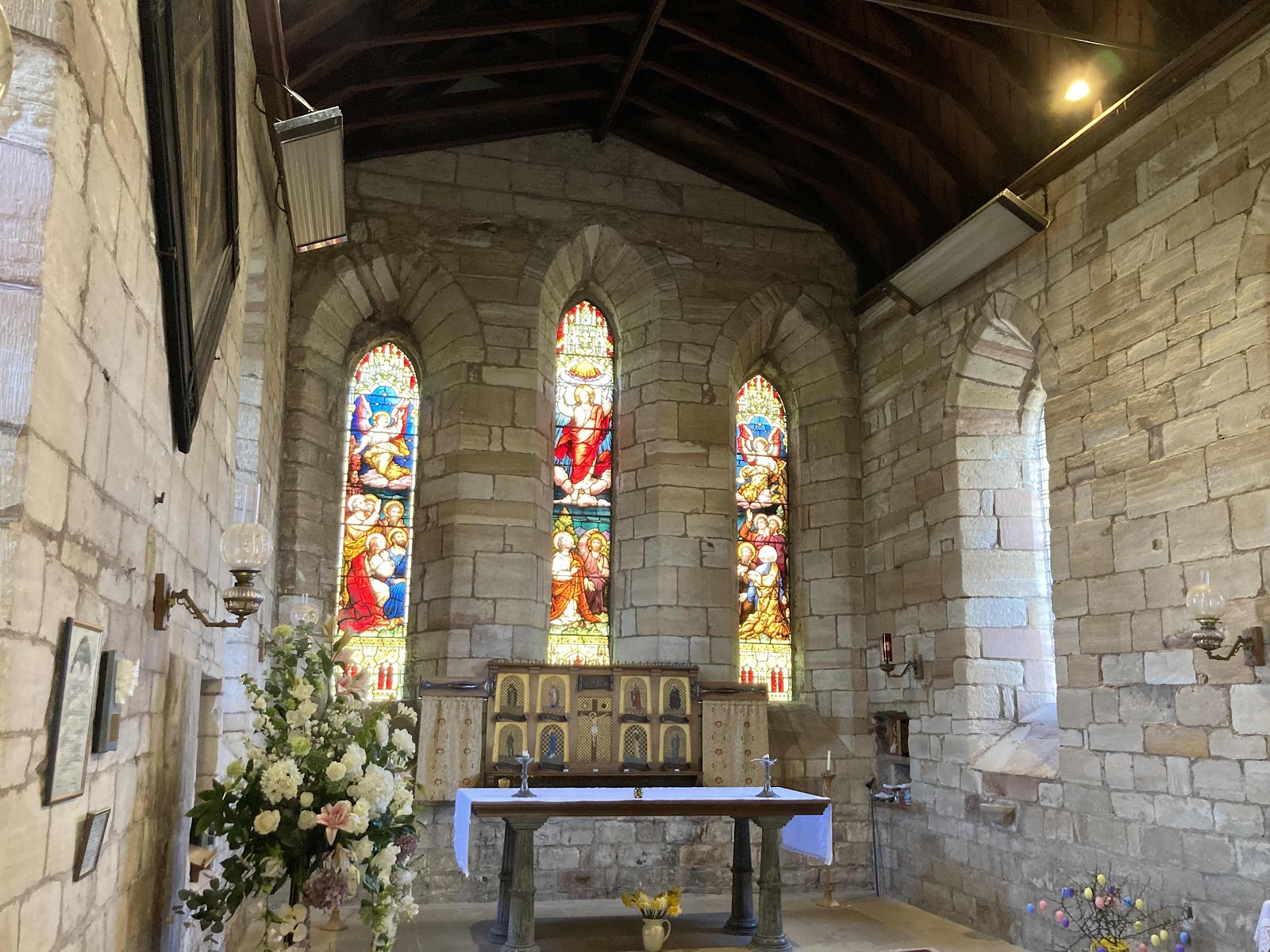
The spot where Aidan is said to have died is commemorated by a shrine within the present church, built in the late 12th century as part of a monastic cell of Augustinian monks. 


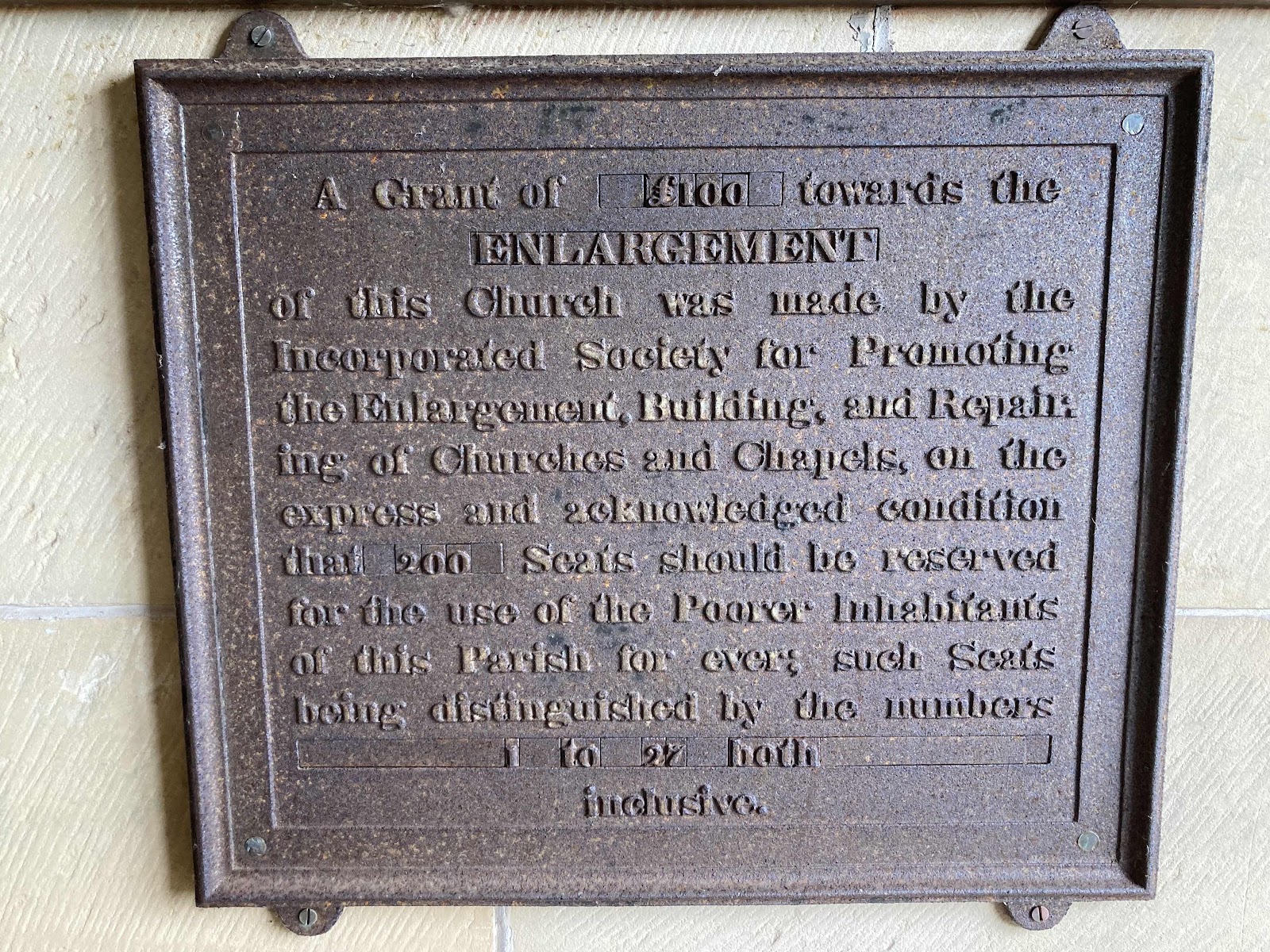
Then we went to find the churches in Ford and Etal. The church at Ford is massive, clearly having been supported by the neighbouring castle. It had an interesting way of interacting with the poor…


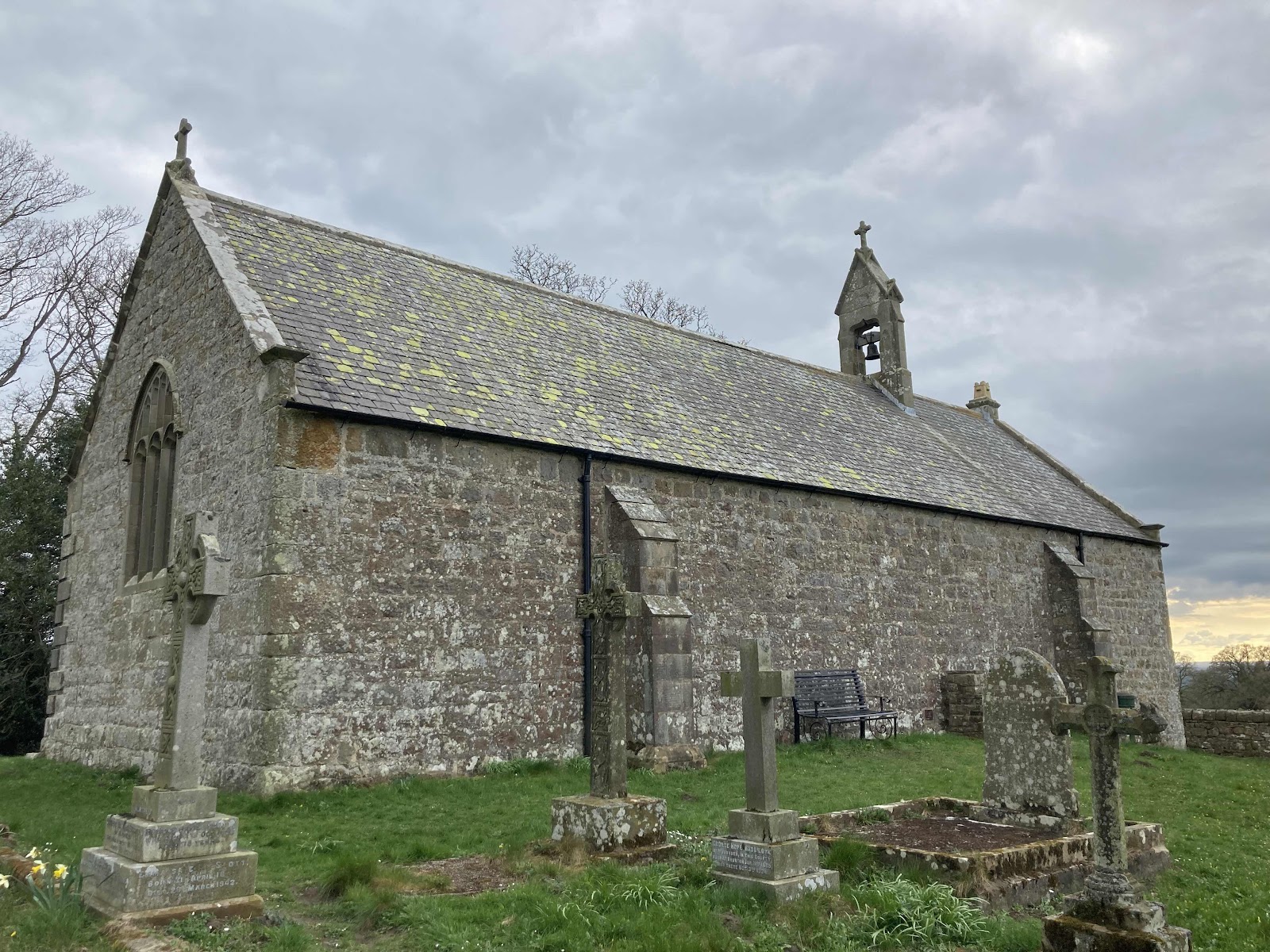
The church at Etal was simpler. Both are set in very well heeled villages! 


It’s been good to be able to be based for another week on Holy Island. I’ve found being here towards the end of sabbatical helpful. I don’t though want to leave. It always feels like coming home when we visit. The place where we’ve mostly stayed over the last few years has been a place of sanctuary for us. The owners are moving into it in the autumn so this has been our last stay in it. You can’t get closer to the church!


We ended the week on the beach which was lovely. I can’t believe I’m about to begin my last week of this journey. What will be our story when others read of us one day? Will we have been as courageous as the saints of old or as close to God as them? They brought the Gospel to people who’d never heard it. We have that same challenge in our age. What sort of church will there be beyond us? I guess that’s up to us. The saints of Northumbria knew those marvellous works and they were compelled to share them because they knew God was at work. Holy Island especially for me is a reminder of God being there. Being here this and last week has to inspire me to try to get my churches to look up and around and see him again. As a poem I found here years ago says “you didn’t come here to get away, you came here in order to go back.” 


A place of worship was founded on this site of the present church in 635 by Saint Aidan.  St Aidan was called to Bamburgh from Iona by King Oswald to establish Christianity in his newly united kingdom of Northumbria.

No trace of that wooden building can be now be seen - other than perhaps a beam in the Baptistery.  Tradition has it that thsi is the beam that St Aidan was leaning against when he died and it is said to have miraculously survived two fires.

The site of St Aidan's death is marked by a simple shrine within the present church.  The church building that is now seen dates from the end of the 12th century


2